Did you know that over 26,000 house fires are caused by electrical issues every year? It's a sobering thought that weighs on many homeowners, especially when you notice a light flicker or a switch feel warm to the touch. You're right to be concerned; your home's safety depends on an invisible network of cables that shouldn't be ignored. Learning to spot the common signs of bad electrical wiring is the first step toward reclaiming your peace of mind and ensuring a secure household for your family.
We've spent decades serving as a stable pillar in our community, helping neighbors navigate these technical hurdles without the typical anxiety. This 2026 guide is designed to empower you with the knowledge to protect your property and your budget. You'll learn how to identify dangerous red flags before they escalate into costly repairs or emergency situations. We'll provide a clear checklist of seven critical indicators, incorporate the latest safety standards from the 2026 National Electrical Code, and show you exactly how to handle these risks with confidence. Our goal is to move you from worry to a resolution that keeps your lights on and your family safe.
Key Takeaways
- Master the "A-B-C" sensory check to identify dangerous auditory, burning, or color changes before they escalate into emergencies.
- Understand why your breaker box acts as a safety watchdog and what frequent tripping reveals about your home's current load capacity.
- Learn to recognize the most common signs of bad electrical wiring to protect your household from the hidden risks of electrical fires.
- Discover why the "25-Year Rule" makes a professional audit essential for aging homes, especially when adding modern upgrades like EV charging points.
- Explore how targeted professional remediation and partial rewiring can solve specific safety issues efficiently without the need for a full-scale renovation.
The Hidden Risks of Faulty Electrical Wiring in Your Home
Most of your home's vital infrastructure lives in the shadows, tucked away behind layers of drywall and floorboards. This invisibility often leads to a false sense of security. You don't see the cables aging, but the Electrical wiring in an older home works harder every single year. According to the U.S. Fire Administration, over 26,000 house fires are caused by electrical problems annually. These aren't just numbers on a page; they're preventable tragedies that frequently stem from ignored signs of bad electrical wiring. The Electrical Safety Foundation International (ESFI) also highlights that while safety technology has improved, aging infrastructure remains a primary risk factor for homeowners.
As we move through 2026, our electrical demands have reached an all-time high. We're plugging in electric vehicles, high-efficiency heat pumps, and a constant stream of smart devices. Many systems designed decades ago simply weren't built for this level of sustained load. It's critical to distinguish between a minor issue, like a faulty lamp cord, and a systemic failure that threatens your entire property. A systemic problem isn't just a nuisance; it's a ticking clock that requires professional attention to ensure your family's safety.
Why Electrical Malfunctions Happen
Every wire has a limit. When electricity flows through a path that's too narrow or blocked by a loose connection, it encounters resistance. Resistance creates heat. Over time, this heat makes the protective insulation brittle and prone to cracking. Environmental factors like moisture or even tiny vibrations from nearby construction can accelerate this decay. Faulty wiring is the breakdown of safe current paths.
The Consequences of Ignoring Early Warning Signs
The most devastating result of neglected signs of bad electrical wiring is a house fire. However, the damage often starts much smaller. Localized "shorts" can send power surges through your home, frying expensive smart TVs, computers, and home automation hubs. You might also find yourself facing insurance claim denials if a provider determines that known hazards were left unaddressed. Waiting and seeing is the most expensive strategy for electrical repair. Taking a proactive approach doesn't just save money; it provides the security your family deserves. We believe in building long-term safety through diligent maintenance and honest assessments.
Sensory Cues: What You Can See, Hear, and Smell
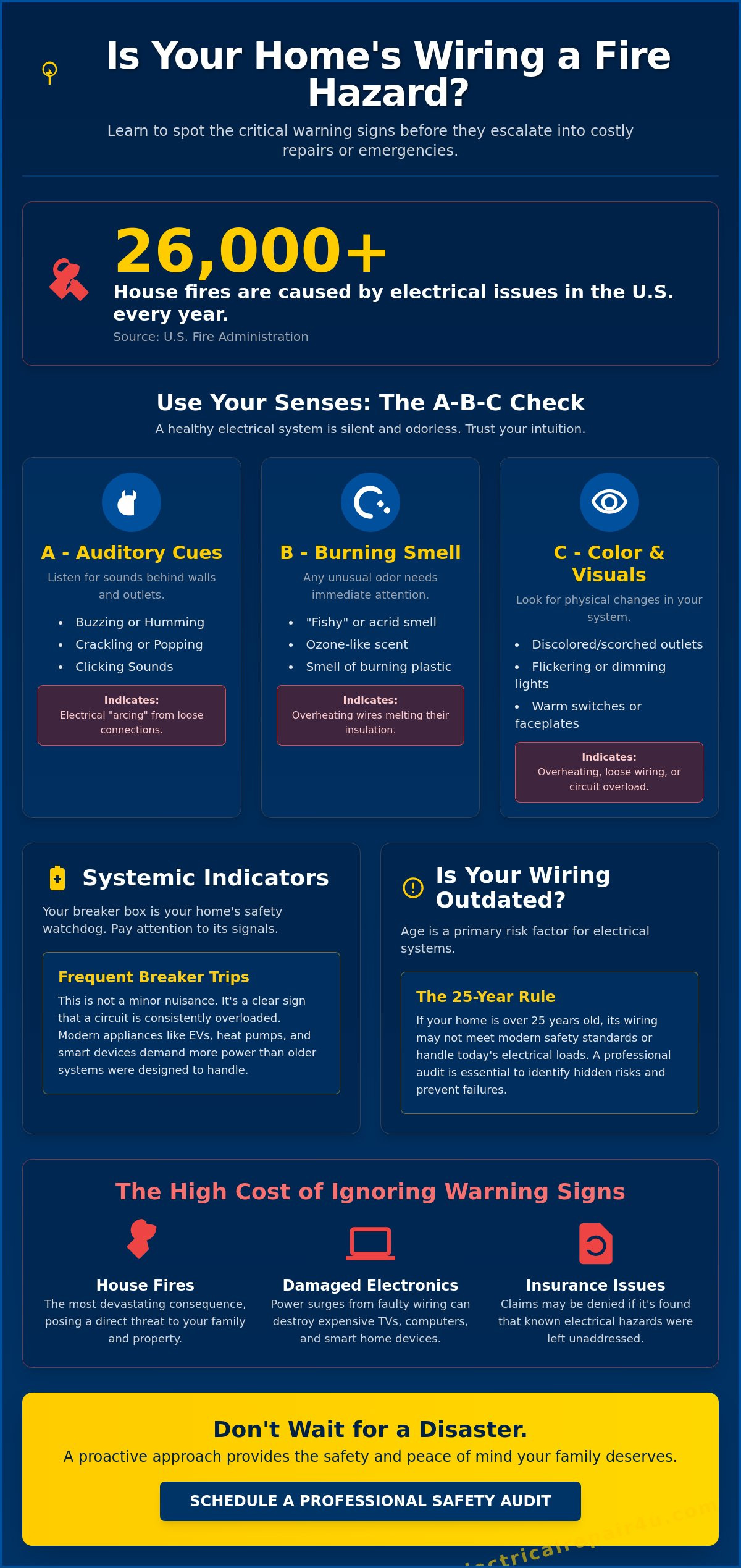
Your senses are your first line of defense against electrical hazards. While much of your system is hidden, it often broadcasts its distress through smells, sounds, and visual changes. We recommend using the "A-B-C" method for regular home checkups: Auditory, Burning, and Color. By staying alert to these signs of bad electrical wiring, you can catch a small problem before it becomes a dangerous emergency. A healthy electrical system should be silent and odorless, so any deviation from that baseline deserves your immediate attention.
Trusting your intuition is a powerful safety tool. If something feels off, it usually is. Our team has spent decades helping families identify these signs of home wiring electrical hazards to ensure their properties stay secure. Taking a moment to look and listen can save you from the stress of a major failure later on.
Flickering Lights and Dimming Fixtures
A single flickering bulb usually just needs replacing. However, if multiple lights in a room dim or shimmer, you're likely looking at a loose neutral wire or a circuit reaching its limit. When your refrigerator or air conditioner kicks on, they pull a large "inrush" of current. If your lights dim significantly during this moment, your wiring may lack the capacity to handle modern appliance loads. This voltage drop is a clear indicator that your system needs a professional eye to prevent long-term damage to your electronics.
Odd Odors and Unusual Noises
Electricity shouldn't make a sound. If you hear buzzing, clicking, or crackling behind your walls or at an outlet, you're likely hearing "arcing." Arcing occurs when electricity attempts to jump across a gap in a loose connection. This process ionizes the air and generates intense heat. This heat often produces a distinct "fishy" or "ozone" smell as the plastic insulation on the wires begins to melt. If your nose picks up a sharp, chemical scent near a switch, don't ignore it. This is the smell of a fire that hasn't started yet. If you notice these sounds or smells, scheduling a prompt electrical repair is the safest way to protect your home.
Discolored Outlets and Scorched Switch Plates
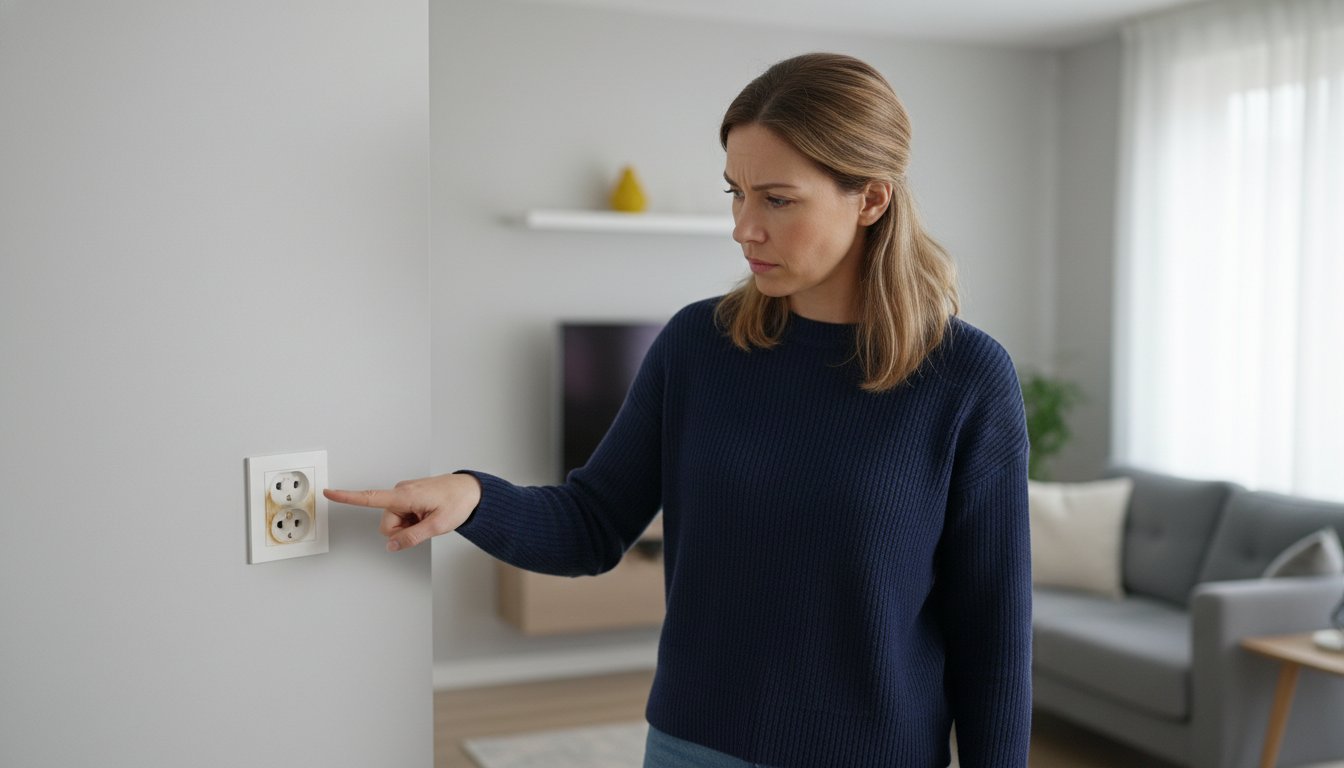
Visible char marks or brown discoloration on an outlet are major red flags. These marks indicate that the outlet has already experienced a "micro-fire" or extreme overheating. When an outlet or switch plate feels warm to the touch, it means the internal connections are creating resistance. This resistance turns electrical energy into heat instead of power. Scorched outlets are an immediate fire hazard because the plastic has begun to carbonize, making it even more conductive and prone to further arcing. Replace these components immediately to restore safety to your room.
Systemic Indicators: How Your Electrical Panel Signals Trouble
Your electrical panel is the brain of your home's power system. It acts as a tireless watchdog, monitoring every amp of current that flows through your walls. When everything is functioning correctly, this system remains silent and invisible. However, when the infrastructure begins to fail, the panel is often the first place to broadcast signs of bad electrical wiring. Understanding how to interpret these signals can be the difference between a simple fix and a catastrophic failure. Safety science leaders at UL Solutions emphasize that recognizing signs of a problem with electrical wiring early is the most effective way to prevent property damage.
We've spent decades helping homeowners identify these weak links in their power distribution. Our goal is to remove the anxiety associated with technical failures by providing clear, honest assessments. When your panel starts acting up, it's not just a nuisance. It's a safety feature doing its job to protect you from a potential fire.
Frequent Breaker Trips and Blown Fuses
A circuit breaker trips to cut off power when it detects a dangerous situation. If you find yourself walking to the garage once a week to flip a switch, your system is telling you there's a mismatch between your power load and your wire capacity. There is a significant difference between an overloaded circuit, where you've simply plugged in too many appliances, and a short circuit caused by damaged wire insulation. A breaker that won't stay reset is a critical emergency. It indicates a persistent fault that could lead to an immediate fire. Consistent breaker box maintenance ensures that these safety devices are ready to trip when you need them most and stay engaged when you don't.
Tingles, Shocks, and Grounding Failures
You should never feel a "zap" or a light tingle when touching a metal appliance or a toaster. These minor shocks are clear indicators of a grounding failure. In many older homes, ungrounded two-prong outlets lack a safe path for stray electricity to travel. This forces the current to use the appliance casing, or you, as a path to the ground. This is especially dangerous in wet areas like kitchens or bathrooms. Installing GFCI outlets is a vital step in preventing lethal shocks, as they can cut power in milliseconds if they detect a leak.
Identifying Outdated Wiring Materials
The materials used in your home's construction play a massive role in its long-term safety. Many homes built in the 1960s and 70s utilized aluminum wiring, which expands and contracts more than copper, leading to loose connections and fire risks over time. Historic properties may still harbor knob-and-tube wiring, which lacks a ground wire and can't handle modern high-wattage devices. Upgrading to modern AFCI (Arc-Fault Circuit Interrupter) breakers is now the gold standard for safety. These intelligent devices can detect the specific electrical signature of a dangerous arc before it generates enough heat to start a fire, providing a level of security that older systems simply cannot match.
Assessing Your Risk: Is Your Home’s Wiring Outdated?
While your home may feel like a permanent sanctuary, its internal infrastructure follows a strict timeline. We often refer to this as the "25-Year Rule." Once a home's wiring crosses the quarter-century mark, it requires a professional audit to ensure its integrity hasn't been compromised by time or environmental factors. In historic Illinois communities like Naperville and Oak Park, our local climate plays a significant role in electrical deterioration. Dramatic temperature swings and high humidity levels cause metal components to expand and contract repeatedly. Over several decades, this cycle can loosen connections at terminals and switches, creating the very signs of bad electrical wiring we've discussed in previous sections.
Understanding the "DIY Wall" is vital for your safety. While swapping a lightbulb or a decorative faceplate is straightforward, the moment you encounter brittle insulation or multiple wires in a single terminal, you've reached the limit of homeowner maintenance. Recognizing these boundaries prevents accidental damage and ensures your home remains a safe environment for your family. We take pride in being a stable pillar of the community, helping you identify these risks before they become emergency situations.
The Impact of Modern Power Demands
The electrical systems installed in the 1980s or 1990s were designed for a different world. They weren't built to handle the sustained high-current draw required for EV charger installation or modern high-efficiency heat pumps. Legacy 100-amp panels often struggle to keep up with the simultaneous demands of smart home hubs, high-end kitchen appliances, and home office setups. This strain creates "hidden" heat within your walls, which accelerates the degradation of wire insulation. If you're planning to upgrade your home's technology, you must first ensure your foundation can support it. Dedicated circuits for high-wattage equipment are no longer a luxury; they're a safety requirement for the modern household.
When to Schedule a Professional Inspection
A standard home inspection during a real estate transaction is often a surface-level visual check. In contrast, a dedicated electrical audit involves a deep dive into your system's health. During electrical troubleshooting services, a licensed professional uses specialized tools to check for circuit continuity, proper grounding, and thermal anomalies that the naked eye can't see. We look for specific signs of bad electrical wiring that indicate systemic fatigue rather than isolated fixture issues. Preparing your home for a safe, modern electrical future starts with an honest assessment of your current risks. If your home is over 25 years old or you've noticed any of the sensory cues mentioned earlier, it's time to schedule a comprehensive wiring audit today to protect your investment and your peace of mind.
Professional Solutions for Faulty Wiring in Warrenville and Beyond
Once you've identified the signs of bad electrical wiring in your home, the path from anxiety to security begins with a structured, professional plan. We don't view ourselves as just contractors; we're collaborative partners dedicated to the long-term safety of our neighbors. Resolving electrical issues isn't merely about swapping out old cables. It's a comprehensive remediation process that restores the integrity of your entire power system. By choosing a local team that understands the specific DuPage County codes, you ensure that every repair is performed to the highest safety standards, providing you with lasting peace of mind.
Our approach to remediation is surgical rather than destructive. We start with a high-stakes technical diagnostic to map your home's current vulnerabilities. In many cases, you might not need a full-house overhaul. We often utilize "partial rewiring" to target specific dangerous circuits or high-load areas while leaving healthy sections of your system intact. This targeted strategy solves your most urgent safety risks without the stress of a full-gut renovation, keeping your project efficient and your home life uninterrupted.
Comprehensive Home Rewiring Services
When a system has aged beyond the point of simple repairs, a full-house rewire is the most dependable solution for your family's future. During this process, our seasoned veterans carefully pull new, high-caliber copper wiring through your existing infrastructure, replacing brittle or outdated materials. While this sounds like a major disruption, our team works diligently to minimize the impact on your daily routine. Beyond immediate safety, professional rewiring significantly increases your home's resale value and satisfies the stringent requirements of modern insurance providers. For a deeper look at how we handle these projects locally, explore our guide on residential electrical repair in Warrenville.
Upgrading for Safety and Performance
Modernizing your wiring often goes hand-in-hand with a panel upgrade. If your current breaker box is a legacy 100-amp model, it likely lacks the capacity to safely distribute power to your new wiring and high-draw appliances. Installing a new, 200-amp breaker box provides the stable foundation your home needs to thrive. To protect this new investment, we highly recommend a whole house surge protector installation. This safety device acts as a shield, diverting unexpected voltage spikes away from your sensitive electronics and preserving the longevity of your new wiring. At Electrical Repair 4U, we take immense pride in our 40-year local legacy. We're ready to help you move past the worry of electrical failure and into a home that's powered for the future. Contact us today to secure your property with the honest, expert care you deserve.
Power Your Home with Confidence and Safety
Your home's electrical system shouldn't be a source of constant stress or uncertainty. By staying alert to the signs of bad electrical wiring, such as unusual odors, buzzing sounds, or frequent breaker trips, you've already taken the most important step toward protecting your family. Modern energy demands require a robust foundation. Identifying these red flags early prevents small issues from escalating into dangerous emergencies or costly repairs. Whether you're maintaining a historic property or preparing for new technology, your safety depends on a system that works silently and reliably in the background.
Our team brings over 40 years of local Illinois expertise to every service call. We are licensed and insured master electricians who specialize in older home rewiring and essential safety upgrades. We're here to act as your collaborative partner, removing the anxiety from complex technical failures. Secure your home today with a professional electrical inspection from Electrical Repair 4U. We'll help you navigate your home's power needs with the honesty and precision you deserve. You can rest easy knowing your property is stable, secure, and ready for the future.
Frequently Asked Questions
Is it normal for an outlet to feel slightly warm when something is plugged in?
An outlet or switch plate should never feel warm to the touch. While some electronic devices generate their own heat, the outlet itself must remain at room temperature to be considered safe. If you notice warmth, it is one of the common signs of bad electrical wiring caused by loose terminals or an overloaded circuit. Stop using that outlet immediately and have a professional evaluate the connection to prevent a potential fire.
How often should I have the electrical wiring in my home inspected?
You should schedule a professional electrical audit at least every 10 years for a standard residential property. However, if your home is more than 25 years old or you've recently added high-draw technology like an EV charger, a checkup every 3 to 5 years is much safer. Regular inspections allow our team to catch deteriorating insulation or loose connections before they escalate into high-stakes technical failures.
What should I do if I smell something burning but cannot find the source?
Shut off your main electrical breaker immediately if you detect a persistent "fishy" or plastic burning odor. This distinct scent often indicates that wire insulation is melting behind your drywall where it isn't visible. Once you have killed the power, contact a licensed professional to perform a thorough diagnostic of your walls. Taking quick action removes the anxiety of a hidden hazard and protects your property from catastrophic damage.
Can bad wiring cause my electric bill to increase suddenly?
Faulty wiring can lead to a surprise spike in your monthly utility costs. When connections are loose or wires are damaged, they create excessive resistance, which generates heat instead of powering your devices efficiently. This wasted energy still registers on your meter and adds up quickly. If your usage habits haven't changed but your bill has soared, it might be a systemic indicator that your infrastructure is struggling to maintain a steady current.
Is flickering lights always a sign of bad wiring, or could it be the utility company?
Flickering lights can stem from either a loose wire in your home or an issue with the local utility grid. If the flickering only happens in one room or when a specific appliance like your refrigerator kicks on, the problem is likely within your own signs of bad electrical wiring. If your neighbors are experiencing the same shimmer, the issue is probably with the municipal power lines. Identifying the scope of the problem helps you decide whether to call us or the electric company.
Can I repair frayed or animal-chewed wires myself?
You should never attempt to patch frayed or chewed wires with electrical tape as a permanent solution. Damaged insulation exposes live conductors, creating an immediate risk of arcing, fire, or lethal shocks. Professional remediation involves removing the compromised section and installing new, high-caliber cabling that meets modern safety standards. We prioritize your security by ensuring every repair provides long-term stability for your household.
How much does it typically cost to rewire an older home in Illinois?
The cost to rewire a home in Illinois varies based on the square footage and the complexity of the existing infrastructure. General industry data for 2026 suggests homeowners might pay between $2 and $4 per square foot for a full-house project. While we cannot provide a specific quote without a site visit, we focus on providing fair pricing and high-caliber results. Partial rewiring is often a more budget-friendly way to address specific danger zones without a full renovation.
What is the difference between a fuse box and a circuit breaker panel?
A fuse box uses small glass filaments that melt to stop a power surge, requiring you to manually replace the fuse every time it blows. Modern circuit breaker panels use internal switches that trip and can be easily reset with the flip of a finger. Most insurance companies now require a transition to breaker panels because they are safer and handle modern electrical loads more effectively. Upgrading to a breaker box is a proactive way to enhance your home's stability and resale value.


