
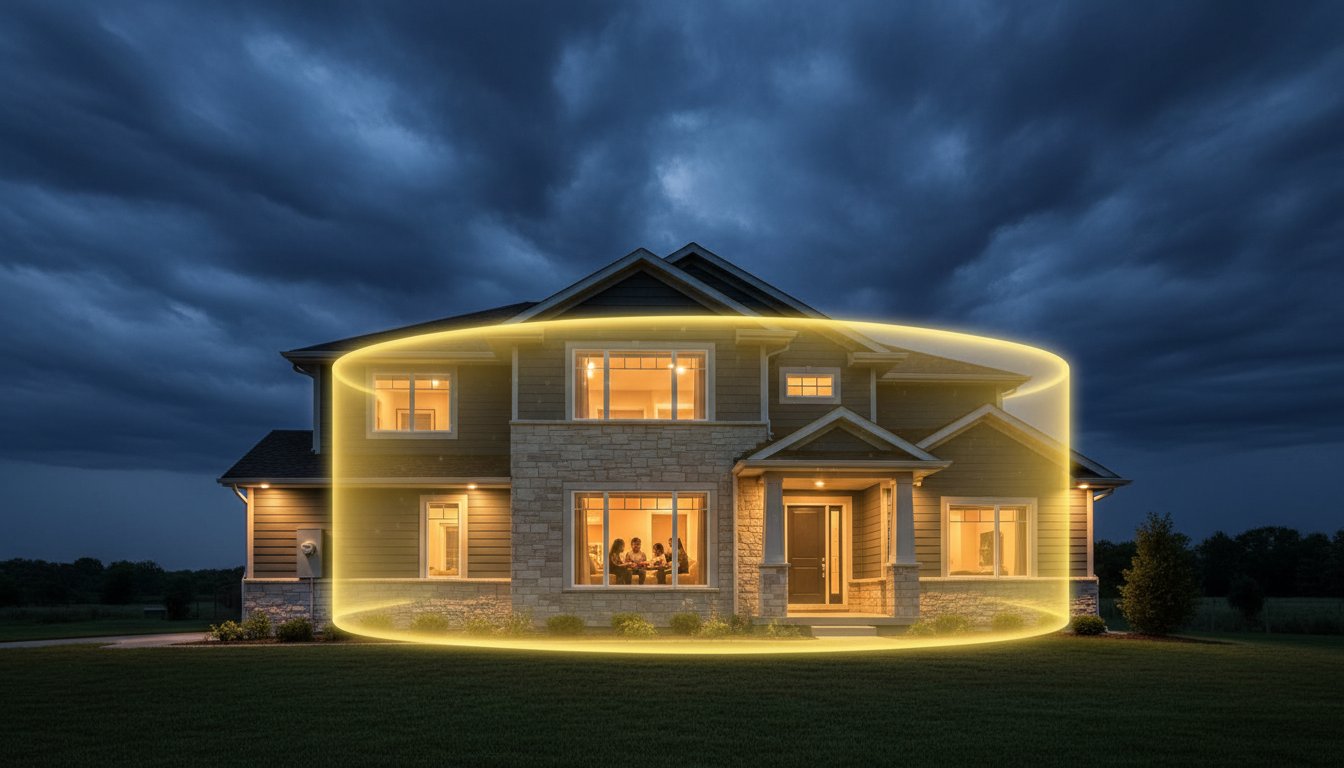
Did you know the average U.S. home now contains over $15,000 worth of sensitive electronics that are completely vulnerable to a single power spike? It's terrifying to watch a heavy Illinois summer storm roll in and wonder if your high-end appliances or home office will survive the night. You've probably used those cheap power strips for years, but they simply can't provide the security of a professional whole house surge protector installation. We understand that worry because we've spent 40 years helping neighbors keep their homes safe and their equipment running.
We're here to show you how to safeguard your entire property from unpredictable spikes and secure your expensive investments with the right technology. This guide explains the latest 2026 safety requirements and why 80% of surges actually start from inside your own walls. You'll learn how to choose the right level of protection so you can finally enjoy total peace of mind, no matter what the weather does outside. Let's make sure your home is ready for anything.
Key Takeaways
- Understand how a hardwired gateway guard intercepts high-voltage spikes at the source before they can enter your home's electrical system.
- Discover why modern smart homes and EV charging stations require a professional whole house surge protector installation to protect delicate, expensive microprocessors.
- Learn the critical importance of wire lead length and why expert installation is necessary to ensure the fastest possible reactive speed during a surge.
- Identify the differences between Type 1 and Type 2 surge protective devices to select the ideal kA rating for your specific property.
- Find out how partnering with a seasoned local professional provides the long-term reliability and peace of mind your family deserves.
What is Whole House Surge Protection?
Think of your home's electrical system as a castle. In this scenario, a whole house surge protective device (SPD) acts as the primary gateway guard. While many homeowners rely on simple power strips, a professional whole house surge protector installation involves hardwiring a heavy-duty unit directly into your main breaker box. This strategic placement allows the device to intercept dangerous voltage spikes at the very moment they enter your property. By stopping the surge at the source, you protect every single outlet and hardwired appliance in the building. This includes expensive systems like your HVAC units, smart refrigerators, and water heaters that power strips simply cannot reach.
So, What is a Surge Protector? In technical terms, an SPD is a specialized device that detects excess voltage and instantly redirects it to the ground wire before it can reach your internal circuits. We install these robust units so you can sleep soundly during the worst Midwest storms. Unlike the limited protection of a plastic strip, these professional devices use a "clamping" mechanism. When the voltage hits a dangerous level, the SPD creates a path of least resistance to the ground. It's a high-stakes technical job that ensures your home's infrastructure remains stable for decades.
Whole House Units vs. Point-of-Use Power Strips
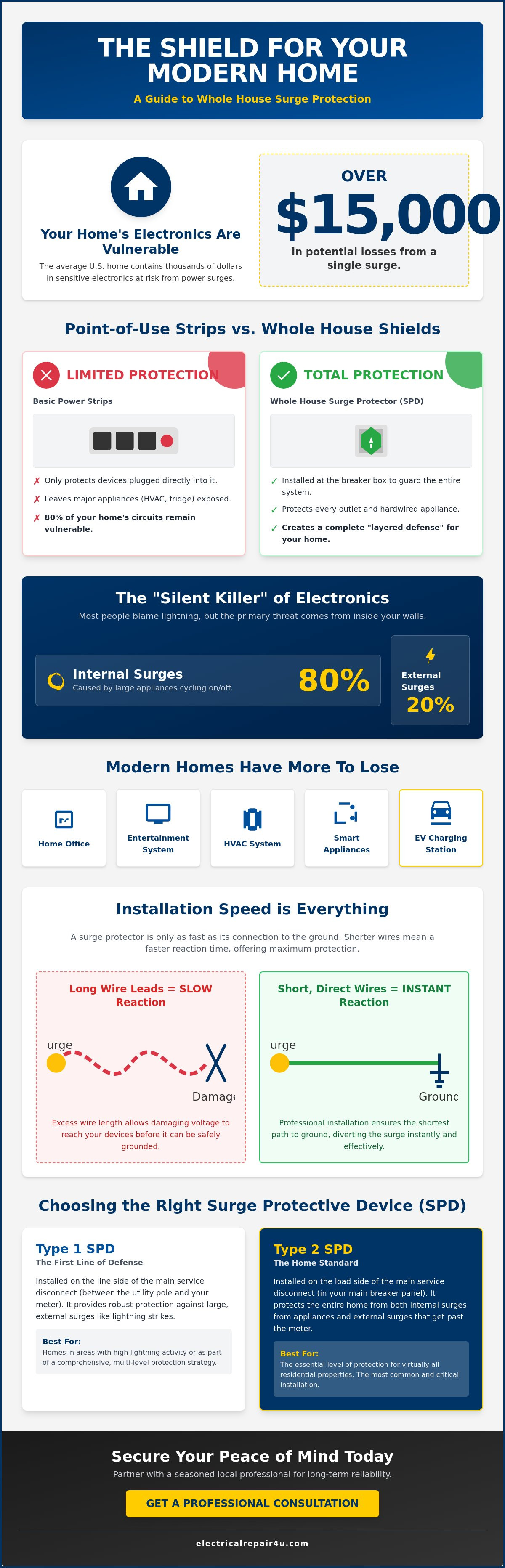
Many people assume a $20 power strip is enough to save their gear. It's a common mistake. Power strips only protect the specific devices plugged directly into them. They are "point-of-use" tools, not a complete solution. Electrical safety experts recommend a "layered defense" strategy instead. This means combining a whole house surge protector installation with individual strips for your most sensitive gear. Relying solely on strips leaves roughly 80% of your home's electrical infrastructure vulnerable to damage. We provide these comprehensive solutions because we want your home to have total coverage, not just a few protected outlets.
The Anatomy of a Power Surge
A power surge is a sudden, intense burst of electricity that lasts only nanoseconds. Even though they happen in the blink of an eye, they can cause permanent "electronic rust" inside your devices. This term refers to the cumulative degradation of microprocessors over time. Each small spike wears down the components until they eventually fail. When a spike hits, the SPD uses the grounding wire to safely dissipate that excess energy into the earth. These spikes come from various sources. While lightning strikes are the most famous cause, most surges actually stem from utility grid switching or downed power lines in the local area. We've seen it all in our 40 years of experience, and we know how to keep that energy away from your electronics.
Why Your Illinois Home Needs Protection in 2026
Living in Illinois, specifically around DuPage County, means dealing with unpredictable weather. While we appreciate the rain, the severe thunderstorms that roll through our area bring a high frequency of lightning strikes. However, it's not just the big storms you should worry about. In 2026, our homes are packed with more delicate technology than ever before. From smart thermostats to high-end kitchen appliances, modern devices rely on tiny microprocessors. These components can fail if the voltage fluctuates even slightly. A professional whole house surge protector installation ensures these expensive investments stay safe from the grid's instability.
For our neighbors in Naperville and Aurora, the shift toward electric vehicles has added a new layer of vulnerability. If you've invested in a home charging station, you've essentially added a high-value, high-draw appliance to your garage. A surge hitting your EV charger doesn't just damage the station; it can potentially affect the vehicle itself. We often recommend upgrading your breaker box alongside surge protection to handle these modern power demands safely. It's a proactive step that protects your car and your home simultaneously.
You don't have to take our word for it. Industry leaders like UL Solutions on whole-house suppressors highlight that these devices are essential for maintaining the longevity of home electronics. They emphasize that while power strips have their place, they can't match the comprehensive shield provided by a system integrated into your main panel. We're here to help you make sense of these technical requirements with ease.
Internal vs. External Surges
Most people think of lightning as the primary threat, but external events are actually quite rare. The real "silent killer" of electronics is the internal surge. These happen dozens of times a day when large motors, like those in your air conditioner or refrigerator, cycle on and off. HVAC experts such as Around the Clock Heating and Air Conditioning point out that these small spikes send ripples through your wiring that slowly degrade components over time. A whole-house protector manages both types. It blocks the catastrophic external hits and absorbs the daily internal spikes. This dual action effectively extends the lifespan of every device in your home.
Insurance and Warranty Benefits
Beyond physical safety, there's a strong financial case for this upgrade. Many insurance providers now offer premium discounts for homes that feature a whole house surge protector installation. This is because it significantly reduces the risk of fire and equipment loss. Additionally, high-quality SPD manufacturers often include "downstream equipment warranties." If their device fails to stop a surge, they'll pay to replace your damaged tech. These warranties almost always require proof of professional installation by a licensed electrician to remain valid. We provide the documentation and quality workmanship needed to secure that peace of mind for your family.
The Professional Installation Process Explained
While DIY videos on the internet make it look like a simple thirty minute project, a whole house surge protector installation is a high-stakes technical task. Opening your main breaker box exposes you to live bus bars that carry enough current to cause a fatal arc flash. We've spent forty years mastering the nuances of these panels, and we know that safety is never something to gamble with. Our licensed team handles the dangerous work so you can stay focused on your family and your business. We don't just "hook it up"; we calibrate the system to ensure it integrates perfectly with your specific brand of electrical panel.
One critical detail many amateurs miss is the importance of lead length. A power surge travels at incredible speeds. If the wires connecting your surge protector to the breaker are too long or have sharp bends, the "inductance" in the wire can actually delay the device's reaction time. This tiny delay is often the difference between a saved computer and a fried motherboard. We keep these leads as short and straight as possible to ensure maximum reactive speed. Once the unit is in place, we perform a series of tests to verify the indicator lights. These lights are your visual confirmation that the protection is active and your home is secure.
Mounting and Wiring to the Main Breaker
The process begins by installing a dedicated double-pole breaker specifically for the surge protective device. This setup ensures that the SPD has a direct, prioritized connection to both "legs" of your home's power supply. We mount the device as close to the main lugs as possible to minimize the distance the surge has to travel before being intercepted. Our technicians also conduct a rigorous verification of your neutral and ground connections. If these aren't perfectly tight, you risk a "floating" surge that can bypass your defenses and head straight for your outlets.
Code Compliance and Permits in DuPage County
Working in local communities like Elgin and Oak Brook requires a deep understanding of specific municipal requirements. We ensure every whole house surge protector installation meets the latest National Electrical Code (NEC) standards, which are strictly enforced throughout DuPage County. These regulations aren't just red tape; they're designed to prevent electrical fires and ensure your insurance remains valid. When we finish a job, you receive an official invoice and documentation for your home maintenance records. This validation is essential if you ever need to file a warranty claim with the device manufacturer or show proof of professional upgrades to a future home buyer.
Choosing the Right Surge Protector for Your Property
Selecting the right hardware is just as critical as the quality of the workmanship. We've seen many homeowners get lost in the sea of technical specifications, but choosing the right unit doesn't have to be overwhelming. The most important distinction to understand is between Type 1 and Type 2 devices. A Type 1 surge protective device (SPD) is typically installed at the meter base, acting as a shield against massive external spikes like direct lightning hits. For most residential whole house surge protector installation projects, we focus on Type 2 devices. These are installed at the main breaker box and provide comprehensive protection for your branch circuits, shielding everything from your kitchen appliances to your home office gear.
When you're comparing units, you'll see a kA rating, which stands for kilo-amperes. This number represents the maximum surge current the device can handle in a single event. While industrial sites might need 200kA or more, the "sweet spot" for most homes in Warrenville is between 50kA and 80kA. Going higher often adds unnecessary cost without providing additional benefit for a standard residential electrical load. Another vital number is the Voltage Protection Rating (VPR). This is counterintuitive because lower numbers actually mean better protection. A lower VPR means the device "clamps" the surge at a lower voltage, preventing more of that dangerous energy from ever reaching your electronics.
Don't forget to check the NEMA rating of the enclosure. If your breaker box is located in a finished garage, a NEMA 1 enclosure is usually sufficient. However, if your panel is in a damp basement or located outdoors, you'll need a NEMA 4 rating to protect the internal components from moisture and dust. We're here to help you navigate these choices so you can schedule your professional surge protector installation with total confidence.
Key Specifications to Compare
Speed is everything when it comes to electrical safety. You want a device with a response time of less than a nanosecond. If the device is too slow, the surge will pass through before the "gate" can close. Additionally, look for clear end-of-life indicators. High-quality units feature visual LED status lights that stay green while protection is active. Some premium models even include audible alarms that beep if the device has sacrificed itself to save your home, ensuring you never go unprotected without knowing it.
Layering Your Defense
We always recommend a layered approach for the best results. A Type 2 panel protector is your primary firewall, but sensitive data lines need their own specialized guards. Surges can enter your home through coax cables or phone lines, potentially frying your internet modem or home security system. By combining a whole house surge protector installation with high-quality point-of-use strips for your computers and entertainment centers, you create a comprehensive safety net that protects your entire family's digital life.
Secure Peace of Mind with Electrical Repair 4U
Choosing the right team for your whole house surge protector installation is just as important as the hardware itself. At Electrical Repair 4U, we’ve spent forty years establishing ourselves as a stable pillar of the Western Suburbs community. We’re here to provide professional solutions tailored to your needs so you never have to worry about the next storm. Our seasoned experts treat your home’s safety as their top priority, ensuring every connection is secure and every component meets the highest standards of reliability. We’re not just contractors; we’re your trusted partners in home safety.
We believe that security shouldn't come with a confusing price tag. That’s why we offer affordable, transparent pricing with no hidden fees for your surge protection upgrades. As licensed and insured professionals, we understand the specific challenges of Illinois electrical systems, from our humid summers to our freezing winters. We project a can-do attitude and take pride in our craft, ensuring that your home is powered safely and your business is empowered for the long term. Our goal is simple: we provide the technical expertise so you can enjoy total peace of mind.
Our Comprehensive Electrical Safety Inspection
We don't just show up, install a device, and leave. Every whole house surge protector installation we perform includes a complimentary check of your entire breaker box. Our seasoned veterans have seen it all, and they know how to identify hidden hazards that a standard inspection might miss. We look for loose wiring, signs of overheating, or outdated breakers that could fail when you need them most. By catching these issues early, we prevent future emergencies and give you a clear picture of your home’s electrical health. We provide tailored recommendations based on your property’s age and your family’s technology usage, ensuring your protection is a perfect fit.
Ready to Switch to Quality?
If you’re living in Naperville, Aurora, or the surrounding Western Suburbs, it’s time to secure your investments. When you schedule a service call with us, you can expect a clean, efficient, and professional experience from start to finish. We respect your time and your property, arriving on schedule and leaving your workspace exactly as we found it. It’s time to stop worrying about unpredictable power spikes and start feeling confident in your home’s defenses. Switch to Quality. Switch to Us.
Protect Your Home's Future Today
Your property is filled with more sensitive technology than ever before, which makes it more vulnerable to the unpredictable power spikes common in Illinois. By choosing a professional whole house surge protector installation, you aren't just buying a device; you're building a permanent firewall for your electrical system. This robust defense stops catastrophic external hits while quietly absorbing the small internal surges that wear down your expensive appliances every day. It's the most effective way to ensure your home remains stable for decades to come.
We've spent over 40 years serving our neighbors with reliable electrical work that puts safety first. As a licensed and insured team, we stand behind our high-quality workmanship with a Peace of Mind Guarantee. Don't wait for the next heavy storm to test your luck. It's time to secure your family's comfort and your financial investments with a partner you can trust. We're ready to help you make the right choice for your property.
Secure your home and electronics—Get a professional surge protection quote now!
We look forward to helping you switch to a safer, more reliable home today.
Frequently Asked Questions
Do I really need a whole house surge protector if I have power strips?
Yes, because power strips are only designed to protect the specific devices plugged directly into them. They can't shield your hardwired appliances like the HVAC system, water heater, or oven. A professional whole house surge protector installation creates a primary firewall at your breaker box. This ensures that every circuit in your home is protected from external spikes before they ever reach your outlets or expensive electronics.
How long does a whole house surge protector installation take?
Most installations are completed in approximately two hours. This timeframe includes the time we need to safely shut down the power, mount the device, and verify all grounding connections. We work efficiently to minimize the disruption to your daily routine. Because we have forty years of experience, we've refined our process to be quick, clean, and professional for every homeowner we serve.
How much does it cost to install a surge protector in a main panel?
The total investment depends on the specific Type 1 or Type 2 device you select and the complexity of your current breaker box. Higher-rated units with superior clamping voltages or audible alarms may influence the final cost. We provide clear, honest estimates after a quick inspection of your electrical system. This ensures you get a solution that fits your home's technology needs without any hidden fees.
Does a whole house surge protector protect against direct lightning strikes?
No device can completely stop the massive energy of a direct lightning hit, but these protectors are your best defense against the most common threats. Most lightning damage occurs when a strike hits nearby and travels through utility lines. An SPD intercepts this high-voltage surge and diverts it safely to the ground. This significantly reduces the risk of an electrical fire or the total destruction of your home's wiring.
How often do I need to replace my whole house surge protector?
You should generally replace your unit every five to ten years. These devices contain components that degrade slightly every time they absorb a voltage spike. If your area experiences frequent Illinois summer storms, the device may reach its end-of-life sooner. We recommend checking the visual indicator lights on your unit once a month. If the green light is out, it's time to call us for a replacement.
Will a surge protector lower my home insurance premiums?
Many insurance providers offer discounts or credits for homes with professionally installed surge protection. They recognize that these devices lower the likelihood of expensive claims related to fire or fried appliances. It's a good idea to contact your insurance agent once the job is done. We'll provide the professional documentation and invoice you need to prove the work was handled by licensed experts to help you secure those savings.
Can I install a whole house surge protector myself?
We strongly recommend against DIY installation because of the high risk of fatal electric shock or arc flashes. A whole house surge protector installation requires opening a live breaker panel where high-voltage components are exposed. Additionally, improper lead lengths or poor grounding can make the device completely ineffective. Our licensed team has the specialized training to handle these risks safely while ensuring your equipment warranties remain valid.
What happens if the surge protector is "used up" by a large spike?
The device is designed to sacrifice its own internal components to save your home's electronics. When a massive surge hits, the protector diverts the energy and then permanently disconnects itself to prevent the spike from continuing into your circuits. You'll know the device has done its job when the LED status lights change color or turn off. When this happens, you've successfully avoided thousands of dollars in damage, and it's time to install a new unit.


