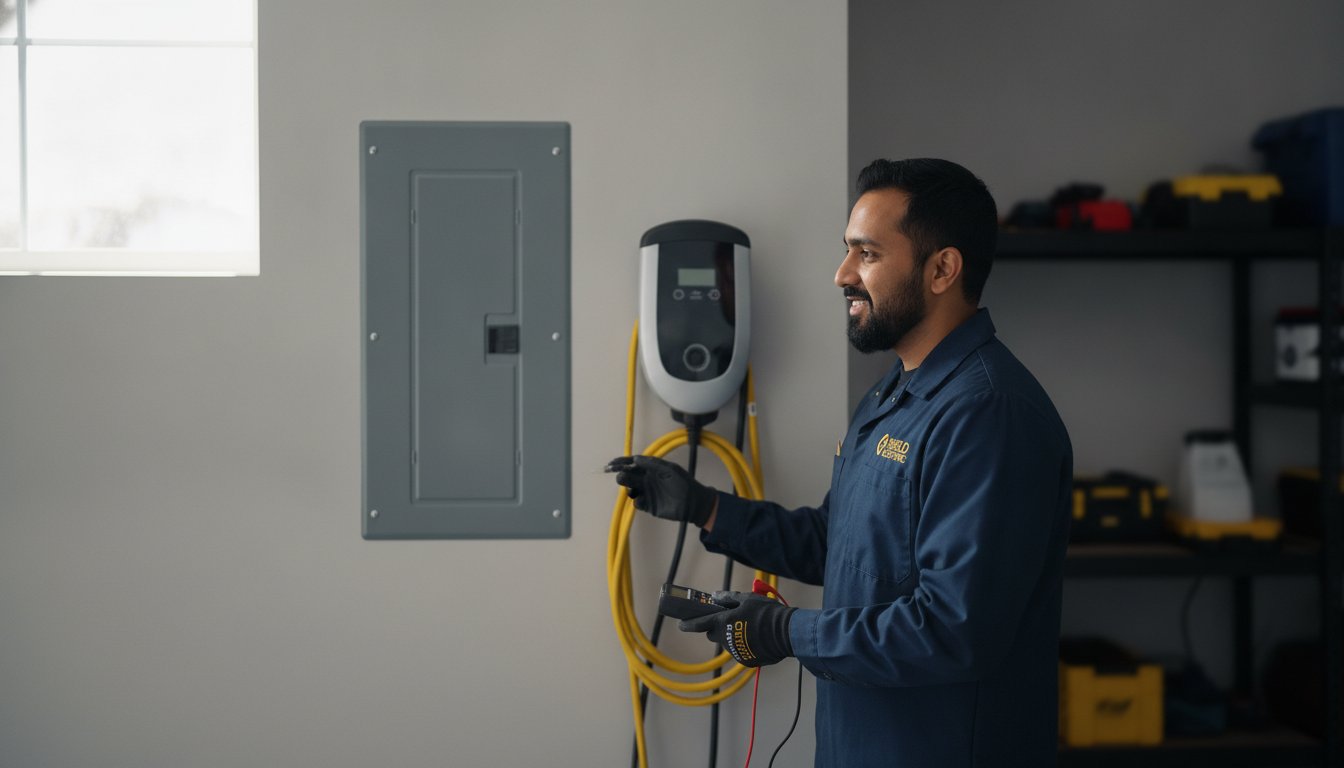
Your garage is no longer just a place to park the car; it's the high-tech engine room of your home. Whether you're setting up a professional-grade workshop or finally installing a fast EV charger, your existing electrical system might be screaming for help. You've likely felt that spike of anxiety when a breaker trips or noticed the lights dimming every time a heavy tool kicks on. It's a clear sign that your main panel is struggling to keep up with modern life, and ignoring those signs can lead to serious safety risks.
We understand that the thought of adding a subpanel for garage Naperville installations can feel overwhelming, especially with strict local codes and the fear of making a dangerous DIY mistake. You deserve a power supply that is as reliable as it is safe. This guide simplifies the entire process, from navigating the City of Naperville's Civic Access portal to meeting the 2017 National Electric Code standards. We'll walk you through capacity planning and permit requirements so you can upgrade your home with total confidence. You'll learn how to secure a code-compliant power source that handles your high-draw equipment and boosts your property value for years to come.
Key Takeaways
- Protect your home from fire hazards by moving away from overloaded outlets and toward a dedicated secondary power hub designed for high-draw equipment.
- Master the technical side of sizing by learning how to calculate the total amperage your workshop or EV charger requires before making any hardware purchases.
- Streamline your project by identifying the exact permit steps and NEC standards necessary for adding a subpanel for garage Naperville installations.
- Identify the specific wiring and trenching requirements that differ between attached and detached garage setups to avoid unexpected installation delays.
- Gain peace of mind by understanding how professional oversight ensures your new electrical infrastructure is a safe, code-compliant asset that boosts home value.
Why Adding a Subpanel for Your Garage is a Smart Move
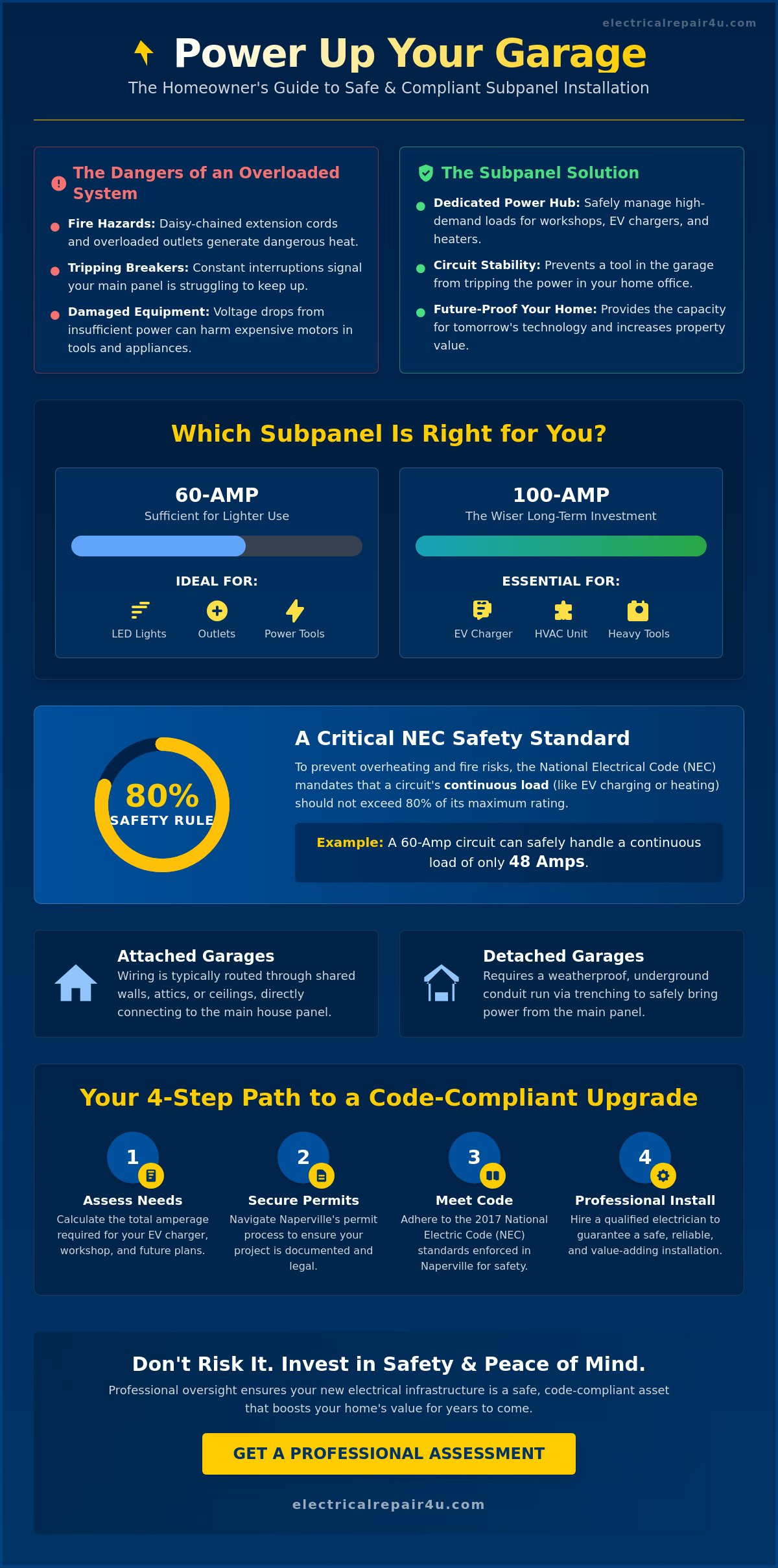
Think of your garage as an extension of your home's capability. Adding a subpanel for garage Naperville projects isn't just about adding more outlets; it's about creating a dedicated secondary distribution board that manages high-demand loads safely. Many homeowners fall into the "Extension Cord Trap," where they daisy-chain cords to run heaters or power tools. This is a significant fire hazard. An overloaded circuit generates heat, which can melt insulation long before a breaker ever trips. By installing a subpanel, you bring specialized power directly to your equipment, eliminating the need for dangerous workarounds and reducing electrical anxiety.
This upgrade serves as the essential backbone for modern technology. If you're considering an EV charger installation Warrenville or Naperville residents often choose, a subpanel ensures your car charges at full speed without flickering the lights in your kitchen. It keeps your home's main circuits organized. It prevents a table saw in the garage from killing the power to your home office. You gain a level of control and stability that standard home wiring simply wasn't designed to handle.
The Shift to High-Draw Garage Demands
Modern garages are no longer just storage sheds. They're workshops and fueling stations. A standard Level 2 EV charger typically requires a dedicated 40 to 60 amp circuit to provide a meaningful charge overnight. If you're turning your space into a year-round retreat, adding a mini-split system or an electric heater adds another significant draw. Hobbyists using woodworking tools like dust collectors and high-torque table saws need the stable, consistent voltage that only a dedicated subpanel can provide. Without it, you risk damaging expensive motors due to voltage drops. We focus on providing the capacity you need today while leaving room for tomorrow's upgrades.
A complete garage modernization often involves more than just electrical work; to ensure your physical entryways are as reliable as your new power supply, you can discover Liberty Door Repair for professional door installation and repair services.
Increasing Your Naperville Property Value
A garage that is "EV ready" or "workshop ready" is a massive selling point for Illinois homebuyers. When you invest in adding a subpanel for garage Naperville homes, you're building equity. However, the value only holds if the work is permitted and code-compliant. During a home inspection, unpermitted electrical work is a major red flag that can stall a sale or force expensive repairs. This proactive approach is a core part of a smart residential electrical repair Warrenville and Naperville homeowners use to ensure their infrastructure remains a safe, documented asset. It shows you've cared for the home with professional standards, giving future owners the same peace of mind you enjoy.
Technical Requirements: Sizing Your Subpanel for Capacity
Sizing your electrical system isn't a guessing game. It's a precise calculation that ensures your home remains safe while providing the power you need. When you are considering adding a subpanel for garage Naperville installations, the first step is a thorough load assessment. You must determine if your main service panel, typically rated for 100 or 200 amps, has the capacity to support an additional draw. A subpanel doesn't create new power; it merely redistributes what your utility service already provides to the property.
A vital safety standard to remember is the 80% rule. To prevent overheating and potential fire hazards, you should never plan to run a circuit at more than 80% of its maximum capacity for continuous loads, such as an EV charger or a garage heater. For example, a 60-amp subpanel should ideally only handle a continuous load of 48 amps. This buffer is a core requirement of the National Electrical Code (NEC), specifically the 2017 edition currently enforced in Naperville, which ensures your wires don't degrade over time from excessive heat.
60-Amp vs. 100-Amp Subpanels
Choosing between a 60-amp and 100-amp subpanel depends on your long-term goals. A 60-amp panel is usually sufficient for a few LED lights, a garage door opener, and standard power tools. However, if you plan to charge an electric vehicle while running a table saw or a dedicated HVAC unit, a 100-amp panel is a much wiser investment. You also need to verify that your main panel has physical space for a double-pole breaker. If your main board is already crowded, you might need professional breaker box maintenance to reorganize or upgrade your existing service before tapping into the system.
The Importance of Proper Wire Sizing
The wire connecting your main panel to the subpanel is the most critical component of the installation. For Naperville's variable climate, we typically use THHN or THWN wire inside a protective conduit for durability. Copper is the gold standard for conductivity and ease of installation, though aluminum is a cost-effective alternative for longer runs if the gauge is properly increased. You must also account for voltage drop. If your garage is far from the house, the electrical resistance in the wire can cause the voltage to dip, which potentially damages sensitive electronics. If you need help determining the right fit for your home, our team can provide a technical electrical evaluation to ensure your project starts on solid ground.
Attached vs. Detached Garages: Different Rules Apply
The physical location of your garage dictates the complexity and the specific safety rules of your project. If your garage shares a wall with your home, the installation is usually straightforward. We can often run the feeder cable through shared attic spaces or crawlspaces. This keeps labor costs manageable and avoids any disruption to your landscaping. However, for those with a separate structure, adding a subpanel for garage Naperville installations requires a more intensive approach. You aren't just adding a circuit; you're building a dedicated power infrastructure for a standalone building.
One of the most critical safety rules involves the "four-wire" requirement. In your main panel, ground and neutral wires often connect to the same bus bar. In a subpanel, you must keep them separate. You need two "hot" wires, one neutral, and one dedicated ground wire. This separation ensures that the ground wire only carries current during a fault, which prevents your metal tool casings or appliances from becoming accidentally energized. It's a simple distinction that makes a massive difference in preventing electrical shocks.
Trenching and Conduit for Detached Structures
Digging in Naperville means contending with our notoriously thick, clay-heavy soil. It's demanding work that requires the right equipment. For detached garages, you must run your feeder wires through a protective conduit buried at a specific depth. If you use PVC conduit, the 2017 National Electric Code typically requires a depth of 18 inches. Opting for Rigid Metal Conduit (RMC) allows for a shallower trench, but the material costs are higher. We also ensure every exterior fitting is weatherproof. This protects your connections from the brutal freeze-thaw cycles of Illinois winters and heavy spring rains.
Grounding and Bonding Essentials
There's a lot of dangerous misinformation on internet forums regarding grounding detached structures. Some claim you don't need a local ground rod if you've run a ground wire from the house. This is incorrect and violates safety codes. A detached garage must have its own grounding electrode, usually a copper rod driven eight feet into the earth. This rod provides a safe path for high-voltage surges, such as those from lightning strikes. Proper bonding connects all metal components of the electrical system together. This prevents "stray voltage," a common issue where improper grounding causes a tingling sensation or minor shock when you touch a metal workbench or door frame. We take these steps to remove any technical anxiety, ensuring your workspace is a fortress of safety.
Navigating Naperville Permits and NEC Code Compliance
The paperwork phase of an electrical project often causes more stress for homeowners than the actual wiring. However, the City of Naperville Building Department serves a vital role in keeping our neighborhoods safe. When you are adding a subpanel for garage Naperville installations, you must secure an electrical permit before the first wire is pulled. Naperville currently adheres to the 2017 National Electric Code (NFPA 70). While some online forums might suggest that permits are optional for small projects, local regulations are very clear. Any addition to your home's permanent wiring requires official oversight and a professional inspection.
Modern safety codes also demand specific protection for your garage circuits. Every outlet in a garage must have GFCI (Ground Fault Circuit Interrupter) protection to prevent shocks in damp environments. Additionally, the inspector will check for proper AFCI (Arc Fault Circuit Interrupter) protection where required. These devices detect dangerous electrical arcs that could start a fire behind your walls. We ensure every component meets these rigorous standards so you don't have to worry about a failed inspection or, worse, a safety hazard in your home.
Applying for an Electrical Permit in Naperville
The application process is handled through the City of Naperville's Civic Access portal. You'll need to provide specific documentation, including a detailed circuit diagram and accurate load calculations. Skipping this step is a major risk. If an electrical fire occurs and the work was unpermitted, your insurance provider could legally deny your claim. We take the burden of this paperwork off your shoulders. We handle the technical filings and coordinate with the city inspectors to ensure your project is documented as a safe, legal improvement to your property.
Common Code Violations to Avoid
Even well-intentioned DIY projects often fall short during the final inspection. One of the most frequent mistakes is failing to maintain proper clearance. The code requires a clear working space in front of the panel that is at least 30 inches wide and 36 inches deep. This ensures an electrician can safely access the equipment in an emergency. Another critical error is mixing the ground and neutral wires. As we discussed in the previous section, these must remain separate in a subpanel to prevent "objectionable current" on the grounding system. Using the wrong breaker types for high-draw tools or EV chargers is another red flag that inspectors watch for. If you want to ensure your installation passes the first time, schedule a professional code-compliance consultation with our licensed team today.
Why Professional Installation is Your Safest Investment
Choosing the right partner for your home's infrastructure is the most important decision you'll make during this project. At Electrical Repair 4U, we bring over 40 years of local Naperville experience to every job site. We've seen how the city's electrical demands have evolved, and we know exactly how to build systems that last. When you're adding a subpanel for garage Naperville installations, our expertise acts as a shield against "electrical anxiety." You don't have to wonder if a connection is tight or if a breaker is sized correctly. We provide the emotional reassurance that your home and family are protected by work that meets the highest professional standards.
Efficiency is another hallmark of our service. What might take a dedicated DIYer several stressful weekends to research and execute, our licensed team can often complete in a single afternoon. We arrive with the right tools, the correct conduit, and a deep understanding of local soil conditions. This speed doesn't come at the expense of safety. In fact, we look at the big picture of your home's health. We often recommend integrating your new garage power supply with a whole house surge protector installation. This protects your expensive EV chargers and workshop tools from the unpredictable power spikes common during Illinois summer storms.
The Risks of DIY Electrical Work
While "YouTube University" is great for minor home repairs, high-voltage subpanel work is a different stakes game entirely. The hidden danger in many self-installed panels is the "loose connection." Even a slightly under-torqued wire can cause micro-arcing. This creates intense heat that can smolder behind your garage walls for weeks before a fire breaks out. We eliminate these risks through rigorous testing and calibrated tools. Our commitment to the community means we offer honest, neighborly pricing. We believe every Naperville family deserves a safe home without the stress of cut corners or inflated costs.
Starting Your Garage Upgrade Today
Ready to unlock the full potential of your space? The process starts with a professional load assessment. Our licensed electricians will visit your home, evaluate your main panel's health, and help you determine the perfect amperage for your future needs. We walk you through every step of the installation, from the initial trenching to the final city inspection. You'll receive a clear plan and a code-compliant result that adds real value to your property. Take the first step toward a more powerful, reliable home. Schedule your garage subpanel consultation with Electrical Repair 4U!
Power Your Garage with Confidence
Upgrading your home's electrical infrastructure is a transformative step toward a more functional and valuable property. By moving away from the dangers of overloaded circuits and embracing a dedicated power hub, you've ensured that your workshop or EV charger runs at peak performance. We've explored the technical demands of sizing, the unique grounding needs of detached structures, and the importance of navigating the local permit process. Now, you have the knowledge to move forward without the stress of electrical anxiety or the risk of code violations.
When you are ready to begin adding a subpanel for garage Naperville projects, partnering with a seasoned team makes all the difference. We bring over 40 years of local electrical expertise to your doorstep. As specialists in EV charger and subpanel upgrades, we ensure every connection is tight and every circuit is safe. We are fully licensed and insured in Naperville and Warrenville, providing the neighborly reliability you deserve for such a high-stakes project. Get a Professional Quote for Your Naperville Garage Subpanel and let us handle the technical details while you enjoy your newly powered space. Your dream garage is closer than you think.
Frequently Asked Questions
Do I really need a permit to add a subpanel to my garage in Naperville?
Yes, the City of Naperville requires an electrical permit for adding a subpanel for garage Naperville projects. This official oversight ensures that your installation complies with the 2017 National Electric Code (NEC). Obtaining a permit is a critical step for your safety and protects your home's insurance eligibility and future resale value.
What is the average cost to add a 60-amp subpanel to a garage?
The total investment depends on several variables, including the distance from your main panel and whether your garage is attached or detached. Costs are influenced by the price of copper wire, the need for trenching, and the complexity of your current electrical board. We provide transparent, detailed load assessments to help you understand the specific requirements for your home.
Can I run an EV charger off a 60-amp garage subpanel?
You can run a Level 2 EV charger on a 60-amp subpanel, but it leaves very little room for other high-draw devices. A typical charger requires a 40 or 50 amp breaker. If you plan to run a garage heater or large shop tools at the same time, a 100-amp subpanel is a much more reliable choice to avoid frequent breaker trips.
What gauge wire do I need for a 100-amp subpanel 50 feet away?
For a 100-amp subpanel at that distance, you'll typically use #2 AWG copper wire or #1/0 aluminum wire. The specific insulation type, such as THWN for conduit, and voltage drop calculations are vital for a safe installation. It's best to have a licensed professional verify these technical specs to ensure your equipment operates efficiently without overheating the lines.
Does a detached garage need its own grounding rod in Illinois?
Yes, the National Electric Code requires a detached structure to have its own grounding electrode system. This usually involves driving a dedicated ground rod at least eight feet into the earth. This local ground provides an essential path for electricity during a surge, which protects your garage equipment and keeps the main house safe from stray voltage.
How much space do I need to leave around my garage electrical panel?
You must maintain a clear working space that is at least 30 inches wide and 36 inches deep in front of the panel. This area must extend from the floor to a height of six and a half feet. Keeping this space free of clutter ensures that you or an electrician can safely reach the breakers during an emergency or routine maintenance.
Can I install a subpanel myself if I follow the NEC code?
While some homeowners attempt DIY electrical work, the high voltage and strict Naperville inspection standards make professional installation the safest investment. Minor errors in torque or grounding can lead to arcing and fire hazards. We handle the technical heavy lifting and the city's Civic Access portal filings so you don't have to worry about failed inspections.
What happens if I add a subpanel without an inspection?
Adding a subpanel for garage Naperville homes without an inspection creates significant legal and safety liabilities. If an electrical fire occurs, your insurance provider can legally deny your claim due to unpermitted work. Furthermore, uncertified electrical systems are major red flags during home inspections that can force you to pay for expensive tear-outs and repairs before a sale.


