What if the most critical piece of equipment in your facility is actually your greatest liability? For business owners across Elgin, Aurora, and Naperville, an outdated electrical system isn't just an inconvenience; it's a bottleneck that prevents growth and invites unnecessary risk. Investing in a professional commercial electrical panel upgrade ensures your infrastructure can keep pace with modern machinery and the 2025 Illinois statewide building codes. Whether you're operating a high-traffic retail space in Bolingbrook or a manufacturing hub in Warrenville, your power distribution needs to be as ambitious as your business goals.
We understand the stress that comes with flickering lights, unexpected downtime, or the looming fear of a fire risk in a heritage building. It's exhausting to manage rising insurance premiums and confusing local permit requirements when you simply want your facility to work. You've built something great, and you shouldn't have to worry about the power cutting out during peak production. We're here to remove that anxiety by positioning ourselves as your collaborative partners in modernizing your system for long-term stability.
This guide explains the clear signs your facility needs more power, the latest Illinois code updates, and the specific steps involved in a successful installation. You'll learn how a strategic upgrade protects your investment, ensures compliance, and prepares your business for the future. Let's look at how to keep your operations running safely and efficiently for years to come.
Key Takeaways
- Understand the critical differences between residential and commercial systems to ensure your infrastructure can handle high-demand industrial machinery.
- Learn how to evaluate your current capacity and determine if 400-amp or 3-phase power is necessary for your business to scale safely.
- Discover how a commercial electrical panel upgrade keeps your facility compliant with the latest 2025 Illinois state codes and local municipal requirements.
- Prepare for a smooth transition with a clear look at the professional installation timeline and how to minimize operational downtime.
- See how modernizing your electrical hub reduces fire risks and helps you manage rising insurance premiums through improved system stability.
What is a Commercial Electrical Panel Upgrade?
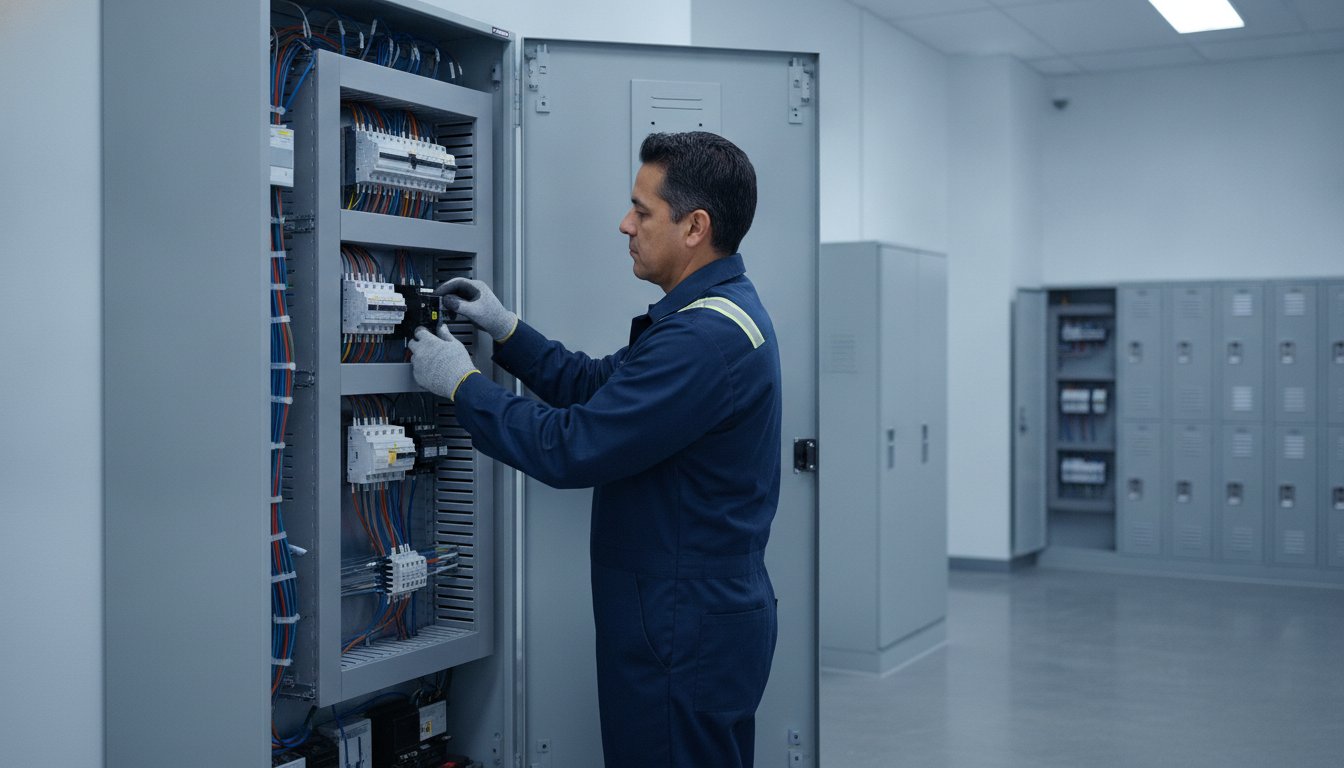
A commercial electrical panel upgrade is the process of replacing or expanding your facility’s primary power distribution hub to accommodate modern electrical loads. A commercial panel upgrade is the essential bridge between utility power and business operations. It’s the critical infrastructure that takes high-voltage energy from the grid and safely divides it among your various circuits, ensuring your machinery, lighting, and computers all have the steady flow they require.
Commercial systems differ significantly from residential breaker boxes because they're built for endurance and high-capacity throughput. While a home might run on simple single-phase power, a business often relies on an electrical distribution board designed for 3-phase power. This allows for more efficient energy use by heavy industrial equipment and large-scale lighting systems. At Electrical Repair 4U, we’ve spent over 40 years as a stable pillar in the Warrenville community, helping our neighbors transition from outdated infrastructure to high-performance systems that don't quit when the pressure is on.
Signs Your Business Needs a Panel Expansion
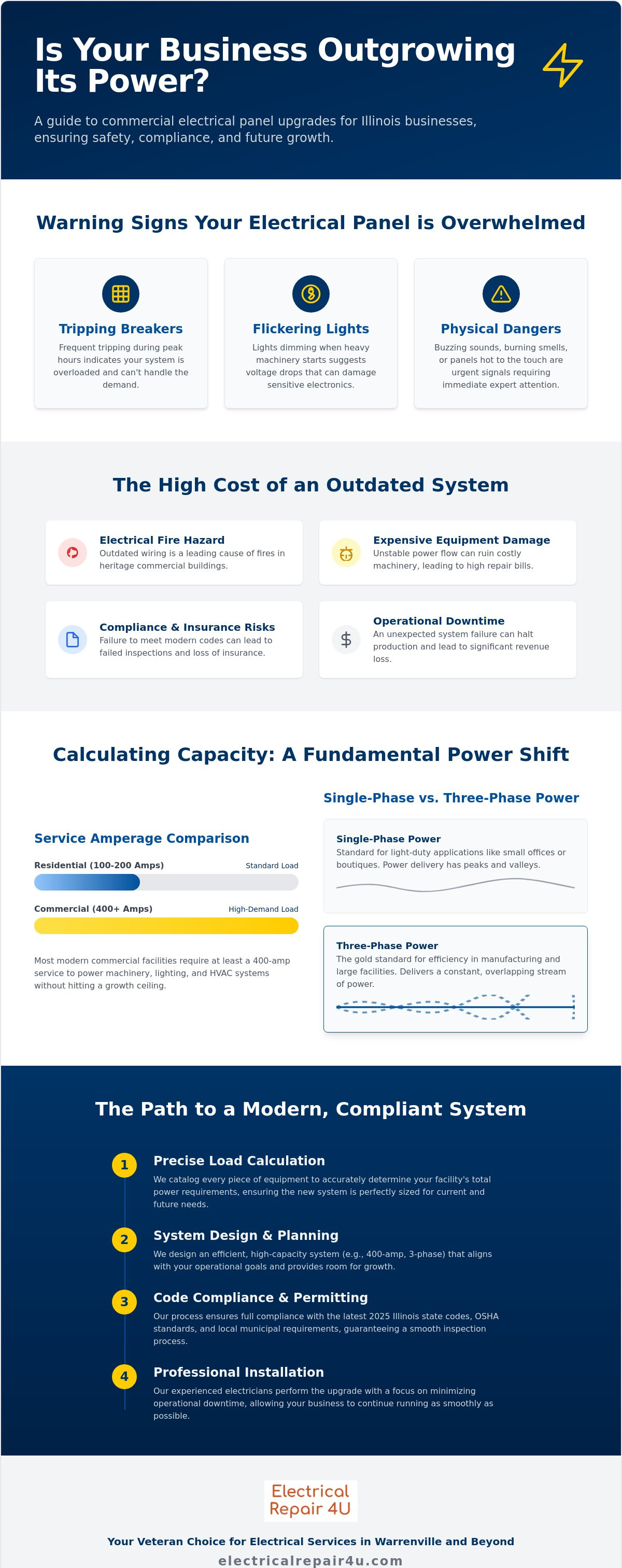
If you notice your circuit breakers tripping during peak operating hours, your system is telling you it's overwhelmed. You might see flickering lights when your heavy machinery or HVAC systems kick in, which indicates a voltage drop that can stress sensitive electronics. Pay close attention to physical warning signs like buzzing sounds, a burning smell, or panels that feel hot to the touch. These aren't just inconveniences; they're urgent distress signals that require immediate professional attention from a licensed expert to prevent a total system failure.
The Risks of Operating on an Outdated Panel
Running a modern business on an aging electrical panel creates a dangerous mismatch between supply and demand. The most severe risk is an electrical fire, especially in heritage commercial structures throughout the Chicago suburbs where wiring may not have been updated in decades. Beyond safety, an unstable power flow can cause expensive equipment damage—a major concern for medical practices that explore Laser Therapy or other high-tech treatments—leading to repair bills that far exceed the cost of maintenance. You also face the risk of non-compliance with modern safety standards and local Illinois codes, which can lead to failed inspections or even the loss of your business insurance coverage. We're here to help you remove that anxiety and secure your facility with a system built for the long haul.
Calculating Capacity: 200 Amp, 400 Amp, and 3-Phase Power
Moving from a residential mindset to a commercial one is a significant shift in scale. While 100 or 200 amps might handle a suburban home's HVAC and kitchen, that capacity barely scratches the surface for a local business. Most modern facilities now require at least a 400-amp service to ensure they don't hit a ceiling as they grow. A commercial electrical panel upgrade isn't just about adding more breakers; it's about expanding the "pipe" through which your energy flows so your equipment never starves for power.
Determining the right size for your facility requires a precise load calculation. This process involves cataloging every piece of equipment, from the coffee maker in the breakroom to the heavy-duty compressors on the shop floor. Adhering to OSHA electrical safety standards is non-negotiable during this phase. These regulations ensure that your distribution equipment is installed with proper clearances and is capable of handling the intended load without overheating or creating a workspace hazard.
Single-Phase vs. Three-Phase Power
A small boutique or a quiet office space in Elgin might thrive on single-phase power, which is standard for light-duty applications. However, for manufacturing hubs or large warehouses in Aurora, three-phase power is the gold standard for efficiency. Three-phase systems deliver power in a constant, overlapping stream that prevents the "valleys" found in single-phase delivery. This consistent flow is vital for motors and heavy machinery. Proper phase-balancing, a skill our team has perfected over 40 years in the field, ensures that no single leg of your system is over-taxed. This prevents the vibration and heat that lead to premature motor failure in commercial HVAC units.
Determining Your Current and Future Load Requirements
Don't just build for your current needs; build for your five-year plan. Are you planning to provide EV charge point installations for your employees? Will your server room require a dedicated cooling system next year? Modern office lighting and high-density workstations also add up quickly. A commercial electrical panel upgrade should act as a foundation for this future growth. We recommend consulting with a licensed electrician to perform a professional load study. This data-driven approach removes the guesswork and ensures your new panel is a stable, long-term asset for your business. Let us help you map out a power plan that keeps your facility running smoothly as you expand.
Code Compliance and Insurance Requirements in Illinois
Compliance isn't just about avoiding a fine; it's about protecting your people and your legacy. When you invest in a commercial electrical panel upgrade, you're aligning your facility with the National Electrical Code (NFPA 70). This document is the definitive benchmark for safe electrical design and installation across the United States. In Illinois, staying current is especially critical as the state moved toward a unified building code on January 1, 2025. However, local municipalities in Naperville, Aurora, and Warrenville still maintain their own specific amendments that can catch an uninformed business owner off guard.
An outdated panel is a massive liability that extends far beyond the utility room. If a fire occurs and an investigation reveals the cause was an obsolete or unpermitted breaker box, your insurance provider may have grounds to deny the claim entirely. This leaves you responsible for 100% of the damages. By securing professional permits and passing official inspections, you create a documented "safety shield" for your business liability. We've spent over 40 years helping local owners navigate these high-stakes requirements, ensuring every wire and breaker is a testament to stability and trust.
Managing Local Building Permits
Unlicensed work is a gamble you can't afford to take. In many Illinois jurisdictions, hiring a licensed professional is a legal mandate for any commercial electrical panel upgrade. This process often involves complex coordination with local utilities like ComEd to manage service drops or lateral line upgrades. Ensuring your commercial electrical services meet the 2026 safety standards is vital. For example, cities like Aurora are updating their building codes for permits issued after January 1, 2026, to reflect the most recent technological advancements in the field. We handle the paperwork and the inspections so you can focus on running your business.
Panel Upgrades and Business Insurance Premiums
Modernizing your electrical system is a proactive way to lower your risk profile and potentially reduce your insurance premiums. Carriers look for "UL Listed" equipment, which signifies that your hardware has passed rigorous safety testing. When we complete an installation, we provide you with the full documentation of professional work to share with your agent. This proof of a modern, stable infrastructure shows that you're a diligent owner who prioritizes safety. It transforms a technical necessity into a strategic business advantage that protects your bottom line for the long haul.
The Commercial Panel Upgrade Process: Step-by-Step
A planned power shutdown is often the biggest hurdle for business owners to clear emotionally. We understand that every hour your facility is dark is an hour of lost productivity. However, a properly executed commercial electrical panel upgrade follows a disciplined rhythm that minimizes disruption and maximizes long-term reliability. For a standard swap in a mid-sized facility, you should typically expect an 8-12 hour window for the main installation. Our goal is to move you from uncertainty to a state of total operational confidence by the time the sun goes down.
Preparation is the key to removing anxiety during this transition. We work with you to identify the best time for the cut-over, whether that's a weekend or an overnight shift, to ensure your servers and security systems are handled with care. This isn't just a mechanical task; it's a collaborative effort to keep your business's heartbeat steady. For businesses managing perishable inventory, this might include arranging temporary cooling; for example, those needing emergency refrigeration rental Kansas City can utilize mobile trailers to protect their stock during the transition. By the time our team arrives on-site, every permit is in place and every component is staged for a seamless execution.
Phase 1: Inspection and Planning
Success starts long before the tools come out. We begin with a comprehensive breaker box maintenance check to map your current circuitry and identify hidden vulnerabilities. During this stage, we look for obsolete or dangerous hardware like Federal Pacific or Zinsco panels, which are notorious for failing to trip and causing fires. Once we've cleared the old data, we finalize a blueprint for your new distribution layout that accounts for the 3-phase power and load requirements we discussed earlier. This proactive planning ensures there are no surprises when the power is cut.
Phase 2: Installation and Cut-Over
This is where our 40 years of experience becomes your greatest asset. We manage the delicate transition from your old service lines to new, high-capacity busbars designed for modern demands. Our team prioritizes proper grounding and bonding, which are the silent guardians of commercial safety. We don't just "plug and play." Every single circuit is meticulously labeled and tested to prevent post-install confusion or overloaded phases. This diligent approach ensures that when your employees return to work, every switch and machine performs exactly as it should.
The final step is the official inspection by local authorities in cities like Warrenville or Naperville. Because we handle the permit process from the start, this is usually a straightforward verification of our high-caliber results. Once the inspector signs off, your facility is officially compliant and ready for the future. If you're ready to secure your facility's heartbeat, schedule your commercial electrical panel upgrade with our master electricians today.
Why Electrical Repair 4U is the Veteran Choice in Warrenville
Stability is the cornerstone of any successful operation. For over 40 years, Electrical Repair 4U has served as a reliable partner for business owners across Warrenville and the greater DuPage area. We've seen the evolution of local infrastructure firsthand, from the earliest wiring standards to the sophisticated demands of modern 3-phase power. Choosing our team for your commercial electrical panel upgrade means you're hiring master electricians who treat your facility like it was their own. We bridge the gap between being a high-stakes technical expert and a friendly, local service provider you can actually trust.
Our experience spans the full spectrum of Illinois architecture. We understand the delicate touch required for heritage buildings in historic downtowns and the precision needed for modern commercial fit-outs. To provide a total security solution, we often pair our panel services with whole-house surge protection strategies scaled for commercial use. This comprehensive approach ensures that your new breakers aren't just compliant; they're a fortress against the unpredictable power surges that can fry expensive equipment. We're proud to be a stable pillar of this community, offering the longevity and proven results your business deserves.
Minimizing Business Downtime
We don't just show up and pull the plug. Our team uses strategic scheduling to ensure your operations are back online fast. We maintain proactive communication during the entire permitting and installation process, so you're never left wondering about the status of your power. Our "no-surprises" approach to logistics means the plan we set is the plan we follow. We've built our reputation on honesty and high-caliber results that speak for themselves, allowing you to focus on your customers while we handle the high-voltage details.
Secure Your Facility Today
Don't wait for a small flickering light to become a total power failure that halts your production for days. Acting early protects your bottom line and your peace of mind. Because we've been in business for four decades, we know every local code quirk in DuPage County, from specific grounding requirements in Naperville to permit nuances in Aurora. This veteran status ensures your commercial electrical panel upgrade passes inspection the first time without costly delays or legal headaches. Schedule your commercial electrical consultation today! and let's build a safer, more efficient future for your business together.
Powering Your Business Growth for the Long Haul
Modernizing your facility's infrastructure is a strategic move that transforms your electrical system from a liability into a stable asset. By prioritizing a commercial electrical panel upgrade, you're ensuring your operations can handle the high-capacity demands of 3-phase power while staying fully compliant with the latest Illinois state codes. This investment doesn't just prevent flickering lights; it protects your high-value equipment and secures your standing with insurance providers. You've worked hard to build your reputation, and your electrical system should be strong enough to support that legacy.
You deserve a partner who understands the high stakes of commercial operations. Electrical Repair 4U has been a stable pillar of the community since the 1980s, bringing over 40 years of local Illinois experience to every project. Our fully licensed and insured master electricians have spent decades serving Warrenville, Naperville, and the surrounding suburbs with high-caliber results. We're here to remove the anxiety of technical failures and help you build a more dependable future.
Contact Electrical Repair 4U for a Professional Commercial Panel Assessment and let's ensure your facility's heartbeat remains steady for years to come. Your business is built to last, and your power should be, too.
Frequently Asked Questions
How much does a commercial electrical panel upgrade cost in Illinois?
The total investment for your project depends on several variables, including the required amperage, the complexity of your building's existing wiring, and local municipal permit fees. Larger transitions, such as moving from 200-amp to 400-amp or 800-amp service, require more extensive hardware and labor than a standard replacement. Since labor in the Chicago suburbs typically accounts for a significant portion of the project, the specific layout of your facility will influence the final cost.
How long will my business be without power during the upgrade?
Most standard commercial swaps require a scheduled power shutdown of approximately 8 to 12 hours. We understand that downtime is a major concern for any business owner, so we coordinate with you to pick the least disruptive window possible. Our team handles all the preparation and staging beforehand to ensure the actual cut-over happens as quickly and safely as possible.
What is the difference between a panel repair and a full upgrade?
A repair typically involves fixing a specific failed component, such as a single faulty breaker or a loose connection, to restore immediate function. A commercial electrical panel upgrade is a comprehensive replacement of the entire distribution hub to increase your building's total power capacity and meet modern safety codes. If your current panel is obsolete or physically damaged, an upgrade is the only way to ensure long-term stability and insurance compliance.
Do I need a permit for a commercial panel upgrade in Naperville or Aurora?
Yes, both Naperville and Aurora require official building permits for any significant electrical work on a commercial property. These municipalities mandate that a licensed professional pulls the permit and that the finished work passes a formal inspection by the local building department. We've managed these relationships for over 40 years, so we handle all the paperwork and coordination with the city on your behalf.
Can I upgrade my commercial panel to support EV charging stations?
You can certainly modernize your system to handle the high-demand loads required for electric vehicle infrastructure. Adding multiple charging stations often necessitates a commercial electrical panel upgrade to ensure your facility has the extra capacity to power these units without starving your existing machinery or lighting. We'll perform a load study to determine exactly how much additional power your new chargers will draw.
Is a 3-phase power upgrade necessary for my small office building?
While a very small office might technically run on single-phase power, 3-phase power is highly recommended for modern commercial environments. It provides a more consistent, efficient stream of energy that's better for your HVAC systems, servers, and heavy-duty office equipment. Transitioning to 3-phase power is a smart way to future-proof your building and lower your overall energy waste as your business grows.
What are the most common signs of an overloaded commercial electrical panel?
Tripping breakers during peak business hours are the most obvious sign that your system is struggling to keep up with demand. You should also watch for flickering lights when large appliances kick in or panel covers that feel hot to the touch. If you hear buzzing sounds or notice a faint burning smell near your electrical room, you're facing an urgent safety risk that requires immediate professional attention.
How often should a commercial electrical panel be inspected by a professional?
We recommend having your commercial system inspected by a licensed expert at least once every year. These annual checks allow us to identify loose connections, signs of wear, or code violations before they turn into expensive emergency repairs. Regular maintenance is the best way to remove the anxiety of unexpected power failures and keep your facility running at peak efficiency.


