

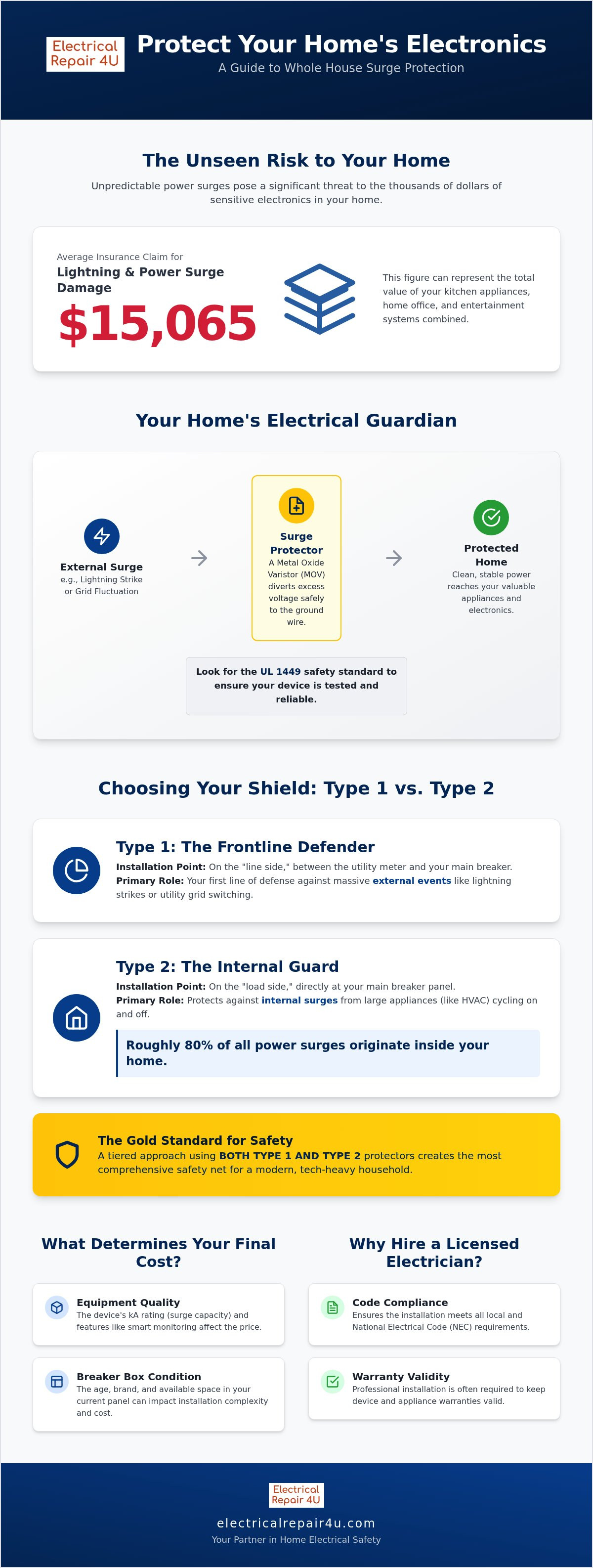
Did you know the average insurance claim for lightning and power surge damage has climbed to over $15,065? For most families in DuPage County, that figure represents the total value of their kitchen appliances, home office setups, and entertainment systems combined. It's a heavy risk to leave your expensive electronics unprotected against the unpredictable Illinois weather. You want to secure your home, but the confusion over varying quotes and technical jargon often makes it difficult to take the first step. You need to know the actual cost to install whole house surge protector equipment so you can make an informed decision for your family's safety.
We understand that you need clear answers, not vague estimates. This guide reveals the factors that influence your total investment in 2026, covering everything from equipment categories to the professional labor considerations involved in a high quality installation. You'll discover which type of protector actually fits your current electrical panel and how to find a reliable local partner to handle the technical work. By the end of this article, you'll have a straightforward roadmap to total electrical security and the peace of mind that comes with a job done right.
Key Takeaways
- Understand why professional surge protection acts as a vital insurance policy for your home’s $15,000+ worth of sensitive electronics and smart appliances.
- Learn the critical differences between Type 1 and Type 2 devices to choose the right gatekeeper for your specific electrical panel.
- Get a realistic breakdown of the cost to install whole house surge protector equipment, including professional labor rates specific to the DuPage County area.
- Identify how the age and condition of your breaker box can impact your final installation bill and whether your current system needs a modern upgrade.
- Discover why hiring a licensed master electrician is the only way to ensure your installation meets local codes and keeps your equipment warranties valid.
Understanding Whole House Surge Protection and Its 2026 Value
Think of a whole house surge protector as a dedicated security guard for your home's electrical panel. It sits at the primary entry point, monitoring every volt of electricity that tries to enter your living space. In 2026, our homes are packed with sensitive microchips found in everything from smart refrigerators to sophisticated EV charging stations. These modern devices require much higher joule ratings and faster response times than the passive appliances of a decade ago. Even small, frequent fluctuations can degrade your tech over time, leading to premature failure. Integrating this protection into your regular breaker box maintenance routine ensures your entire infrastructure remains stable and secure.
How Surge Protectors Guard Your Infrastructure
Most high-quality units rely on a clever component called a Metal Oxide Varistor (MOV). When a sudden voltage spike hits your system, the MOV acts like a pressure relief valve. It shunts the excess energy safely into the ground wire before it can reach your expensive electronics. For homeowners investigating the cost to install whole house surge protector equipment, it's vital to look for the UL 1449 safety standard. This 2026 benchmark ensures the device can handle repeated surges without failing or becoming a fire hazard. Understanding Surge Protectors involves knowing they don't just "block" electricity; they redirect it to keep your home's nervous system calm and functional.
Type 1 vs. Type 2: Which One Do You Need?
We often help neighbors choose between Type 1 and Type 2 devices based on their specific risks and panel configurations. Type 1 protectors are installed on the "line side" of your main service entrance, usually between the utility pole and your main breaker. They are your first line of defense against massive external events like lightning strikes or utility grid switching. Type 2 devices are installed on the "load side" at the main breaker panel. These are essential because roughly 80% of surges actually start inside your home when large motors, like your HVAC system or a vacuum cleaner, cycle on and off.
The 2026 gold standard for safety is a tiered approach. By combining a Type 1 unit to catch external hits and a Type 2 unit for internal stability, you create a comprehensive safety net. When you calculate the cost to install whole house surge protector systems, remember that this dual layer offers the highest level of security for a tech-heavy household. We've spent over 40 years helping families in DuPage County find this balance, removing the anxiety of technical failure every time a storm rolls through. We view ourselves as your collaborative partners in home safety, ensuring every wire and breaker is ready for the demands of modern living.
Average Cost Breakdown: Equipment, Labor, and Materials
Calculating the total investment for home safety involves more than just picking a box off a shelf. You're looking at a combination of the protective device, the specialized labor required for a safe install, and the specific materials needed to integrate the unit into your home's infrastructure. While it's tempting to hunt for the lowest sticker price, the cheapest units often lack the long-term durability needed to survive multiple strikes. Investing in quality components now prevents the anxiety of a system failure during the next big storm.
Equipment Costs by Protection Level
The price of the unit itself varies based on its "clamping" power and kiloampere (kA) rating. A higher kA rating means the device can handle larger surges without burning out. Basic units provide standard protection, but premium models in 2026 often include smart-monitoring features that alert you when the device has reached its end of life. You'll also see differences in manufacturer warranties; some only cover the device, while others offer limited insurance for the electronics plugged in behind it. These protective measures are now required by the National Electrical Code for new and renovated homes, reflecting their critical role in modern safety.
Labor and Installation Complexity
When determining the cost to install whole house surge protector hardware, professional labor is a major factor. In DuPage County, rates reflect the expertise of licensed master electricians who understand the local amendments to the 2020 NEC. A standard installation typically takes one to three hours. This time includes mounting the device, installing a dedicated circuit breaker, and ensuring all connections are torque-tested for stability. We've spent over 40 years mastering these installs, ensuring every connection is secure and every homeowner feels confident in their protection.
If your panel is modern and has open slots, the process is straightforward. However, older systems might require sub-panels or complex circuit remapping to make room for the new protector. These variables are why a flat-rate quote from a flyer can be misleading. We pride ourselves on being collaborative partners, providing a clear breakdown so you aren't surprised by hidden fees. If you're unsure about your panel's current health, our team can provide a thorough breaker box assessment to ensure your home is ready for an upgrade. Beyond the unit and labor, you should also account for minor material costs like specialized conduit, mounting hardware, and high-gauge copper wiring.
Factors That Influence Your Final Installation Bill in Illinois
While base equipment and standard labor provide a starting point, your specific home layout in the Chicago western suburbs often dictates the final investment. We've served DuPage County for over 40 years, and we know that no two electrical panels are exactly alike. The age of your infrastructure is the biggest variable. If your system is outdated or showing signs of wear, you may require residential electrical repair before a surge protector can be safely integrated. A stable foundation is necessary for these devices to function correctly during a high-voltage event.
Proximity also plays a role in your total cost to install whole house surge protector equipment. If your main electrical panel is located far from the service entrance, the run of specialized heavy-gauge wire increases material expenses. Accessibility matters too. A panel tucked behind built-in shelving or in a tight crawlspace requires more time for our master electricians to navigate safely. These logistical details ensure the installation meets our high standards for safety and longevity.
Panel Brand and Compatibility
The brand of your breaker box can significantly impact the complexity of the job. Discontinued or rare panel brands often require specialized mounting hardware that isn't found at a standard hardware store. Beyond the brand, we must evaluate physical space. A whole-house surge unit typically requires a dedicated two-pole breaker. If your panel is already full, we might need to install tandem breakers or a small sub-panel to create the necessary room. This extra step ensures your system remains organized and code-compliant without overloading existing circuits.
Geographic and Local Code Factors
Local regulations in cities like Naperville, Aurora, and Warrenville add another layer to the process. Each municipality has specific permit requirements and inspection fees that must be factored into your budget. These rules aren't just red tape; they are vital safety benchmarks that protect your property value. Because Illinois experiences frequent lightning and seasonal grid instability, we often recommend units with higher surge current capacities for our local neighbors.
Meeting these local standards requires a deep understanding of the 2020 National Electrical Code and its local amendments. This is why hiring a licensed and insured electrician is non-negotiable. We act as your collaborative partners, handling the paperwork and ensuring the install passes every local inspection with flying colors. This proactive approach removes the anxiety of potential code violations and guarantees that your home's "gatekeeper" is ready for whatever the Illinois weather throws its way.
Is It Worth It? Calculating ROI Against Appliance Replacement Costs
When you evaluate the cost to install whole house surge protector systems, look beyond the initial bill. Think of it as a one-time insurance premium that never expires. Modern homes in DuPage County are now filled with high-stakes technology. From smart refrigerators with built-in touchscreens to sophisticated HVAC control boards, the average household contains over $15,000 in vulnerable electronics. A single lightning strike or utility mishap can wipe these out in milliseconds, leaving you with a massive replacement bill and a mountain of stress.
Small surges are the "silent killer" of modern tech. Every time your air conditioner or vacuum cycles on, it sends a mini-spike through your wiring. These don't blow a fuse, but they slowly degrade the delicate microchips in your laptops, smart TVs, and gaming consoles. By installing a whole-house unit, you also safeguard your EV charger installation against these internal fluctuations. Protecting that high-voltage investment ensures your vehicle is always ready to go without the risk of a fried circuit board or a failed charging session.
The Cost of Modern Smart Home Vulnerability
In 2026, replacing a full suite of high-end kitchen appliances can easily exceed $10,000. Your home office networking gear and smart hubs are equally fragile and expensive to recover if a surge hits your router. The return on investment for surge protection is the cost of the unit divided by the total value of all connected devices. When you run those numbers, the protection pays for itself the very first time a storm rolls through Warrenville or a utility transformer fails nearby.
Insurance Savings and Peace of Mind
Most homeowners insurance policies carry deductibles that often range from $500 to $2,500. When you compare those out-of-pocket expenses to the cost to install whole house surge protector hardware, the financial benefit is undeniable. Some insurance providers even provide small premium discounts for homes with verified whole-house protection. Beyond the dollars, there is the vital removal of "anxiety cost." You won't have to scramble to unplug your expensive computers and entertainment systems every time you hear a storm approaching.
We've spent 40 years serving as a stable pillar for our neighbors, providing the security that comes with expert craftsmanship and honest advice. Our licensed professionals handle every detail so you can enjoy long-term stability in your home. If you're ready to secure your high-value assets and remove the stress of technical failure, schedule your surge protection consultation today to get a precise plan for your property. We are here to act as your collaborative partners in total home safety.
Choosing the Right Professional for Your Warrenville Home
Selecting a contractor is just as important as selecting the device itself. While you might be tempted to save on the cost to install whole house surge protector equipment by attempting a DIY job, the risks far outweigh the savings. Working inside a live electrical panel is inherently dangerous. Beyond the physical risk, most manufacturers specifically state that their equipment warranties are only valid if a licensed professional handles the installation. If a surge occurs and your DIY-installed unit fails, you could be left with no recourse for your damaged appliances.
Before you let anyone open your panel, ask specific questions to gauge their expertise. Does the electrician have experience with your specific panel brand? Are they familiar with the local amendments to the 2020 National Electrical Code in Warrenville or Naperville? A true professional acts as a collaborative partner, explaining the technical reasons behind their work and ensuring you feel secure in the final result. Always verify that your contractor is both licensed and insured in DuPage County to protect your property and your peace of mind.
The Professional Installation Advantage
A master electrician brings precision that goes beyond simply connecting wires. Proper grounding is the most critical part of surge protection; if the ground path isn't perfect, the surge has nowhere to go. We use specialized tools to meet exact torque requirements on every connection, preventing the loose arcs that can lead to electrical fires. Once the unit is in place, we perform post-installation testing to verify the status lights are active and the system is fully operational. This meticulous approach ensures your cost to install whole house surge protector hardware translates into actual, long-term safety for your digital life.
The Electrical Repair 4U Commitment
We have spent over 40 years serving as a stable pillar for our neighbors in the Chicago western suburbs. Our team doesn't just show up to do a job; we show up to remove the anxiety of technical failure from your daily life. We believe in transparent, fair pricing and high-caliber results that stand the test of time. You deserve a partner who takes pride in their craft and treats your home with the same care they would their own. Secure your home with professional surge protection today and experience the difference that four decades of local expertise can make for your family's safety.
Secure Your Home's Digital Future Today
Your home is more than just a building; it's a hub for the technology that powers your life. We've explored how the actual cost to install whole house surge protector equipment is a small price to pay compared to the $15,000 in electronics at risk in most modern households. By choosing a tiered approach with Type 1 and Type 2 devices, you create a robust safety net that shields everything from your smart fridge to your EV charger.
Don't let a single lightning strike or utility spike turn into a financial headache. Our team of licensed and insured master electricians has over 40 years of local electrical expertise. We take pride in serving Warrenville, Naperville, and the surrounding suburbs as a stable pillar of the community. We're ready to act as your collaborative partners to remove the anxiety of technical failure.
Protect your home’s electronics with Electrical Repair 4U. Let's work together to ensure your home remains a safe, dependable sanctuary for years to come.
Frequently Asked Questions
How much does a whole house surge protector cost to install in 2026?
The total investment depends on the protection level of the device and the complexity of your panel setup. You're paying for a high-quality unit and the expertise of a master electrician to ensure it's integrated safely. Factors like your panel's age and the need for a dedicated breaker will influence the final bill. We focus on providing transparent quotes that reflect the security and peace of mind you receive from a professional installation.
Can I install a whole house surge protector myself to save money?
We strongly advise against DIY installation because it involves working with the main power supply inside your electrical panel. One mistake can lead to severe injury or a fire hazard. Most manufacturers also require a licensed professional to handle the work to keep your equipment warranty valid. Hiring an expert ensures the unit is grounded correctly, which is the only way it can actually protect your home during a surge event.
Do whole house surge protectors really work against lightning strikes?
These devices are highly effective at managing the massive voltage spikes from nearby lightning strikes or utility grid switching. While no device can stop a direct, million-volt hit to your roof, a properly installed Type 1 protector acts as a powerful first line of defense. It shunts the excess energy into the ground before it reaches your delicate circuits. Combining this with Type 2 protection inside your panel offers the best possible security.
How long do whole house surge protectors last before needing replacement?
Most units provide reliable protection for three to five years, though their lifespan depends on how many surges they've absorbed. These devices use components that wear down every time they shunt excess voltage. Many modern 2026 models feature status indicator lights or audible alarms to let you know when they've reached their limit. It's a good habit to check these indicators during your regular home maintenance routines to ensure your safety net is still active.
Will a whole house surge protector save me money on my electric bill?
A surge protector won't directly lower your monthly energy consumption or reduce your utility rates. Its primary job is safety and infrastructure longevity, not energy efficiency. However, it saves you significant money over time by preventing the premature failure of expensive appliances and sensitive electronics. By stopping small, internal surges from degrading your motors and circuit boards, you avoid the high costs of emergency repairs and early equipment replacements.
Does my homeowners insurance require me to have surge protection?
While most insurance policies don't strictly mandate surge protection for older homes, the 2020 National Electrical Code now requires these devices for new construction and significant renovations. Some insurance providers in the Chicago suburbs offer premium discounts for homes with professionally installed protection because it reduces the risk of high-value claims. We recommend checking with your specific agent to see if your safety upgrade qualifies you for any local policy benefits or credits.
What is the difference between a surge protector and a surge arrester?
A surge arrester is typically installed by the utility company on the line side to protect against massive external voltage spikes from the grid. A surge protector, or surge protective device (SPD), is installed at your panel to protect your specific household circuits and appliances. Think of the arrester as the city's flood wall and the protector as your home's personal sump pump system. Both work together to keep your electrical environment stable and secure.
Can a whole house surge protector be installed on an older electrical panel?
Yes, we can often install these units on older panels, provided the system is in safe working condition. If your panel is full or uses discontinued hardware, we might need to install a sub-panel or use tandem breakers to make room. This is where the cost to install whole house surge protector equipment can vary based on your home's unique needs. We always perform a thorough assessment first to ensure your older panel can support the new safety device.


