

You’re standing in your kitchen in DuPage County, reaching for the toaster with damp hands, and that tiny voice in your head asks if you’re actually protected. It's a common worry, especially when you start looking into the GFCI outlet installation cost and find yourself buried under a mountain of conflicting numbers and technical jargon. You know you need that safety net, but the fear of overpaying or, worse, hiring someone who cuts corners on code compliance can make the process feel overwhelming.
We understand that your home’s safety isn't just a line item; it’s your peace of mind. In this guide, we'll clarify the real-world factors that influence your project, from the latest 2026 National Electrical Code updates regarding indoor sinks to the critical role of master electricians in older homes. You’ll discover how to distinguish between simple hardware and the expert labor required for a secure, long-term solution. We'll also explore why professional installation is the most reliable way to protect your family from shocks while lowering your long-term insurance liability. By the end, you'll have the confidence to make an informed decision for your home and your budget.
Key Takeaways
- Learn how the age and condition of your home’s wiring directly influence the overall GFCI outlet installation cost and long-term system reliability.
- Identify the hidden dangers of DIY "miswiring" where an outlet appears to work but fails to trip during a life-threatening ground fault.
- Choose the correct hardware grade for your specific environment, including weather-resistant units designed to withstand harsh Illinois winters and outdoor kitchen demands.
- Ensure your home stays compliant with local DuPage County building codes to protect your property value and prevent potential insurance claim denials.
- Discover why partnering with a seasoned local expert provides the security and code-compliant results that a standard contractor quote simply cannot match.
Factors Influencing GFCI Outlet Installation Costs in 2026
Understanding the GFCI outlet installation cost starts with looking behind your walls rather than just at a price tag. While most homeowners focus on the hardware, the complexity of your home’s electrical infrastructure determines the bulk of the investment. For example, a Residual-current device (RCD), commonly known as a GFCI, performs a sophisticated job by monitoring current flow and cutting power in milliseconds to prevent shock. If your home uses modern copper wiring, the process is usually a straightforward swap. However, if we encounter older aluminum wiring or ungrounded systems common in some DuPage County neighborhoods, the scope of work expands to ensure those connections remain safe and stable for decades.
The 2026 NEC updates have also introduced stricter requirements for dual-function protection in specific rooms, alongside expanded GFCI mandates for all indoor sinks and HVAC equipment. This means the type of outlet we select isn't just about convenience. It's about meeting the latest safety standards that protect your family from both fire and electrocution. Accessibility also plays a role. Swapping a kitchen wall outlet is much faster than crawling into a tight attic space to reach a junction box, which directly impacts the labor time required.
Labor vs. Material: Breaking Down the Bill
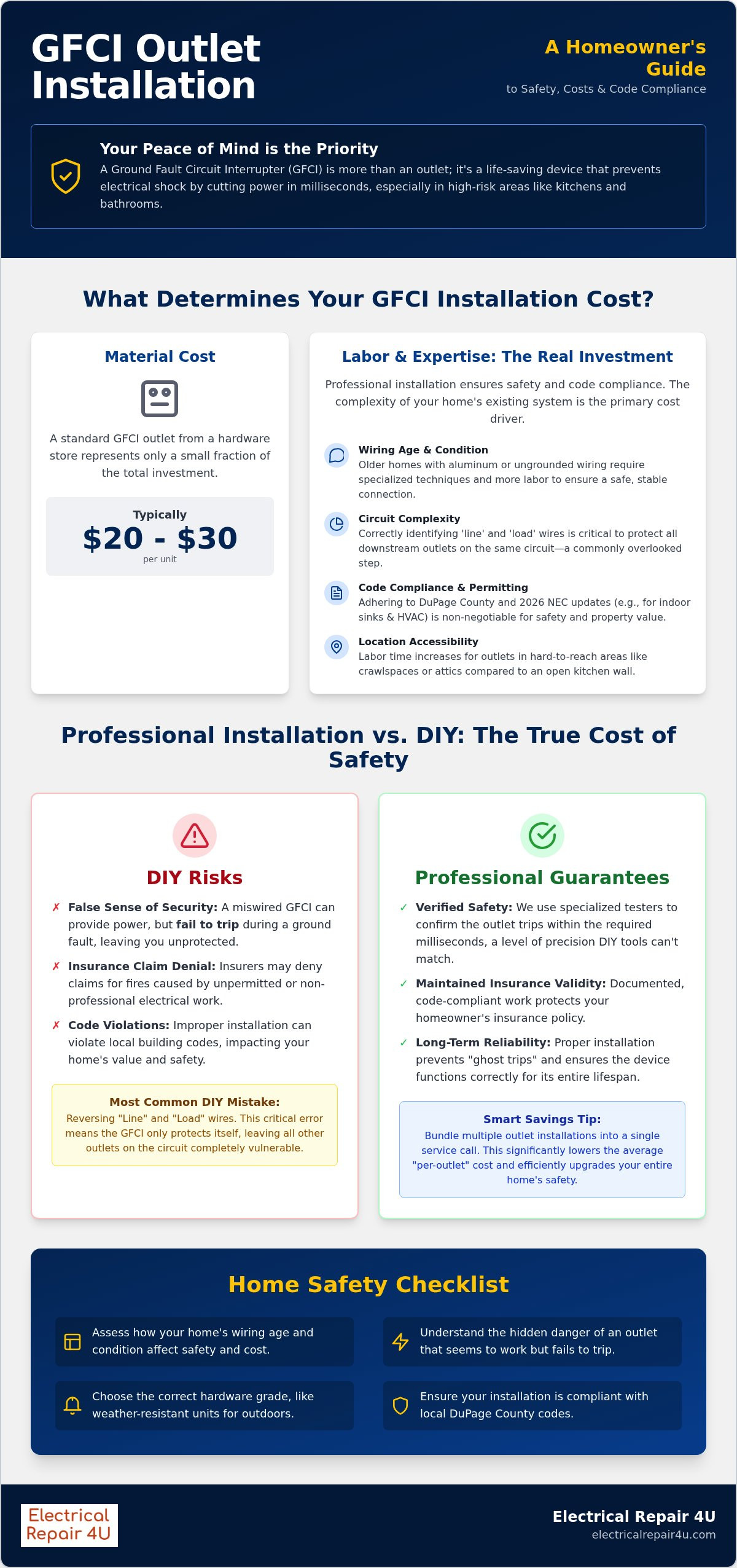
It’s tempting to look at a $20 outlet at a big-box store and wonder why professional quotes are higher. That hardware is only a small fraction of the total cost. When you hire a seasoned team, you’re paying for specialized diagnostic tools that verify the integrity of the entire circuit. Most local contractors have a minimum service call fee to cover travel and overhead. Because of this, the "per-outlet" GFCI outlet installation cost actually drops when you bundle multiple replacements into a single visit. It’s a smarter way to upgrade your home’s safety while making the most of a professional’s time on-site.
The Complexity of Older Wiring
In older Naperville homes, wiring isn't always a simple "plug and play" situation. We often find ungrounded outlets that require specific labeling and wiring techniques to meet modern codes. Identifying the "line" and "load" wires is essential so that one GFCI can protect every other outlet downstream on that same circuit. Older electrical systems often require significantly more labor because technicians must carefully evaluate and adapt legacy wiring to safely support modern ground-fault protection devices. This diligence prevents the "ghost trips" or failure-to-trip scenarios that happen with rushed, amateur installations.
Professional Installation vs. DIY: The True Cost of Safety
Saving a few dollars on the upfront GFCI outlet installation cost by doing it yourself is a tempting prospect for many homeowners. However, electricity isn't the place for trial and error. A common and dangerous misconception is that if the little green light is on, the outlet is safe. In reality, a miswired GFCI can provide power to your appliances while completely failing to trip during a ground fault. This leaves your family unprotected from the very shocks you were trying to prevent. Professional installation ensures that the device functions according to strict CPSC on GFCI Safety standards. We use specialized testers to confirm the outlet trips within the required milliseconds. This level of precision is something a standard hardware store plug-tester simply cannot replicate.
Beyond immediate physical danger, DIY electrical work carries heavy financial risks. If an electrical fire occurs and investigators find unpermitted or non-professional work, your home insurance provider might deny the claim entirely. The long-term liability of an uncertified repair far outweighs the initial GFCI outlet installation cost. You could be left holding the bill for thousands in damages just to save a small amount on labor today. When we handle the job, we provide the documentation and code-compliant results that keep your policy valid and your home safe.
Common DIY GFCI Mistakes
Even with a tutorial, small errors lead to big problems. These are the issues we frequently fix for homeowners who started the project themselves:
- Reversing Line and Load: This is the most frequent mistake. It often renders the reset button useless and leaves every other outlet on the circuit entirely unprotected.
- Crowded Electrical Boxes: Forcing wires into a small space can cause heat buildup, damaged insulation, or dangerous electrical arcing.
- Improper Grounding: In older metal or plastic boxes, failing to secure a solid ground connection creates a false sense of security that can be fatal during a surge.
The Long-Term Value of a Licensed Electrician
When you choose a professional, you're investing in more than just a single outlet. You're gaining a 40 year legacy of expertise. We don't just swap the device; we evaluate the health of your entire circuit. If we spot an aging breaker or a loose neutral wire while we're in there, we can address it before it becomes an emergency. This proactive approach is a core part of our residential electrical repair in Warrenville, ensuring your whole system stays code-compliant. Our work comes with a labor warranty, giving you a safety net that a YouTube video can't provide. If you want the job done right the first time, our team is ready to help. You can easily schedule a safety inspection to ensure your home is fully protected.
GFCI Hardware Grades: Standard vs. Industrial and Dual-Function
Selecting the right device is about matching the hardware to your home’s specific environment. While many homeowners assume an outlet is just an outlet, the internal components vary wildly between a bargain-bin unit and a high-performance device. When calculating your GFCI outlet installation cost, the hardware grade is one of the most overlooked variables. Standard residential GFCIs are reliable for indoor, low-traffic areas like a guest bathroom, but they aren't a "one size fits all" solution. According to ESFI on GFCI Requirements, these devices are essential for any area where water and electricity meet, but the specific type of protection needed depends on the room's function.
For homes with children, Tamper-Resistant (TR) outlets are now the safety standard. These feature internal shutters that prevent foreign objects from being inserted into the slots. If you’re planning an outdoor kitchen or need protection for your patio, Weather-Resistant (WR) units are non-negotiable. These are built with UV-stabilized plastics and corrosion-resistant metal parts to survive the brutal Illinois winters and summer humidity. Choosing the wrong grade for an outdoor setting leads to premature failure and frequent "nuisance tripping," which eventually costs more in replacement labor and frustration.
When to Choose Industrial-Grade GFCIs
High-demand areas like your garage or workshop require more than a standard residential outlet. If you frequently use power tools or have a high-draw workshop setup, industrial-grade GFCIs offer superior build quality. These units feature heavy-duty tension contacts that hold plugs more securely; this reduces the risk of heat buildup during long periods of high current draw. While the material cost for these units is higher, they provide the longevity needed for high-stakes environments. We often recommend these for our neighbors who want a stable, long-term solution for their high-traffic workspaces where standard outlets might wear out prematurely.
The Rise of Dual-Function Protection
The 2026 National Electrical Code increasingly emphasizes dual-function protection. These specialized units provide both Arc-Fault Circuit Interrupter (AFCI) protection to prevent fires and GFCI protection to prevent shocks. Upgrading to these smarter devices might slightly increase the initial GFCI outlet installation cost, but the added fire protection is an investment in your home's long-term security. It’s often more cost-effective to install these during your regular breaker box maintenance than to wait for a code violation during a future home sale. By integrating fire and shock protection into a single device, you create a comprehensive safety shield for your family that meets the highest modern standards.
Local Code Requirements and Permitting in DuPage County
The GFCI outlet installation cost in our community often includes a small but vital component: the local permit fee. While national websites provide broad estimates, they frequently overlook the specific municipal requirements of Warrenville, Naperville, and Aurora. Each city has its own set of oversight rules designed to keep your family safe. In unincorporated DuPage County, for example, remodeling permit fees generally start at $100, while smaller electrical projects may incur a flat fee starting around $50 for areas up to 1,000 square feet. These costs aren't just red tape; they're an investment in a third-party safety check that verifies our work meets the highest standards.
Navigating these rules can be stressful for a homeowner, but it's where our 40 years of local experience truly shines. We understand the nuances of the 2020 National Electric Code (NEC) currently in place and are already preparing for the transition to the 2026 NEC updates. When we handle your project, we take the burden of paperwork off your shoulders. We manage the application process and coordinate with municipal inspectors to ensure every connection is validated and documented. This proactive approach eliminates the anxiety of "what-ifs" and ensures your home remains a stable, secure environment.
DuPage County Safety Benchmarks
Local inspectors pay close attention to specific high-risk areas, especially in our climate. Detached garages and outdoor lighting systems must meet rigorous moisture-resistance standards to prevent dangerous ground faults during Illinois rainstorms. If you’re planning a basement remodel, the code requirements for GFCI protection are even stricter due to the proximity of concrete floors and potential dampness. Unpermitted electrical work discovered during a home inspection can stall a sale, force expensive emergency repairs, or even lead to legal disputes over undisclosed hazards. By following the rules today, you protect your property value for tomorrow.
The Inspection Process
Once we complete your installation, a city official may conduct a walkthrough to verify the work. This is a standard part of the process that provides an extra layer of emotional reassurance. During this visit, the inspector checks for proper grounding and ensures that the trip-time of your new outlets meets safety benchmarks. If we discover existing code violations during a standard outlet swap, we address them immediately to prevent future failures. This professional documentation serves as a "clean bill of health" for your electrical system. If you want to ensure your home is fully compliant with local laws, you can schedule a code-compliant installation with our master electricians today.
Investing in Reliability with Electrical Repair 4U
Choosing a professional partner for your electrical needs is about more than just checking a task off your to-do list. It’s about building a relationship with a team that values your family’s safety as much as you do. At Electrical Repair 4U, we believe that understanding the GFCI outlet installation cost shouldn't be a source of stress or confusion. We provide clear, honest communication from the first phone call, ensuring you feel empowered and informed. Our goal is to remove the anxiety of technical failures by providing solutions that stand the test of time. We take pride in our craft, and that dedication shows in every connection we secure.
Many of our neighbors choose to bundle their safety upgrades for maximum efficiency and protection. While GFCIs are your first line of defense against localized shocks in wet areas, they are even more effective when paired with whole house surge protector installation. This combination creates a comprehensive safety shield for your property. It protects your family from ground faults while simultaneously guarding your expensive appliances and smart home systems from unpredictable power spikes. We treat every project with a neighborly touch, handling your home's wiring with the same diligence we would use in our own.
Why Neighbors Trust Electrical Repair 4U
Our 40 year legacy in DuPage County isn't just a number; it’s a testament to the trust we’ve built with thousands of local families. We are licensed and insured master electricians who are deeply rooted in the community we serve. Our team possesses the unique expertise required to handle the delicate wiring of historic Illinois properties while also seamlessly integrating modern smart home technologies. This proactive approach allows us to identify and resolve potential hazards before they escalate into costly emergencies. We don't just fix problems. We provide the stability and results your home deserves.
Schedule Your Safety Assessment
Investing in professional installation is the most reliable way to secure your home against electrical hazards and ensure full code compliance. Whether you are in Elmhurst, Oak Park, or the surrounding suburbs, we are here to help you navigate your safety upgrades with confidence. We maintain a constant readiness to help our neighbors, and you can reach out to discuss our availability for same-day troubleshooting if you suspect an outlet has already failed. Don't leave your family’s security to chance or a weekend DIY project. Reach out today to schedule a comprehensive safety assessment and experience the peace of mind that comes with a job done right. Let us help you protect what matters most.
Secure Your Home’s Future with Expert Electrical Upgrades
Protecting your family from electrical hazards is one of the most important investments you can make for your property. We've explored how the GFCI outlet installation cost is influenced by everything from your home’s wiring age to the specific 2026 NEC safety requirements. You now understand that choosing the right hardware grade and ensuring strict code compliance are the keys to long-term reliability and insurance protection. While a DIY project might seem simpler, nothing replaces the security of knowing your outlets will trip in those critical milliseconds when it matters most.
As A+ rated local service providers with over 40 years of experience in DuPage County, our team of licensed and insured master electricians is here to help you navigate these technical upgrades. We treat every home with the care it deserves, ensuring your electrical system remains a stable foundation for your daily life. Don't leave your safety to chance. Get a professional quote for your GFCI installation today! We look forward to being your partners in creating a safer, more dependable home for years to come.
Frequently Asked Questions
Why is the cost of GFCI installation higher than a regular outlet?
The hardware itself costs more because it contains a complex monitoring system designed to detect ground faults instantly. Beyond the device, the labor involved is higher because we must verify the circuit's integrity and identify the specific line and load wires. This diagnostic work ensures the outlet actually trips when needed. A standard outlet swap is a basic connection, but a GFCI requires technical precision to protect your family from dangerous shocks.
Does a GFCI outlet require a ground wire to function safely?
Surprisingly, a GFCI does not require a ground wire to detect a ground fault and trip successfully. It monitors the balance of current between the hot and neutral wires instead. However, the National Electrical Code requires us to label these ungrounded outlets as "No Equipment Ground." This is a common solution for older homes in Naperville or Aurora where original wiring lacks a dedicated ground wire but safety upgrades are still necessary.
How many GFCI outlets do I need in a single kitchen circuit?
You often only need one GFCI outlet to protect an entire kitchen circuit if it is installed at the first point in the run. This upstream outlet can shield all downstream standard outlets from ground faults. However, the 2026 NEC updates require specific protection for all indoor sinks. Our team evaluates your kitchen layout to ensure every countertop outlet meets current safety standards while keeping your overall GFCI outlet installation cost efficient.
Do I need a permit to replace a standard outlet with a GFCI in Illinois?
Yes, most municipalities in DuPage County, including Warrenville and Elmhurst, require a permit for electrical modifications. While a simple repair might seem minor, changing the type of protection on a circuit is considered a safety upgrade that requires official validation. Obtaining a permit ensures an inspector verifies the work. This process protects your home's resale value and confirms that your new installation meets the rigorous local safety benchmarks required by law.
Why does my new GFCI outlet keep tripping immediately?
Immediate tripping usually indicates a hard fault where electricity is leaking to the ground somewhere on the circuit. This could be caused by moisture in an outdoor box, a faulty appliance, or reversed line and load wires during installation. If the outlet trips as soon as you reset it, the device is doing its job by preventing a potential shock. We recommend a professional diagnostic check to locate the leak and restore stable power to your home.
What is the difference between a GFCI outlet and a GFCI circuit breaker?
A GFCI outlet protects a specific location and anything plugged in downstream from it. A GFCI circuit breaker is installed directly in your panel and protects the entire branch circuit from the source. Breakers are often more expensive but offer a cleaner look in kitchens and bathrooms since you don't need the bulky buttons on the wall. Both options provide the same high level of life-saving protection against ground fault shocks for your family.
Can a GFCI outlet protect other outlets "downstream" on the same circuit?
Yes, a single GFCI can protect every standard outlet that follows it on the same electrical run. By connecting the outgoing wires to the load terminals on the back of the GFCI, we extend ground fault protection to the rest of the room. This is a strategic way to manage your GFCI outlet installation cost. It allows you to gain full circuit safety without paying for specialized hardware at every single wall opening.
How often should I test my GFCI outlets to ensure they are working?
You should test your GFCI outlets once a month to ensure the internal sensing mechanism remains functional. Simply press the test button to confirm the power cuts off, then press reset to restore it. These devices can wear out over time or be damaged by power surges. Regular testing is a simple, proactive habit that provides emotional reassurance. It confirms that your family remains protected from the hidden dangers of electrical ground faults.


