
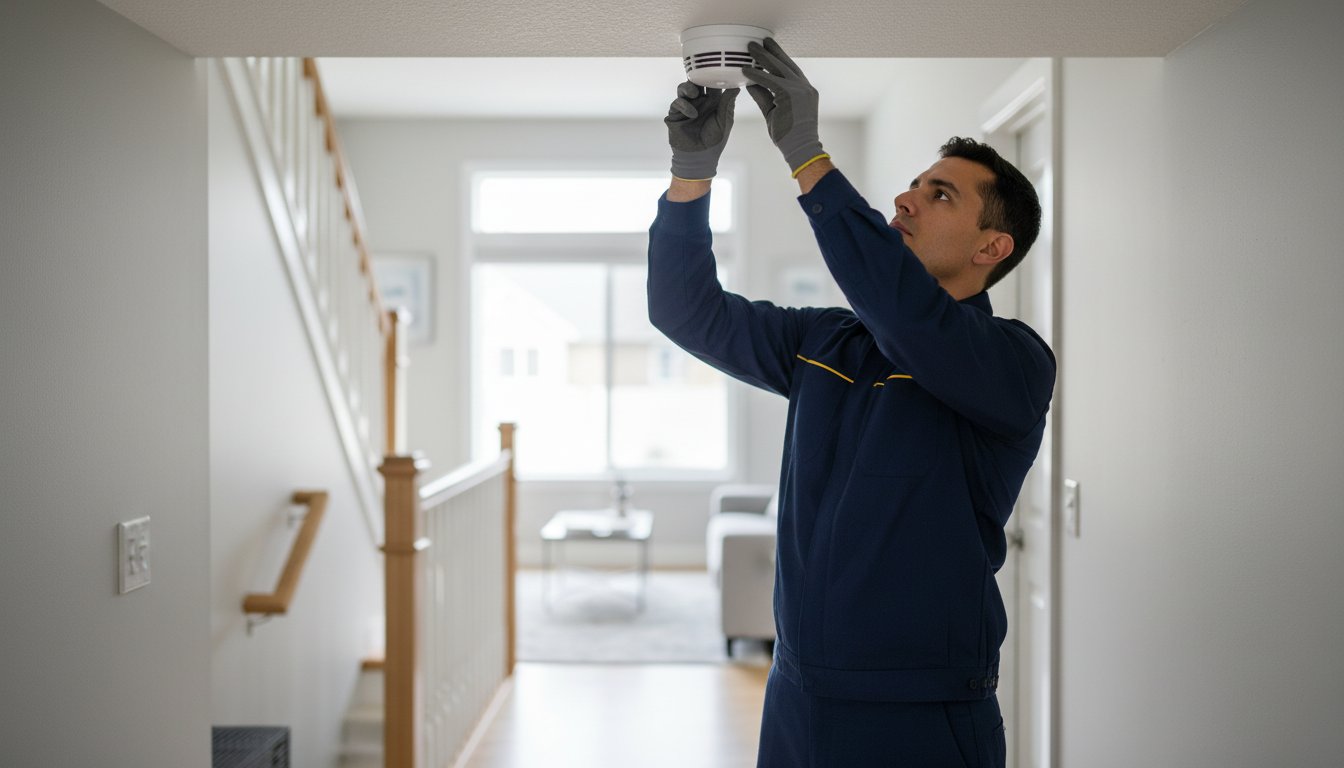
Did you know that 60 percent of home fire deaths happen in houses where smoke alarms weren't working? It's a sobering reality that makes the choice of your safety system one of the most important decisions you'll make for your family. While you might wonder if the investment is necessary, professional hardwired smoke detector installation is the only way to ensure your home meets the strict NFPA 72-2025 standards that became effective on January 1, 2026. You shouldn't have to guess if your loved ones are protected by a cheap plastic disc with a dying battery.
We understand the frustration of middle-of-the-night chirping and the confusion surrounding local Illinois fire codes. Our team has 40 years of experience providing reliable solutions so you can sleep soundly knowing your home is secure. This article explains why hardwired detectors are the gold standard for modern safety and how professional installation creates a unified network that saves lives. You'll get a clear look at the latest multi-sensor technology and the peace of mind that comes with a system that's always on guard.
Key Takeaways
- Learn how connecting alarms directly to your home’s 120-volt circuit eliminates the risk of battery failure during a fire emergency.
- Discover the updated NFPA 72-2025 standards for detector placement to keep your household compliant and safe through 2026.
- Understand why professional hardwired smoke detector installation is essential for meeting local building codes in Warrenville and Naperville.
- Find out how to interpret different alarm chirps to distinguish between a simple low battery and a critical end-of-life signal.
- Explore the life-saving benefits of interconnected systems that alert the entire house the moment a single sensor detects danger.
The Benefits of Hardwired Smoke Detector Installation
A hardwired smoke detector is a life-saving device connected directly to your home’s 120-volt electrical circuit. Unlike basic battery-powered models, these units draw constant power from your electrical grid. This ensures they are always active without the risk of a dead battery during a critical emergency. We provide professional hardwired smoke detector installation to give your family a level of security that standalone units simply cannot match. While these systems run on your house power, modern units also include a dedicated battery backup. This means if a storm knocks out the power in Warrenville, your family remains protected by a reliable secondary energy source.
Why Interconnection is a Life-Saver
Interconnection is the central nervous system of home fire safety. When one alarm detects smoke, every alarm in the house sounds simultaneously. Imagine a fire starting in your basement due to a forgotten candle at 3:00 AM. In a house with standalone alarms, the basement unit might chirp for several minutes before the smoke reaches your upstairs bedroom. With an interconnected system, the alarm next to your pillow screams the moment the basement sensor is triggered. Research shows that residential fires account for over 72% of all fire deaths, and every second of early warning counts. Battery-only units often fail to provide this house-wide alert because they lack the physical or wireless communication bridge required to trigger other devices instantly.
Hardwired vs. Battery-Operated Units
The National Fire Protection Association (NFPA) recommends hardwired systems because of their proven reliability over a 10-year lifespan. While battery-operated units require yearly battery swaps and frequent testing, hardwired systems offer a more permanent solution. You can explore the history and evolution of smoke detector technology to see how far these systems have come. Today's hardwired units are designed for longevity and stability, providing a level of protection that simple retail gadgets can't provide. We install these systems so you don't have to worry about whether a $5 battery is still working when you need it most.
- Maintenance: Hardwired units only need the backup battery changed once a year, rather than relying on it for primary power.
- Reliability: They are less prone to being disabled by homeowners frustrated by nuisance alarms.
- Compliance: Most modern building codes now mandate hardwired smoke detector installation for all new construction and major renovations.
Choosing a hardwired system means you aren't just buying a sensor; you are investing in a comprehensive safety network that monitors your home 24/7. It's a professional solution for a high-stakes problem.
Understanding NFPA 72 Standards and CO Integration
Safety isn't just about having an alarm; it's about following the rules that save lives. The NFPA 72 standards provide the essential blueprint for this protection. The 2025 edition, published in October 2024, sets a higher bar for every modern home. It mandates that you have alarms in every bedroom, outside each sleeping area, and on every level of the house. We perform your hardwired smoke detector installation to these exact specifications so you never have to worry about a failed inspection or a safety gap.
Proper Placement for Maximum Coverage
Placement is a precise science that requires a seasoned eye. You must avoid "dead air" spaces, which are the top four inches of a wall where it meets the ceiling. Smoke often floats right past these pockets, leaving your sensors silent during the first few minutes of a fire. To prevent annoying false alarms that lead people to disable their units, we keep sensors at least 10 to 20 feet away from cooking appliances. We also ensure detectors are placed at least 3 feet away from bathroom doors with showers to avoid steam triggers. Every basement and finished attic needs its own dedicated unit to provide a complete safety net for the entire structure. If you're worried your current layout is outdated, we offer reliable electrical wiring repair to bring your home up to modern standards.
Dual-Sensor Technology: Smoke and Carbon Monoxide
Modern systems in 2026 often combine smoke and carbon monoxide detection into a single, efficient unit. This reduces the number of devices on your ceiling while providing double the protection for your family. Interconnected CO alarms are vital because carbon monoxide is a "silent killer" that you can't see or smell. Ionization sensors are designed to detect fast-flaming fires quickly, while photoelectric sensors excel at spotting slow-burning, smoldering fires. By using dual-sensor technology, we ensure you’re covered for every possible fire scenario without the clutter of multiple devices.
Smart Integration and the 2026 Standard
By 2026, smart integration has become a standard feature for safety-conscious homeowners. These advanced systems connect to your Wi-Fi and send instant alerts to your smartphone if an alarm triggers while you're away at work or on vacation. This allows you to call emergency services before a small kitchen fire turns into a total loss of property. We handle the hardwired smoke detector installation and the complex wiring required for these high-tech systems so you can enjoy the ultimate peace of mind. Our team takes the stress out of technology so you can focus on what matters most: your family's safety.
Professional vs. DIY Installation: Safety and Code Compliance
Some online tutorials make electrical work look like a simple weekend project. They suggest anyone with a screwdriver can handle the job. This is dangerous advice. Working with 120V circuits involves serious hazards that go beyond a simple shock. We provide professional hardwired smoke detector installation to eliminate these risks. Our licensed experts ensure every connection is tight and every circuit is balanced. DIY mistakes often lead to hidden dangers that surface when you least expect them:
- Arcing: Loose wire nut connections can cause electricity to jump, creating intense heat.
- Fire Hazards: Nicked insulation during a rushed install can lead to a short circuit inside your walls.
- Improper Grounding: Incorrectly grounded units may fail to function or could damage the sensitive electronics inside the sensor.
Navigating Local Illinois Electrical Codes
In Warrenville and Naperville, local codes are strict for a reason. DuPage County often requires permits for adding new electrical circuits, especially during major home renovations. If you're updating your property, those "grandfathered" battery-only units usually must be upgraded to hardwired, interconnected systems to meet current safety laws. We handle the technical work and ensure your home remains compliant. Using a licensed and insured electrician isn't just about safety; it's about documentation. If a fire occurs, your insurance company will look for proof that life-safety systems were installed to code. Following official guidelines for home fire safety ensures your claims aren't denied due to unpermitted DIY work.
Interconnection adds another layer of complexity. It relies on a "third wire," usually orange or red, that acts as the communication line between units. Wiring this incorrectly can fry the sensors or cause the entire system to malfunction. It’s a specialized task that requires precise knowledge of residential circuitry. We treat this communication line as the backbone of your home’s defense, ensuring every unit talks to the others perfectly.
The Complexity of Retrofitting Older Homes
Historic homes in Naperville present unique challenges for hardwired smoke detector installation. Pulling new wire through finished plaster or thick drywall requires specialized tools and 40 years of experience. You don't want your ceiling looking like a Swiss cheese map after a technician is finished. We use advanced fishing techniques to run wires with minimal impact on your home's aesthetics. We also test your current circuit load. Adding a dozen alarms to an already stressed breaker box can lead to nuisance trips. We ensure your system is stable, reliable, and neatly integrated into your home's existing structure.
Your family’s safety is too high a stake for a "trial and error" approach. We’ve spent decades mastering these systems so you don't have to. We take the stress out of the process, providing the quality workmanship your home deserves.

Maintenance and Troubleshooting Your Hardwired System
Even with a professional hardwired smoke detector installation, your system isn't something you can just set and forget. Every alarm has an expiration date. According to the NFPA 72-2025 standards, you must replace every smoke detector 10 years from its manufacture date. Sensors degrade over time and lose their ability to detect smoke particles effectively. You should check the back of your devices today. If they were manufactured before 2016, they are officially past their prime and need immediate replacement to ensure your family's safety.
We often hear from homeowners frustrated by that annoying midnight chirp. Even though your system is hardwired, it still uses a backup battery for emergencies. A single chirp every 30 to 60 seconds usually means that backup battery is low. However, if the chirping is irregular or happens after a power flicker, it could signal an internal fault or a problem with your 120V circuit. Dust and debris are also major culprits. Spiders love the warm sensing chambers inside your detectors. We recommend using a vacuum attachment or compressed air to clean your units every six months to prevent nuisance alarms.
How to Test Your Interconnected System
Testing ensures that the communication line between your units is still functioning perfectly. It's a quick process that provides immense peace of mind.
- Step 1: Notify everyone in the house that you're starting a test so they don't panic.
- Step 2: Press and hold the test button on one unit for five seconds.
- Step 3: Verify that every other alarm in the house is sounding.
If the unit you’re holding screams but the one in the basement stays silent, you have a communication failure. This often indicates a loose "interconnect" wire or a sensor that has reached its end-of-life.
Common Reasons for False Alarms
False alarms are more than just a nuisance; they cause people to ignore real emergencies. High humidity or steam from a hot shower can mimic smoke particles and trigger a photoelectric sensor. If your alarms go off every time someone takes a shower, we may need to relocate the unit further from the bathroom door. Electrical surges or "dirty" power from the utility grid can also confuse the sensitive electronics inside modern detectors. If your system is acting up after a summer storm, you might need breaker box maintenance to ensure your home’s electrical foundation is stable. We've spent 40 years helping neighbors in Warrenville solve these technical headaches so they can sleep soundly again.
Why Electrical Repair 4U is Your Trusted Fire Safety Partner
Choosing a contractor for your home’s safety is a high-stakes decision. You need a partner who understands that a smoke alarm isn’t just a device; it’s a sentry for your family. Since 1986, we’ve provided expert electrical services to our neighbors in Warrenville, Naperville, and the surrounding suburbs. With 40 years of experience, we’ve seen every type of home architecture and electrical challenge. We provide professional hardwired smoke detector installation so you can rest easy knowing the job was done by seasoned veterans who take pride in their craft.
Our "Peace of Mind" guarantee is the foundation of our business. We treat your home’s safety as our own, ensuring every connection is secure and every sensor is positioned for maximum effectiveness. We provide up-front pricing so you never have to worry about hidden fees or surprise costs. If an alarm starts malfunctioning in the middle of the night, our 24/7 emergency support team is available to restore your security. We don't just install a unit and leave; we include a comprehensive safety inspection with every visit to check for faulty wiring or overloaded breaker boxes.
Our Process: From Assessment to Protection
We’ve refined our installation process over four decades to ensure it’s as efficient and non-disruptive as possible. First, we evaluate your home’s layout to determine the optimal placement according to the latest 2025 safety codes. We handle the technical work of pulling wire through your walls and connecting it to your home’s electrical foundation. We manage all necessary permits and local code compliance so you don’t have to deal with the paperwork. Once the work is finished, we perform a total system test to verify that every interconnected alarm sounds perfectly. We promise to leave your home exactly as we found it, with no mess and no stress left behind.
Switch to Quality: Contact Us Today
Your fire safety system is only as good as the experts who install it. We’re here to provide solutions tailored to your needs, whether you're updating an older home or finishing a new basement project. While we’re there, we can also discuss whole-house surge protection. This is a vital upgrade that protects your new smoke detectors and other sensitive electronics from the sudden voltage spikes caused by Illinois summer storms. It’s time to move beyond the worry of failing batteries and unreliable sensors.
Schedule your smoke detector installation with Electrical Repair 4U today for a free safety consultation. Switch to quality. Switch to us. We’re ready to help you protect what matters most, day or night.
Secure Your Home’s Future and Your Family’s Safety
Fire safety in 2026 is about more than just a loud noise; it’s about a smart, interconnected network that buys your family precious seconds. We've explored how hardwired smoke detector installation provides constant power and meets the strict requirements of the 2025 NFPA 72 code. You now know why professional placement and dual-sensor technology are the gold standards for modern home protection. These systems don't just alert you to danger; they provide a comprehensive shield that battery-only units simply cannot match.
Don't leave your security to chance with aging battery units or unpermitted DIY wiring. Our licensed and insured master electricians bring over 40 years of local electrical expertise to every project. We prioritize your peace of mind by ensuring every connection is stable and every sensor is positioned perfectly. If you ever face an unexpected technical glitch, our 24/7 emergency troubleshooting is always available to restore your safety. Protect your family with professional smoke detector installation; call Electrical Repair 4U today! We’re ready to help you build a safer, more secure home for the years ahead.
Frequently Asked Questions
Why is my hardwired smoke detector chirping if it has power?
Your detector chirps to signal a low backup battery or a sensor fault. Even though it's connected to your house's power, the internal battery must be healthy to act as a fail-safe. A consistent chirp every 30 to 60 seconds is the most common sign that the 9-volt backup needs a replacement. If the sound continues after a battery swap, the unit might be reaching its 10-year expiration.
Do hardwired smoke detectors need batteries?
Yes, hardwired alarms require a backup battery to stay active during electrical outages. Most units use either a replaceable 9-volt battery or a 10-year sealed lithium cell. This ensures that if a transformer blows or a circuit breaker trips, your family remains protected. We recommend testing these batteries twice a year to ensure they are ready for an emergency.
How many smoke detectors do I need for a 3-bedroom house in Illinois?
A typical 3-bedroom home in Illinois requires at least five detectors to meet current safety standards. You must install one in every bedroom, one in the common area outside the sleeping quarters, and one on every level of the house. When we perform a hardwired smoke detector installation, we evaluate your specific floor plan to ensure every hallway and sleeping area is fully protected.
Can I replace a battery smoke detector with a hardwired one myself?
You shouldn't attempt a hardwired smoke detector installation yourself if you aren't a licensed electrician. This process involves more than just mounting a bracket; it requires running 14-gauge or 12-gauge wire from your breaker box to each location. Handling live electrical circuits and ensuring proper interconnection is a complex task that must follow strict local building codes to ensure your insurance remains valid.
What is the orange or red wire on my smoke detector for?
The orange or red wire is the dedicated interconnect line that links your alarms together. This wire acts as a communication bridge between every device in your home's safety network. When a sensor in the kitchen detects a fire, it sends a high-voltage signal through this wire to trigger the alarms in the bedrooms. This gives you the earliest possible warning, regardless of where the smoke originates.
How often should I replace my hardwired smoke alarms?
The entire alarm unit must be replaced every 10 years from its date of manufacture. Sensors degrade over time and become less effective at spotting smoke particles or carbon monoxide gas. You can find the specific manufacture date printed on a label on the back of the device. If your units have yellowed or are approaching that decade mark, it's time to install fresh, modern sensors.
Will my hardwired smoke detector work if the power goes out?
Your alarms will continue to function during a power outage if they have a working backup battery. Hardwired systems are designed to detect a loss of AC power and switch instantly to their internal DC battery source. This ensures your home stays protected even during severe storms or grid failures. Always replace your backup batteries annually to ensure this fail-safe is ready when you need it.
Can I interconnect different brands of hardwired smoke detectors?
Mixing different brands in an interconnected system is risky and often voids the manufacturer's warranty. Different companies use unique electronic signals to trigger their alarms through the interconnect wire. If the signals aren't perfectly compatible, one alarm might fail to trigger the others during a fire. For the most reliable protection, we always install the same brand and model series throughout your entire home.


