
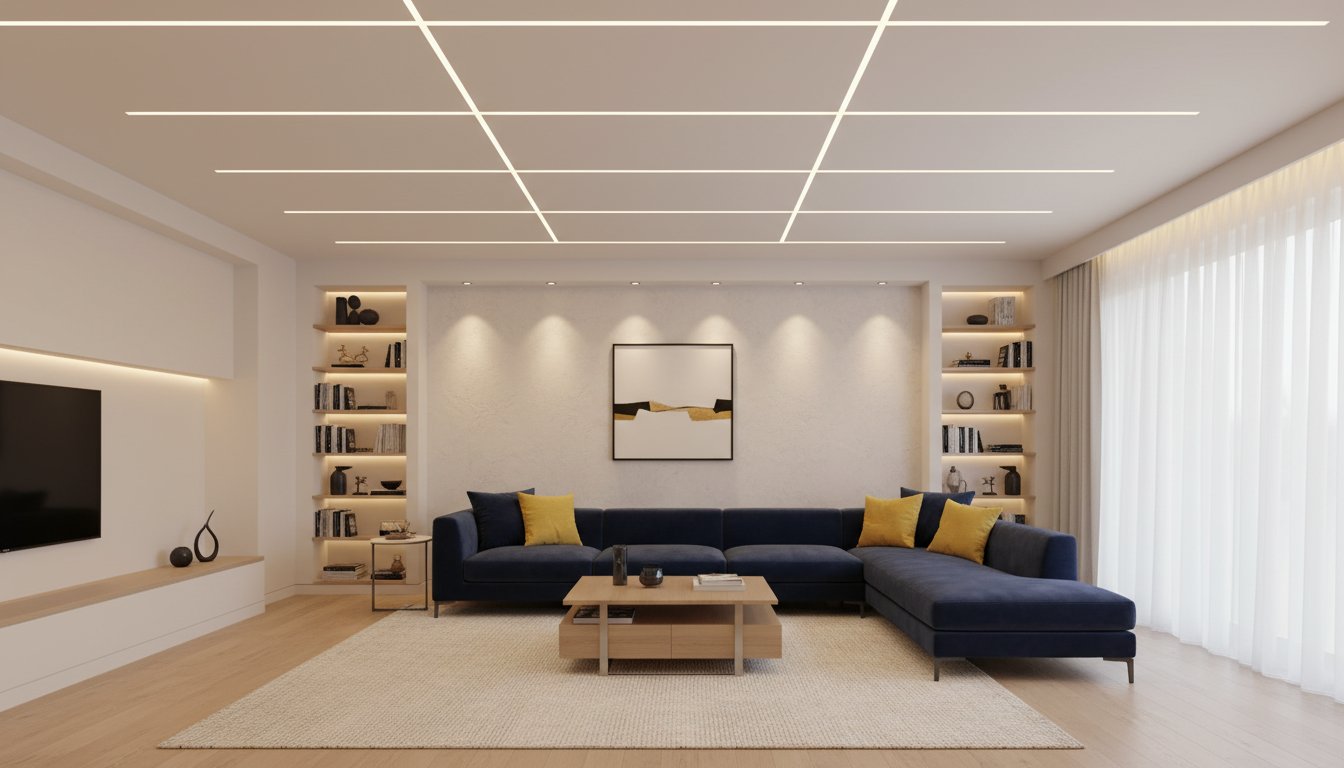
What if the biggest risk to your home's modern makeover isn't the color of the paint, but the hidden wiring behind your ceiling? Many homeowners in Naperville and Aurora dream of a high-end look but hesitate because they fear cutting into their drywall or choosing the wrong LED color temperature. A professional recessed lighting installation does more than just brighten a room. It adds tangible property value while ensuring your family stays safe from fire hazards. With the average cost per fixture ranging from $125 to $500 as of May 2026, it's an investment that requires both a designer's eye and an electrician's precision.
We know you want a home that feels warm and inviting without the stress of circuit overloads or outdated apertures. You deserve the peace of mind that comes from 40 years of local expertise and a commitment to quality workmanship. In this guide, you'll discover the latest 2026 trends like "quiet ceilings" and how to meet strict NEC safety standards for IC-rated fixtures. We'll walk you through smart integration and the shift toward warmer 2700K tones so you can switch to quality with confidence.
Key Takeaways
- Learn how ultra-thin wafer LEDs and 2-inch designer apertures are replacing bulky traditional cans to create a sleek "quiet ceiling" look.
- Discover how a professional recessed lighting installation uses "wall washing" and strategic task placement to eliminate shadows in your kitchen or basement.
- Understand the critical safety requirements for IC-rated fixtures and why your existing breaker box needs a capacity check before adding new circuits.
- Master the "tunable white" trend to seamlessly adjust your home's color temperature from energizing morning light to cozy evening warmth.
- See how 40 years of electrical expertise helps you navigate hidden HVAC ducts and structural joists that often derail complex DIY projects.
The Evolution of Recessed Lighting: From Bulky Cans to Ultra-Thin LEDs
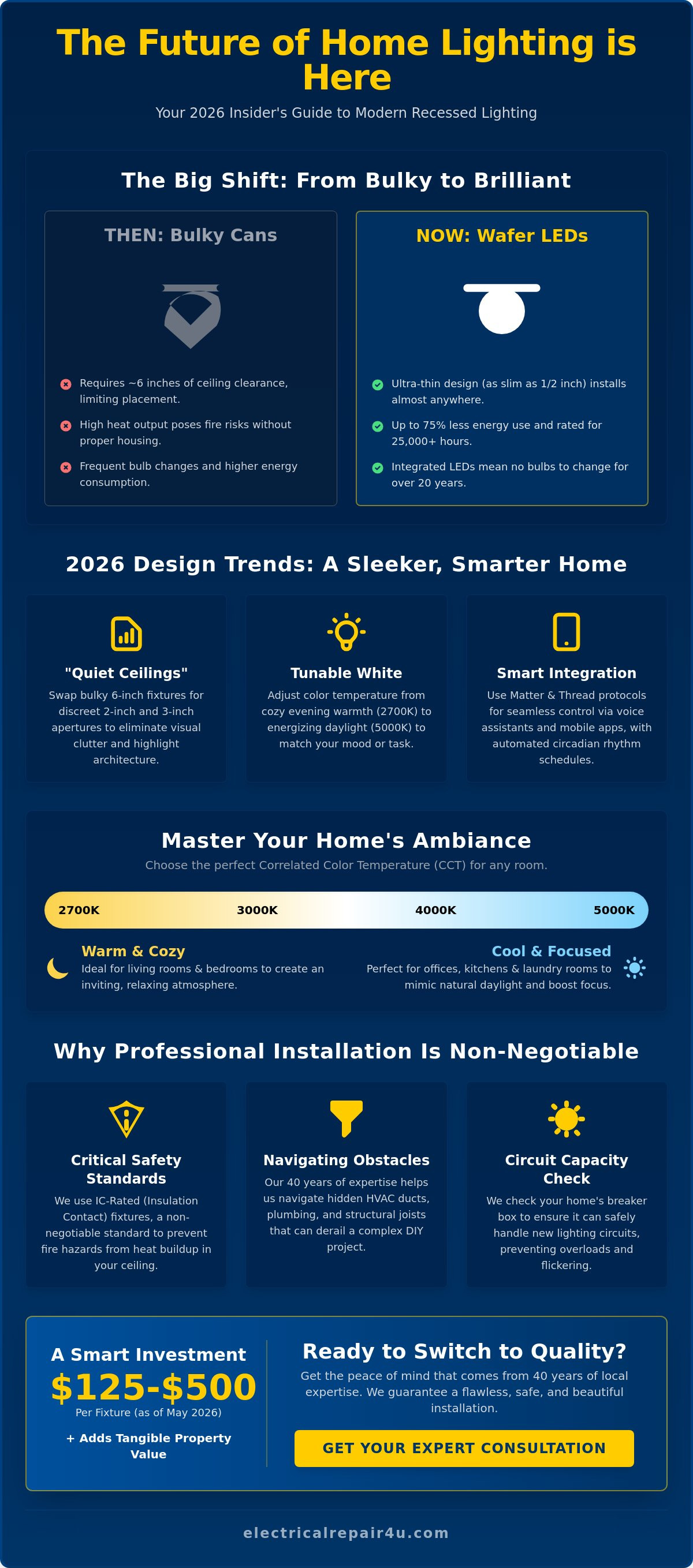
Recessed lighting defines a style where fixtures are installed directly into a hollow opening in the ceiling. This creates a streamlined, flush look that eliminates the visual clutter of hanging lamps or bulky surface mounts. For decades, a standard recessed lighting installation required large metal "cans" or housings that took up significant space behind the drywall. The Evolution of Recessed Lighting has moved toward ultra-thin "Wafer" LEDs. These "canless" designs are dominating the 2026 market because they offer unmatched versatility for various ceiling types. IC-rated (Insulation Contact) fixtures are a non-negotiable safety standard for any installation where the light will touch ceiling insulation, as they prevent heat buildup from starting a fire.
Understanding Wafer Lights vs. Traditional Cans
The physical difference between these two technologies is staggering. A traditional can housing often requires six inches of vertical clearance and a complex frame to stay in place. In contrast, modern wafer lights are only 1/2 inch thick. We install these slim modules almost anywhere. You don't need to worry about attic access or navigating around heavy floor joists. This flexibility allows for better light placement in finished basements or rooms with limited overhead space. Modern LEDs also reduce heat output by a wide margin. Because they draw less power and stay cool, they put much less strain on your home's electrical load than old incandescent bulbs.
The Rise of Integrated LED Modules
Today's integrated LED modules are built for extreme longevity. Many of these fixtures are rated to last 25,000 hours or more. This means you can enjoy your new ambiance for over 20 years without ever climbing a ladder to change a bulb. For DuPage County homeowners, this shift translates to lower utility bills and significantly less environmental waste. Integrated LEDs can consume up to 75% less energy than traditional lighting options. We provide these advanced solutions so you can enjoy a high-end look while lowering your monthly costs. Just remember that modern modules require specific digital dimmers to function correctly. We ensure your dimmers are compatible so you don't have to deal with the annoying flickering or humming often found in DIY projects. Our team handles the technical details so you can simply switch to quality and enjoy the results.
2026 Design Trends: Color Temperature, Layering, and Smart Integration
Modern interiors in 2026 are moving away from the "swiss cheese" ceiling look of the past. Instead of a rigid grid of large 6-inch fixtures, designers now favor 2-inch and 3-inch micro-apertures. These smaller lights provide comparable lumen output with much less visual clutter, creating what professionals call a "quiet ceiling." A strategic recessed lighting installation now prioritizes layering. This approach uses recessed fixtures as a subtle ambient foundation, allowing decorative pendants or wall sconces to act as focal points. We plan these layouts so you can highlight architectural textures or artwork without over-lighting the entire room.
Mastering Color Temperature (CCT)
Choosing the right Correlated Color Temperature (CCT) is vital for your home's mood and functionality. Most Illinois homeowners prefer a warm 2700K to 3000K for bedrooms and living areas to create an inviting, cozy atmosphere. Conversely, 5000K is the standard for home offices and laundry rooms to mimic natural daylight and boost focus. Modern fixtures now feature "Selectable CCT" switches located directly on the junction box. These allow you to toggle between five different warmth levels during the setup process. This flexibility is essential because light temperature significantly affects how paint colors appear on your walls. We help you test these settings so your chosen palette looks perfect under every light.
Smart Lighting Ecosystems
Smart integration has reached a new level of reliability with the 2026 rollout of Matter and Thread protocols. These universal standards ensure your lighting works seamlessly across various mobile apps and voice assistants. You can now program automated dimming schedules that support your body's circadian rhythms, slowly shifting from cool morning light to warm, dim tones as the sun sets. To ensure these sophisticated systems operate without glitches, we provide expert lighting solutions tailored to your specific smart home needs.
Safety and technical precision remain at the core of every upgrade. We strictly follow NEC requirements for recessed fixtures to guarantee proper clearance and heat dissipation, especially when installing smart dimmers that require a neutral wire. We manage the complex wiring and programming so you can enjoy a modern, connected home with total peace of mind. Our team takes pride in delivering a finished product that is as safe as it is beautiful.
Strategic Layout Planning for Kitchens, Living Rooms, and Basements
A successful recessed lighting installation isn't just about cutting holes in your ceiling. It's about light placement that enhances your daily life and highlights your home's best features. In 2026, the "Aperture Trend" is all about mixing fixture sizes to create visual interest. We might use 2-inch micro-lights for accenting a bookshelf while using 4-inch fixtures for general room brightness. This creates a custom look that a standard grid simply can't match. For homeowners in Naperville and Aurora, we often recommend "wall washing." This technique involves placing lights about 24 to 30 inches from a wall to highlight textures or artwork. It makes any room feel wider and more sophisticated instantly.
Basements often present unique challenges due to low clearance and hidden obstructions. This is where ultra-thin wafer lights provide a massive advantage. They fit into tight spaces where HVAC ducts or plumbing pipes block traditional cans. We install these slim modules so you can maximize every inch of ceiling height without sacrificing brightness. It's the perfect way to turn a dark, cramped basement into a vibrant living space or home gym.
The Kitchen Layout Blueprint
The kitchen is the heart of your home, and it needs precise task lighting to be functional. We position lights directly over the edge of the perimeter countertops. This prevents your body from casting shadows while you prep meals or read recipes. For kitchen islands, we suggest a layered approach. We pair recessed lights with decorative pendants to provide a high-end, designer look while maintaining functionality. You should also avoid the "airport runway" look. Don't just line fixtures up in a single, straight row. Staggered placement provides more even coverage and prevents the ceiling from looking cluttered or industrial.
Living Room and Media Center Design
Living rooms require flexibility for everything from movie nights to social gatherings. We use gimbal lights to accent fireplaces or stone walls. These adjustable heads let you aim the light exactly where you want it. For media centers, the beam angle is your most important metric. A narrow 25-degree beam can highlight a specific feature, while a wider 60-degree beam provides soft ambient light. We calculate these angles to prevent annoying glare on your TV screen. We also zone your lights into different circuits. This allows you to dim the area around the television while keeping a soft glow in the seating area. We handle the complex wiring so you can control your home's mood with a single switch.
The Technical Side: Circuit Capacity and Code Compliance in Older Homes
Older homes in Elmhurst and Aurora often feature 100-amp breaker boxes that weren't designed for today's heavy electrical demands. While a modern recessed lighting installation uses energy-efficient LEDs, adding ten or more fixtures can still push an aged system to its limit. We've seen many DIY attempts where homeowners "daisy-chain" new lights onto existing bedroom or living room circuits that are already burdened by space heaters or electronics. This practice is dangerous because it can lead to tripped breakers or, worse, hidden heat buildup in your walls. Lath and plaster ceilings require specialized carbide-grit cutting tools to prevent the structural cracking that occurs with standard wood-boring bits.
Circuit Load Calculations
A standard 15-amp circuit safely supports up to 1,440 watts of lighting when following the 80% rule for continuous loads. Since a typical 4-inch LED wafer light only draws about 9 to 12 watts, you could technically install dozens on one circuit. However, we must identify hidden power draws, such as old garage outlets or heavy appliances, that share those same lines in older homes. As of May 2026, Illinois municipalities have largely adopted the 2023 NEC, which mandates AFCI (Arc-Fault Circuit Interrupter) protection for almost all living area circuits to prevent electrical fires. We calculate these loads precisely so you never have to worry about a circuit failure in the middle of a dinner party.
Safety and Fire Prevention
IC-rated (Insulation Contact) and AT-rated (Air Tight) fixtures are non-negotiable for both safety and home efficiency. IC-rated lights are tested to stay cool even when buried under thick attic insulation, while AT-rated models prevent expensive conditioned air from escaping into your roof. In modern canless setups, the junction box acts as the first line of defense, housing all wire connections in a fire-safe enclosure. If you notice flickering, a distinct buzzing sound, or switches that feel warm to the touch, these are urgent warning signs of faulty wiring. We provide comprehensive breaker box maintenance to ensure your system is ready for a modern upgrade without compromising your family's safety. Our 40 years of experience ensures your installation meets every local code requirement for total peace of mind.
Why Professional Installation Beats DIY for Modern Lighting Upgrades
While big-box stores often suggest that a recessed lighting installation is a simple weekend task, the technical reality is far more complex. You shouldn't have to gamble with your home's safety or structural integrity. We bring 40 years of experience to every project, providing the seasoned expertise needed to handle unexpected hurdles. Our team uses specialized tools to navigate hidden obstructions like HVAC ducts, plumbing lines, and structural joists that are invisible from the floor. By choosing a licensed professional, you gain the security of a comprehensive warranty and the assurance that your property value is protected by work that meets every local code.
We pride ourselves on our "Switch to Quality" promise. This means we don't just get the lights working; we ensure the finish is flawless. DIY attempts often result in jagged holes or unnecessary ceiling damage that requires expensive patch jobs. We use precision cutting techniques to keep your home clean and intact. We handle the technical heavy lifting so you can enjoy the results without the stress. This customer-centric approach is why our neighbors trust us to deliver peace of mind with every fixture we install.
The Value of a Licensed Electrician
Navigating the permit and inspection process in cities like Aurora and Bolingbrook can be a significant hurdle for homeowners. We manage all the administrative details and coordinate with local inspectors to verify that every connection is fire-safe. If we encounter outdated wiring or a crowded junction box, we troubleshoot the issue on the spot. This proactive approach prevents a "simple" project from turning into a long-term electrical hazard. We work diligently to minimize dust and disruption, treating your home with the same respect we would our own.
Ready to Brighten Your Home?
Upgrading to modern, energy-efficient lighting is one of the most effective ways to empower your living space. It changes how you use your kitchen, how you relax in your living room, and how you value your property. We offer professional consultations to help you design a layout that works for your specific needs while performing load testing to ensure your system is ready for the upgrade. Schedule your recessed lighting consultation with Electrical Repair 4U today and experience the peace of mind that comes from working with trusted community partners. Switch to quality. Switch to us.
Elevate Your Living Space Today
Modernizing your home with a professional recessed lighting installation is about more than just aesthetics. It's a strategic upgrade that blends the versatility of ultra-thin wafer LEDs with the convenience of 2026 smart home technology. You now understand how proper layout planning and circuit load calculations prevent the common pitfalls found in older Naperville or Elmhurst properties. By prioritizing IC-rated fixtures and NEC safety standards, you ensure your family's security while significantly increasing your property's value.
Don't let the complexity of hidden joists or breaker box capacities hold you back from the high-end look you deserve. With over 40 years of local experience, our licensed and insured professionals are here to handle every technical detail. We even offer 24/7 emergency support to give you total peace of mind throughout the renovation process. Ready to transform your environment? Switch to Quality: Get a Quote for Your Lighting Project today. We're your trusted partners in powering a brighter, safer future for your home. Let's make your vision a reality.
Common Questions About Modern Recessed Lighting
How much does it cost to install recessed lighting per fixture?
The average cost for a professional recessed lighting installation ranges from $125 to $500 per fixture as of May 2026. This price includes both the materials and the labor from a licensed electrician. For a standard project involving six lights, most homeowners should budget between $1,200 and $3,000 to ensure the job meets all local safety codes.
Can I install recessed lighting in a ceiling that has no attic access?
Yes, you can easily add lighting to ceilings without attic access by using "remodel" housings or ultra-thin wafer LEDs. We use specialized tools to fish wires through the joist bays from the holes cut for the fixtures. This approach is a staple for our 40 years of service in finished basements and multi-story homes where overhead access is impossible.
How many recessed lights do I need for a 12x12 room?
A 12x12 room typically requires four to six fixtures to achieve balanced illumination. If the space is a bedroom or living area, four 4-inch lights usually provide a cozy, ambient glow. For kitchens or home offices where task lighting is a priority, we recommend six fixtures to eliminate dark spots and shadows on your work surfaces.
Do I need to upgrade my electrical panel to add recessed lighting?
Most modern LED upgrades don't require a full panel upgrade because they draw very little power. A typical 15-amp circuit can safely support up to 1,440 watts, and since an average LED only uses 9 to 12 watts, the load is minimal. We'll still inspect your breaker box to confirm your existing circuits aren't already burdened by older, heavy-draw appliances.
What is the best color temperature for kitchen recessed lighting?
The ideal color temperature for a kitchen falls between 3000K and 4000K. This "cool white" range provides the clarity you need for safe food preparation and makes your space feel energetic. Many 2026 fixtures now feature selectable switches, allowing you to fine-tune the warmth to match your specific countertop and cabinet colors perfectly.
Are wafer lights as good as traditional can lights?
Wafer lights are excellent and often superior for modern retrofits due to their 1/2-inch slim profile. They fit into tight spaces where traditional 6-inch metal cans would hit a joist or HVAC duct. While cans allow you to change individual bulbs, integrated wafer LEDs are rated for 25,000 hours, meaning they'll last over two decades without maintenance.
What happens if my recessed lights are touching insulation?
If your lights are in contact with insulation, they must be IC-rated (Insulation Contact) to prevent a serious fire hazard. Non-IC fixtures generate heat that can ignite surrounding materials if they aren't kept at least 3 inches away. We prioritize your peace of mind by only using IC-rated and air-tight fixtures in any insulated ceiling space.
How long does a typical recessed lighting installation take for one room?
A professional installation for a single room usually takes between four and six hours from start to finish. This timeframe includes the initial layout design, precise ceiling cuts, and all necessary wiring to your new or existing switches. We work efficiently to minimize dust and disruption so you can enjoy your upgraded ambiance the very same day.


