
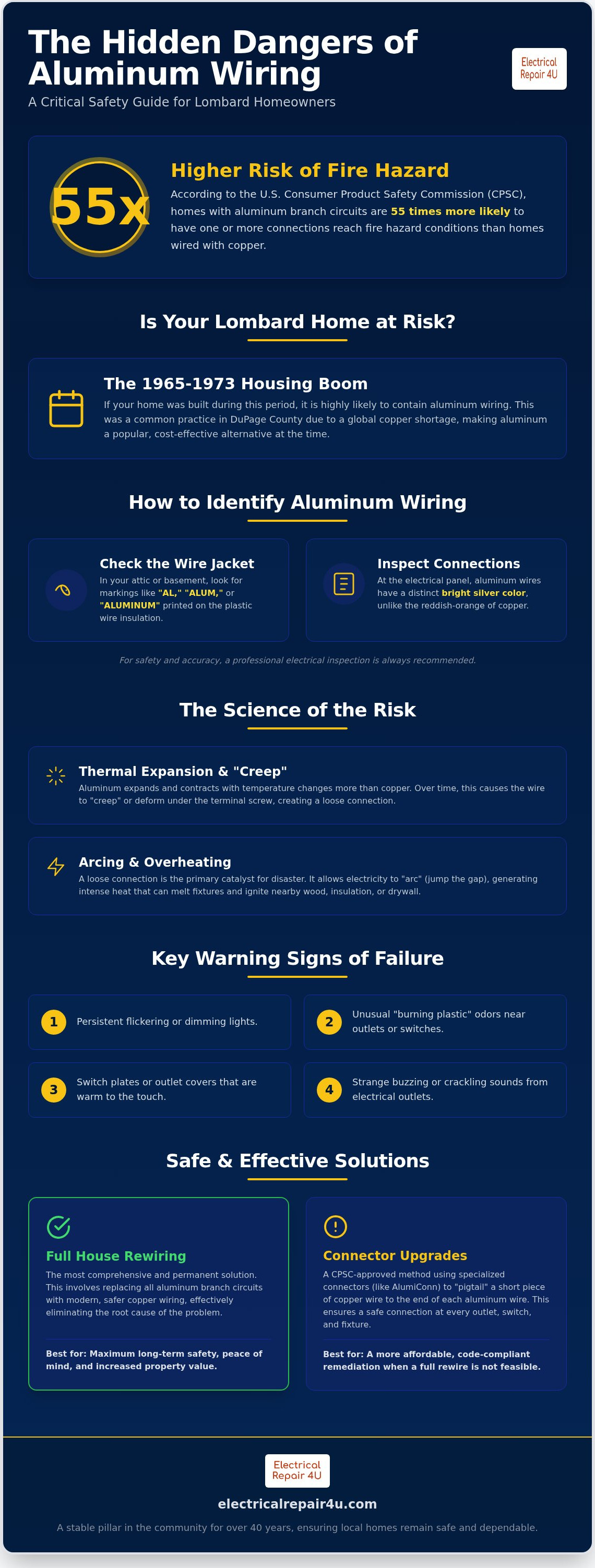
Did you know that homes with aluminum wiring are 55 times more likely to have a fire hazard at an outlet than those wired with copper? In Lombard, where many of our neighborhoods were built between the mid-1960s and early 1970s, the dangers of aluminum wiring Lombard homeowners face are a very real concern. It's unsettling to think that the wires behind your walls could be a safety risk. We know you might be feeling overwhelmed by conflicting advice from inspectors or anxious about the complexity of modern electrical standards.
We're here to help you replace that stress with professional clarity and neighborly support. Our team has spent over 40 years as a stable pillar in the community, ensuring local homes remain safe and dependable. This article will guide you through the specific risks associated with aluminum connections and show you how to spot the red flags before they turn into emergencies. You'll also learn about the most effective, code-compliant ways to secure your property. By the end, you'll have a straightforward plan to protect your family and your investment for the long term.
Key Takeaways
- Understand why the dangers of aluminum wiring Lombard homeowners face stem from a 55x higher risk of fire hazard conditions compared to copper connections.
- Learn why homes built in Lombard between 1965 and 1973 are most likely to contain these high-stakes electrical systems due to past construction trends.
- Identify the critical warning signs of failing wires, such as persistent flickering lights or unusual "burning plastic" odors near your outlets.
- Explore professional remediation options, ranging from the long-term security of a full house rewiring to modern, code-compliant connector upgrades.
- Discover why a professional safety audit from a seasoned local veteran is essential for protecting your family and removing the anxiety of hidden electrical failures.
Why Aluminum Wiring is Common in Lombard’s Older Neighborhoods
Lombard's residential landscape is defined by its mid-century character, but that history often hides a technical vulnerability. Between 1965 and 1973, our village experienced a massive housing surge. This era brought us the beautiful split-levels and sprawling ranches that many local families still call home. During this time, a global shortage of copper made traditional wiring expensive and difficult to source. Builders needed a reliable alternative to keep Lombard's expansion on track; aluminum branch circuit wiring became the go-to solution. It was marketed as a modern, cost-effective replacement for copper, and for nearly a decade, it was the standard for new construction across DuPage County.
The 1960s and 70s Housing Boom in DuPage County
The demand for affordable housing in Lombard meant that local building codes aligned with national trends, permitting the use of aluminum conductors. This transition period was a significant shift in how homes were powered. While aluminum is an excellent conductor for high-voltage transmission lines, its use in the smaller branch circuits of a typical home introduced unforeseen challenges. If your property was built during this specific eight-year window, you are likely living with this "old technology" every day. Recognizing the dangers of aluminum wiring Lombard homeowners encounter is the first step toward securing your property. We’ve been a stable pillar in this community for over 40 years, and we’ve helped countless neighbors navigate the legacy of this building boom.
Identifying Aluminum Wiring in Your Lombard Home
Finding out if your home has aluminum wiring doesn't have to be a mystery. You can often find the answer by inspecting the visible cables in your attic, basement, or crawlspace. Look closely at the plastic insulation jacket that wraps the wires. If your home uses aluminum, you will often see the letters "AL," "ALUM," or the word "ALUMINUM" printed directly on the jacket. You can also look at the terminal connections in your electrical panel. Aluminum wire is easily distinguished by its bright silver color, which stands out clearly against the reddish-orange hue of copper.
However, visual checks from a distance aren't always enough. Wiring can be a mix of materials, or previous owners might have performed partial repairs that hide the true nature of the system. Because the risks are so high, a professional electrical safety inspection is the only way to get a definitive answer. Our licensed professionals take the guesswork out of the process while helping you navigate the unique dangers of aluminum wiring Lombard homes can hide. We provide a collaborative partnership to help you understand exactly what’s happening behind your walls, ensuring your home remains a safe haven for your family.
The Science of Risk: Why Aluminum is 55 Times More Likely to Cause Fires
The Consumer Product Safety Commission (CPSC) didn't mince words when they released their findings on residential wiring. They discovered that homes using aluminum branch circuits are 55 times more likely to have one or more connections reach fire hazard conditions than homes with copper. This isn't just a minor technical difference; it's a significant gap in safety that every local homeowner should understand. When we talk about the dangers of aluminum wiring Lombard residents need to know, we're looking at how the metal behaves differently than copper behind your walls. Over our 40 years in the field, we've seen how these invisible scientific principles can lead to high-stakes failures.
Thermal Expansion and "Creep"
Aluminum is much more sensitive to temperature changes than copper. Every time you turn on a toaster or a vacuum, electricity flows through the wire and generates heat. Aluminum expands significantly during this process. Because the wire is often held in place by steel or brass screws at the outlet, it has nowhere to go. It eventually deforms or "creeps" out from under the screw.
This phenomenon, known as cold flow, creates a permanent change in the shape of the metal. When the electricity is turned off and the wire cools, it contracts. Since it has been deformed, it no longer fits snugly under the terminal screw. This creates a loose connection. In the world of electrical safety, a loose connection is the primary catalyst for disaster. It allows electricity to "arc" or jump across the gap, generating intense heat that can ignite nearby insulation or wood framing. Understanding the dangers of aluminum wiring Lombard properties face means recognizing that every time you use an appliance, a loose connection could be growing more hazardous.
Oxidation and Electrical Resistance
Another major hurdle is how aluminum reacts to the air around it. As soon as aluminum is exposed to oxygen, a thin layer of aluminum oxide forms on its surface. Unlike copper oxide, which still conducts electricity fairly well, aluminum oxide acts as an insulator. It resists the flow of current. Oxidation is the primary failure point in aluminum systems because it creates a layer of resistance that forces electricity to work harder to pass through the connection.
This resistance creates localized heat. As the heat rises, it accelerates the oxidation process and causes more thermal expansion, leading to even looser connections. This feedback loop can eventually reach temperatures high enough to melt plastic switch plates or start a fire. If you're concerned about these hidden risks, our team can help you repair electrical wiring to ensure your home remains safe and stable. We've spent decades identifying these cycles of failure before they become emergencies, providing you with the neighborly support and technical expertise you deserve.
5 Warning Signs of Faulty Aluminum Wiring in Your Lombard Home
Living in a home with aging infrastructure requires a bit of detective work. The dangers of aluminum wiring Lombard residents should watch for often start as minor annoyances before escalating into safety hazards. Because the metal "creeps" and oxidizes slowly over decades, the symptoms can be subtle. We've spent over 40 years helping our neighbors identify these red flags before they lead to property damage. If your home was built during the local housing boom, keep a close eye on these five common indicators of a failing system.
- Flickering lights: If your lights dim or flicker even after you've replaced the bulbs, it's often a sign of a loose connection at the fixture or the switch.
- Warm-to-the-touch wall plates: Outlets and switches should never feel hot. If a cover plate is warm, electricity is likely struggling to pass through a high-resistance connection.
- Static and interference: Strange buzzing on your audio equipment or intermittent "glitches" on your computer can be caused by micro-arcing in the walls.
- Persistent "tripping": While a breaker is designed to protect you, one that trips frequently may be reacting to the heat generated by aluminum terminals.
- Unexplained power loss: If a single outlet or half a room loses power without a tripped breaker, a wire has likely disconnected entirely.
Visual and Olfactory Red Flags
Sometimes your senses of sight and smell are your best defense. If you notice any charring, discoloration, or warping on your plastic outlet covers, stop using that circuit immediately. This is a clear sign that the internal temperature has reached dangerous levels. You might also notice a peculiar "fishy" or "burning plastic" odor near your receptacles. Understanding what a burning smell from an outlet actually means for your safety is critical; it’s usually the smell of melting insulation. Never ignore these signs, as they indicate that a fire hazard is already present.
Performance Issues and Intermittent Power
It's easy to assume that a circuit breaker will always trip if there's a problem, but that's not always true with aluminum. Arcing can occur at a loose connection without pulling enough current to trigger the breaker. This means the dangers of aluminum wiring Lombard homes harbor can exist even if your electrical panel seems fine. While regular breaker box maintenance is vital for home safety, it won't fix a loose screw on a bedroom outlet. Our team acts as your collaborative partner to bridge this gap, diagnosing the root cause of intermittent power issues so you can sleep soundly knowing your home is secure.
Repairing vs. Replacing: Safe Solutions for Aluminum Wiring
We understand that discovering these hidden risks can feel daunting. Our goal is to provide you with clear, actionable paths to secure your property and remove that lingering anxiety. While the dangers of aluminum wiring Lombard homeowners encounter are serious, they are also entirely solvable through proven, professional methods. We've spent over 40 years as a stable pillar in this community, helping your neighbors choose the right balance between immediate remediation and long-term investment.
One of the most reliable remediation methods today involves using AlumiConn connectors. These are modern, CPSC-approved lug-style connectors that physically separate the aluminum and copper wires, providing a much more stable connection than older techniques. Another option is the installation of CO/ALR devices. These are specialized switches and outlets specifically engineered to handle the unique expansion and contraction properties of aluminum conductors. Both methods offer a proactive way to stabilize your system without a full-scale overhaul.
The Pros and Cons of Pigtailing
Pigtailing involves joining a short piece of copper wire, or a "tail," to the existing aluminum wire. This copper tail then connects to your standard outlet or switch. It is a cost-effective way to address safety at every connection point in your home. However, the choice of connector is critical to the success of this repair. You might see "purple" wire nuts marketed for this purpose, but many seasoned professionals find them insufficient because they often fail to prevent the oxidation that leads to heat buildup. AlumiConn or COPALUM crimps are the preferred standards for achieving high-caliber results and emotional reassurance.
When Full Rewiring is the Best Investment
For many local families, a full home rewiring is the ultimate gold standard. It completely eliminates the dangers of aluminum wiring Lombard properties harbor by replacing the entire system with modern copper. This isn't just a safety upgrade; it's a significant investment in your home's future utility. Modern copper wiring easily supports high-demand upgrades like EV charger installation and smart home technology that older systems simply weren't built to handle.
Many insurance companies offer lower premiums or easier policy renewals for copper-wired homes. It also removes a major hurdle during the resale process, as today's buyers are increasingly savvy about electrical safety. Our team takes a non-invasive approach to this work, minimizing the impact on your daily life while maximizing your home's stability. If you're ready to secure your property for the next 40 years, our team can help you rewire your home with the precision and care you deserve.
Protecting Your Family: Professional Electrical Inspections in Lombard
Taking safety into your own hands is usually a point of pride for local homeowners, but electrical safety isn't a DIY project. While it's tempting to unscrew a wall plate and peek at the wires yourself, disturbing these fragile, decades-old connections can actually accelerate the very arcing and heat issues you're trying to prevent. Aluminum becomes brittle over time. A simple nudge can cause a weakened wire to snap or loosen further, turning a potential risk into an immediate hazard. Navigating the dangers of aluminum wiring Lombard properties present requires the steady hand of a licensed professional who understands the nuances of mid-century infrastructure.
A professional safety audit from our team is designed to remove anxiety and provide a clear, technical roadmap. We don't just glance at your breaker box; we perform a deep dive into the most high-stakes areas of your home. This includes a meticulous check of heavily loaded circuits in your kitchen and laundry room, where appliances pull the most current and put the most stress on old aluminum terminals. We look for signs of microscopic arcing, heat damage, and improper past repairs that might be hidden behind your walls. Our goal is to ensure every connection in your home is stable, secure, and fully compliant with modern safety standards.
The Value of a 40-Year Local Veteran
Our history in Lombard allows us to see what others might miss. Having served this community for over 40 years, we've identified recurring building shortcuts specific to certain local subdivisions built during the 1960s boom. We know which neighborhoods were wired with specific brands of older components that are prone to failure. This seasoned perspective means our assessments are honest, accurate, and rooted in decades of local experience. We act as your collaborative partner, ensuring your home meets current Illinois electrical codes while treating your property with the respect a neighbor deserves.
Next Steps for Lombard Homeowners
Securing your home starts with a comprehensive electrical safety inspection. We work with you to prioritize repairs based on immediate fire risk, focusing first on the circuits that show the most significant signs of wear. You don't have to tackle everything at once; we help you build a logical, long-term safety plan that fits your needs and your budget. By identifying these red flags early, we help you protect your family and your investment without the stress of the unknown. Let us help you turn your home back into a place of total security and dependability.
Secure Your Home’s Future Today
You've learned how the dangers of aluminum wiring Lombard homeowners face are rooted in the specific metallurgy of mid-century construction. From the significantly higher fire risk to the subtle warning signs like warm wall plates, the risks are real but manageable. Whether you choose the precision of AlumiConn remediation or the long-term stability of a full copper rewiring, taking action now removes the anxiety of the unknown. We've spent over 40 years as a stable pillar in this community; our licensed master electricians are ready to help you navigate these technical challenges with honest, neighborly advice.
You don't have to face these complex electrical issues alone. We're here to act as your collaborative partner, ensuring your property remains a safe haven for decades to come. Schedule your Lombard home safety inspection with Electrical Repair 4U today and gain the peace of mind that comes with professional expertise. Your family's safety is our highest priority. We're proud to help you build a more secure and dependable future for your home.
Frequently Asked Questions
Is aluminum wiring illegal in Lombard, Illinois?
Aluminum wiring is not permitted for new residential branch circuit installations according to Section 150.060 of the Lombard Village Code. While existing systems are generally grandfathered in, any new construction or significant renovations must adhere to the current National Electrical Code. If you're planning an upgrade, local regulations require a transition to copper to meet safety standards. We've helped neighbors navigate these specific local codes for over 40 years.
How much does it cost to replace aluminum wiring in a standard home?
The investment for remediation varies based on your home’s size and the specific method you choose. Industry data indicates that a full house rewiring is a more significant undertaking than targeted repairs like AlumiConn connectors. While we don't provide fixed quotes without a professional on-site audit, we focus on delivering long-term stability and value. A permanent solution often pays for itself by increasing property value and potentially lowering insurance premiums.
Can I just use AlumiConn connectors myself to save money?
We strongly advise against DIY electrical work when dealing with the dangers of aluminum wiring Lombard homes present. Even though these connectors are available, proper installation requires specific torque settings and professional precision to prevent future arcing. In Lombard, homeowners must pass a qualification test just to pull their own permits. It's much safer to rely on a licensed professional who has the specialized tools to guarantee a secure connection.
Will my homeowners insurance be canceled if I have aluminum wiring?
It's common for insurance companies to require professional remediation or a full rewire before they'll issue or renew a policy. Many insurers view aluminum branch wiring as a high-risk factor due to its statistical fire history. Providing proof of a professional safety audit or a completed remediation plan can often help you maintain your coverage. We provide the necessary documentation to show your insurer that your home meets modern safety standards.
Does all aluminum wiring need to be replaced immediately?
Addressing the dangers of aluminum wiring Lombard homeowners face doesn't always mean an overnight overhaul. While every system needs a professional evaluation, we can prioritize repairs by identifying the most hazardous connections first. This often includes high-load circuits in kitchens or laundry rooms. A collaborative safety plan allows you to manage the most urgent fire risks immediately while giving you the flexibility to plan for future home improvements.
What is the difference between old and new technology aluminum wire?
The primary difference lies in the alloy composition and thermal stability. Older aluminum wiring from the 1960s was prone to extreme expansion and contraction, while modern AA-8000 series alloys are more stable. However, Lombard building codes still restrict aluminum conductors for interior branch circuits regardless of the alloy. Even with newer technology, copper remains the gold standard for residential safety and performance in our local DuPage County neighborhoods.
How long does a full home rewiring project typically take?
A standard home rewiring project usually takes between three to seven days depending on the complexity of your home’s layout. Our team uses non-invasive techniques to minimize the impact on your daily life and keep your property clean. We focus on efficiency so you can return to your normal routine as quickly as possible. We'll provide a clear, logical timeline before we start, ensuring you feel supported throughout the entire process.
Can I still install an EV charger if my home has aluminum wiring?
You can certainly install a charger, but it must be on a dedicated copper circuit. You cannot tap into existing aluminum branch wiring to power a high-demand device like an electric vehicle. During an EV charge point installation, we run a new, modern line directly from your breaker box. This ensures your new technology doesn't overload your older infrastructure. It keeps your home safe while you enjoy the benefits of modern transportation.


