

Would you trust a twenty year old safety device to protect your family from a high-voltage shock in your own kitchen? Many homeowners don't realize that these essential lifesavers have a limited lifespan of about seven to fifteen years, often failing silently while you go about your daily routine. It's natural to feel a sense of dread when dealing with wet area electricity or staring at a confusing mess of "Line" and "Load" wires. You deserve a home that feels like a sanctuary, not a source of technical anxiety.
In this guide, we'll help you master the essentials of GFCI outlet installation and the latest 2026 NEC requirements. You will learn how new high-frequency technology prevents modern appliances from causing those frustrating, unexplained trips. We'll walk through exactly where these outlets are mandatory, explain the critical September 2026 deadline for HVAC equipment, and help you decide when a project requires the steady hand of a master electrician. By the end, you'll have the clarity and confidence to ensure your home's electrical system is both stable and secure.
Key Takeaways
- Understand how Ground Fault Circuit Interrupters monitor electrical flow to shut off power in milliseconds, protecting your family from dangerous leaks.
- Learn the critical differences between GFCI and AFCI technology so you can choose the right protection for shock prevention and fire safety.
- Master the professional steps of GFCI outlet installation, including the vital distinction between "Line" and "Load" wiring to ensure your circuit is fully protected.
- Identify why your outlets might trip frequently and learn how moisture or hidden ground faults can prevent a successful reset.
- Discover why professional installation is necessary to maintain code compliance and protect your homeowner's insurance validity.
What is GFCI Outlet Installation and Why is it Mandatory?
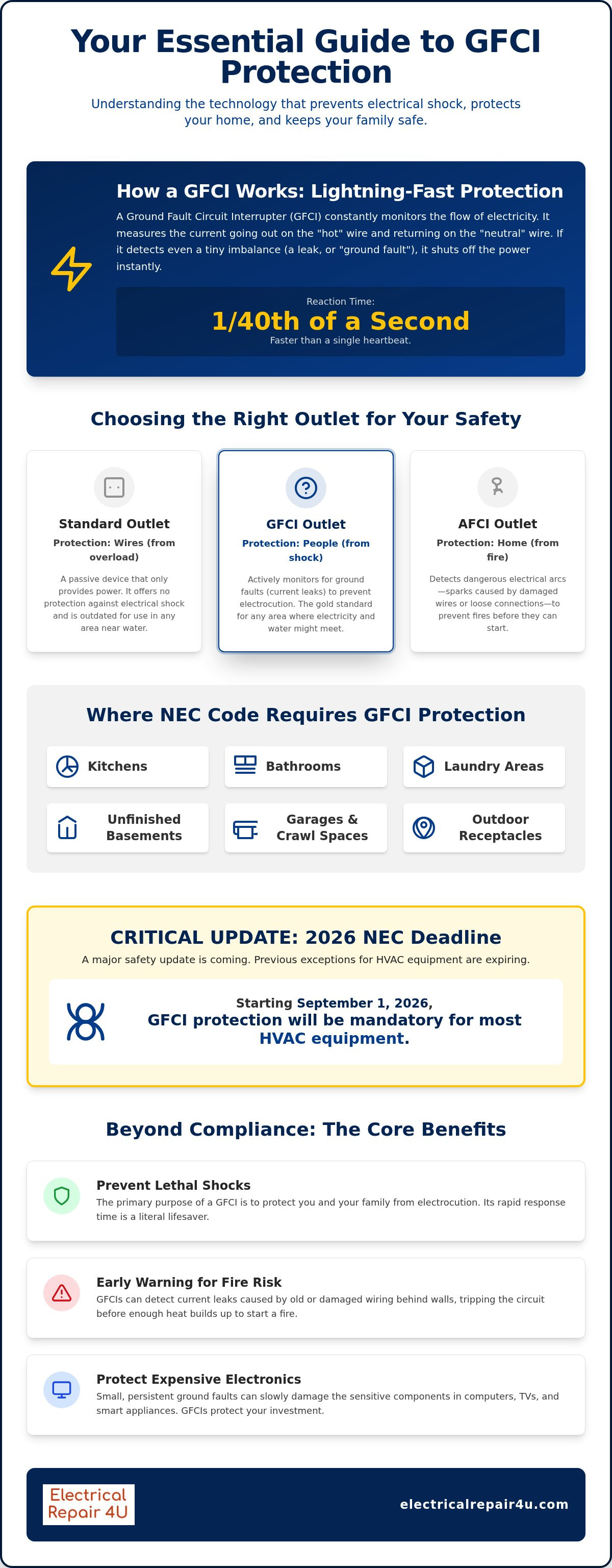
Electricity is a powerful force that always looks for the easiest path to the earth. When that path includes water or a human body, the results are often tragic. This is where What is a GFCI (Ground Fault Circuit Interrupter) becomes your home's most important safety feature. Unlike a standard breaker that protects your home's wiring from overheating, a GFCI is designed specifically to protect people. It functions by measuring the current leaving the "hot" side and comparing it to the current returning on the "neutral" side. If those numbers don't match, the device assumes a leak has occurred. A ground fault is electricity escaping its intended path toward the ground. When this happens, the internal sensor trips the circuit in as little as 1/40th of a second. This speed is faster than a single heartbeat, which is why GFCI outlet installation is the gold standard for preventing electrocution.
Life-Saving Benefits of GFCI Protection
The primary goal is preventing lethal shocks, but the benefits extend to the very structure of your home. These devices act as early warning systems for insulation breakdown. If a wire behind your wall begins to fray or crack, a GFCI can detect the resulting leak before it generates enough heat to start a fire. You also gain a layer of protection for your expensive electronics. Persistent, tiny ground faults can slowly degrade the internal components of computers and smart appliances. By stopping these faults at the source, you ensure the longevity and stability of your modern household technology. It removes the underlying anxiety of "what if" in your most-used rooms.
NEC Code Requirements for 2026
The National Electrical Code (NEC) updates are strictly enforced to keep pace with modern home demands. As of the 2026 edition, GFCI outlet installation is mandatory in any area where moisture is present. This includes kitchens, bathrooms, unfinished basements, and laundry rooms. The 2026 code also emphasizes protection for garages, crawl spaces, and all outdoor receptacles. One of the most significant changes involves HVAC systems. Starting September 1, 2026, the previous exceptions for HVAC equipment expire. This means your heating and cooling units will now require specialized ground fault protection to meet safety standards. In Warrenville and throughout DuPage County, local inspectors are particularly diligent about these corrections. We often help neighbors update their homes before a sale to avoid the stress of a failed inspection. Keeping your home compliant isn't just about following rules; it's about maintaining a safe environment that protects your family's well-being for years to come.
GFCI vs. Standard and AFCI: Choosing the Right Protection
Standard outlets are the workhorses of older homes, but they are essentially "dumb" devices. They provide power until a fuse blows or a breaker trips, which is often too late to prevent a serious accident. Modern GFCI outlet installation introduces intelligence to your walls. While a standard outlet carries current without a second thought, a GFCI monitors it constantly. This evolution in technology is a cornerstone of home electrical safety, moving us away from passive hazards toward active protection.
The Difference Between GFCI and AFCI
It helps to think of GFCI and AFCI as two different types of security guards for your home. A GFCI (Ground Fault Circuit Interrupter) is your specialist for wet areas. It detects current leakage to ground, which is the primary cause of electrical shocks. In contrast, an AFCI (Arc Fault Circuit Interrupter) is designed to prevent fires. It looks for dangerous sparking, or arcing, caused by damaged wires or loose connections. While code requires AFCIs in bedrooms and living areas, GFCIs are the priority for kitchens and baths. Today, you can even install dual-function devices that offer both shock and fire protection in a single unit. You can identify these by looking for the "Test" and "Reset" buttons on the face of the outlet, which are often color-coded or labeled for clarity.
Why Standard Outlets are Outdated for Wet Areas
Using a standard, ungrounded two-prong outlet near a sink or water source is a significant risk. These older models lack the internal mechanism to cut power when water creates a shortcut. Many instances of residential electrical repair in Warrenville involve replacing these outdated hazards with modern, weather-resistant (WR) GFCI models. These newer units are built with corrosion-resistant components, ensuring they don't fail when humidity levels rise or when installed in damp basements.
True security comes from a layered approach. While GFCI outlet installation protects your family from immediate shocks, those sensitive safety circuits can be fried by a sudden power surge. This is why we recommend pairing your outlets with whole house surge protector installation. A surge protector acts as a shield for your safety devices, ensuring your GFCIs remain functional and ready to trip when they are needed most. If you are unsure if your home meets these modern standards, our team can provide a thorough breaker box maintenance check to identify any gaps in your protection.
The Professional GFCI Installation Process
A professional GFCI outlet installation is a precise sequence of safety checks and technical calibrations. While a quick internet search might suggest it's a simple wire-swap, our forty years of experience in DuPage County has shown that every home presents unique variables. We follow a methodical five-step process to ensure your family is fully protected. First, we perform a complete power shut-off at the main breaker box and use a non-contact voltage tester to verify the circuit is truly dead. Second, we identify the 'Line' and 'Load' wires, which is the most critical step for circuit integrity. Third, we secure the terminal connections and ensure the device is properly grounded. Fourth, we test the reset and trip functions to confirm the internal circuitry is responsive. Finally, we label the outlet correctly if it is providing downstream protection for other standard receptacles.
Understanding Line vs. Load Wiring
The most common DIY mistake we encounter is the accidental swapping of 'Line' and 'Load' wires. The 'Line' wires provide the incoming power from your breaker box, while the 'Load' wires carry that protected power to other outlets further down the circuit. This is known as daisy-chaining. If these are reversed, the GFCI will still provide power to the outlet face, but it won't offer any shock protection to the rest of the room. Our master electricians verify these connections with specialized equipment to ensure that a single GFCI outlet installation successfully guards every downstream outlet in your kitchen or bathroom.
Challenges in Older Illinois Homes
Homes in Naperville and Warrenville often feature electrical systems that predate modern safety standards. One frequent hurdle is the size of the electrical box itself. Older metal boxes were designed for slim, standard outlets and are often too small for the bulky housing of a modern GFCI. Forcing a device into a cramped space can pinch wires or cause a short circuit. We also frequently manage old cloth-covered wiring that has become brittle over time. In cases where a ground wire is missing entirely or the box is too small, we may recommend installing a GFCI breaker directly into your panel. This approach provides the same life-saving protection without the need to modify your existing wall boxes, maintaining the aesthetic of your historic home while bringing it up to 2026 safety codes.
Troubleshooting: Why Your GFCI Outlet Won't Reset
It's a common frustration: you're in the middle of a morning routine, and suddenly your bathroom outlet goes dead. You press the "Reset" button, but it refuses to click back into place. While this might feel like a technical failure, it's actually your GFCI outlet installation performing its primary job. A persistent trip is a clear signal that the device has detected a ground fault. This means electricity is escaping its intended path, and the outlet is standing between you and a potentially lethal shock. It's a safety feature, not a malfunction.
Moisture is the most frequent reason for a reset failure, especially in outdoor areas or humid bathrooms. Even a small amount of dampness inside the electrical box can trigger the sensor. If the area is wet, the button will stay popped out until the moisture evaporates. However, if the outlet is dry and still won't reset, you might be dealing with an overloaded circuit or internal component failure. Don't forget that these devices have a limited lifespan. Most GFCI outlets last between 7 and 15 years. If your home hasn't been updated in a decade, the internal mechanism may have simply reached its end of life.
Common Causes of GFCI Trips
Sometimes the problem isn't the outlet itself, but what you've plugged into it. Faulty appliances like older toasters or hair dryers often leak tiny amounts of current that are just enough to trip a sensitive GFCI. Dust and construction debris can also accumulate inside the box over time, creating a high-resistance path that mimics a ground fault. In some local homes, we've found that pests in crawl spaces or walls have chewed through wiring insulation. This creates a direct fault that prevents the circuit from staying active until the damaged wire is repaired.
How to Perform a Monthly Safety Test
Testing your outlets shouldn't be a once-a-year event. We recommend a quick check every month to ensure the internal circuitry is still responsive. First, press the "Test" button; the "Reset" button should pop out immediately, cutting power to the outlet. Press "Reset" to restore power. For a more thorough verification, use an external plug-in circuit tester. This tool confirms that the wiring is still correct and that the trip function is actually severing the connection as intended. If the button stays popped out or feels "mushy," the device has failed. If you encounter a stubborn outlet that won't stay active, reach out for a professional electrical repair to secure your home's safety and restore your peace of mind.
Why Hire a Licensed Electrician for GFCI Upgrades?
While a DIY approach might seem like a way to save money, GFCI outlet installation is a high-stakes task that directly impacts your family's safety. A licensed electrician brings more than just tools to your home; they bring a deep understanding of current 2026 NEC standards. This ensures your home is 100% code-compliant, which is vital for passing future home inspections. Beyond legalities, professional installation protects your homeowner's insurance validity. If an electrical fire occurs and an investigation finds unpermitted or improper DIY work, your claim could be denied. You deserve the security that comes from knowing the job was done right the first time.
Expertise also means looking beyond the outlet itself. As we discussed in the troubleshooting section, a tripping device is often a symptom of a larger circuit issue. A seasoned veteran can diagnose underlying problems, such as loose neutral wires or damaged insulation deep within your walls, that a simple hardware swap won't fix. This proactive approach removes the anxiety of recurring failures and ensures a stable, reliable power supply for your modern appliances. By choosing a professional, you're investing in the long-term stability of your home's infrastructure.
The Risks of DIY Electrical Work
The dangers of amateur electrical work extend far beyond a simple shock. Loose connections are a leading cause of residential fires, as they create high-resistance heat that can ignite nearby materials. Improper wire nut usage or failing to secure terminal screws can lead to arcing behind your walls. Working inside a live breaker panel without proper arc-flash gear is incredibly hazardous, even for those who feel confident. Perhaps most dangerous is the "false" sense of protection. An incorrectly wired GFCI might have a green light that stays on, yet the trip mechanism could be completely disabled. This leaves your family exposed to a ground fault without any warning, turning a safety device into a hidden hazard.
Electrical Repair 4U: Your Local Safety Experts
We've spent over 40 years serving our neighbors in Warrenville, Naperville, and Aurora. Our tenure as a stable pillar of the community is built on a foundation of honesty and safety-first results. We don't just swap parts; we provide a comprehensive safety inspection with every outlet replacement to ensure your entire system is healthy. Our team of licensed master electricians takes pride in their craft, treating every home as if it were their own. This collaborative partnership ensures your home remains a sanctuary for years to come. Contact Electrical Repair 4U for professional GFCI installation today! and let us handle the technical stress so you can focus on what matters most.
Secure Your Home’s Safety with Modern GFCI Protection
Ensuring your home is equipped with the latest safety technology is one of the most effective ways to protect your family from electrical hazards. From understanding the millisecond response times of modern devices to navigating the complex wiring of older Naperville and Warrenville homes, you now have the knowledge to maintain a secure electrical system. Remember that GFCI outlet installation is more than a simple hardware upgrade; it's a vital shield against shocks and potential fires in your most vulnerable living spaces.
Don't let outdated outlets or confusing "Line" and "Load" wires create unnecessary stress in your daily life. Our team has provided licensed and insured electrical services to DuPage County since the 1980s, bringing over 40 years of local experience to every project. We're here to act as your collaborative partners in home safety and technical reliability. Schedule your professional GFCI safety upgrade with Electrical Repair 4U to ensure your home meets the 2026 NEC standards with absolute precision. You deserve the lasting peace of mind that comes from a stable and dependable electrical system.
Frequently Asked Questions
How much does it cost to have a GFCI outlet installed by an electrician?
The cost for this service depends on whether you are replacing an existing unit or requiring a brand new electrical run. Factors such as the age of your home's wiring, the size of your electrical boxes, and your specific location in the DuPage County area will influence the final estimate. A licensed professional can provide a clear, honest assessment after inspecting your home's infrastructure to ensure the result is both safe and code-compliant.
Can I replace a standard outlet with a GFCI myself?
While some homeowners attempt this as a DIY project, a professional GFCI outlet installation ensures your family is truly protected. Amateur mistakes, such as swapping the "Line" and "Load" wires, can leave the outlet functional but completely strip away its life-saving shock protection. Hiring a master electrician removes this anxiety by providing a verified, secure connection that meets all 2026 safety standards and maintains your homeowner's insurance validity.
Why does my GFCI outlet keep tripping when nothing is plugged in?
A "phantom trip" usually indicates that moisture, dust, or a ground fault exists somewhere else on the same circuit. Since one GFCI often guards multiple standard outlets downstream, a problem in a different room can cause the main device to pop. It could also suggest that the internal sensor has worn out. If the tripping persists, it is a clear signal that your electrical system requires a professional diagnostic check.
Do all outlets in a kitchen need to be GFCI?
Yes, according to the 2026 National Electrical Code, all receptacles serving kitchen countertop surfaces must have ground fault protection. This requirement covers outlets near the sink and those located along the backsplash areas. You do not necessarily need a GFCI device at every single wall plate. A single properly wired unit can serve as a master protector for several standard outlets located further down the same circuit.
What is the difference between a GFCI outlet and a GFCI breaker?
A GFCI outlet provides protection at a specific wall location, whereas a GFCI breaker protects the entire circuit from the main breaker box. Breakers are often the superior choice for older homes with cramped wall boxes that cannot fit the bulky housing of a modern outlet. Both options provide the same high-caliber shock protection, and a seasoned veteran can help you decide which is more stable for your home.
How long do GFCI outlets typically last before needing replacement?
Most GFCI devices have a functional lifespan of seven to fifteen years. Environmental conditions, such as high humidity in a bathroom or temperature swings in a garage, can cause the internal components to degrade faster. Because these units can fail silently, we recommend a monthly safety check. If the "Test" and "Reset" buttons feel mushy or fail to click, the device has reached its end of life and needs immediate replacement.
Can a GFCI outlet be installed without a ground wire?
Yes, you can install a GFCI in an older two-wire system to add a layer of shock protection where none existed. This is a common safety upgrade for historic homes in Warrenville that lack modern grounding. However, the National Electrical Code requires these specific outlets to be labeled "No Equipment Ground." This informs users that while they are protected from shocks, the outlet will not provide a ground path for sensitive electronics.
What should I do if my GFCI outlet won't reset after a power outage?
Start by checking your main panel to ensure the circuit breaker hasn't tripped. If the breaker is on but the outlet button won't stay depressed, the device may have been damaged by a power surge or there could be a persistent ground fault. If the "Reset" button refuses to click back into place after several attempts, it is a sign that the internal safety mechanism has failed. You should contact a professional to restore your home's security.


