
Imagine waking up at midnight to a faint, acrid smell of burning plastic near your hallway outlet. You don't see any smoke, but your mind immediately races toward the possibility of a house fire. It's a high-stakes moment where confusion often leads to paralyzing anxiety. You want to protect your family, yet you worry about calling for help and being charged a premium for a minor issue. Understanding what constitutes an electrical emergency is the first step in replacing that fear with a clear, actionable plan.
We understand the stress of staring at a flickering panel or a warm switch plate while wondering if your home is truly safe. With over 40 years of experience as a stable pillar in our local community, we've seen how a little knowledge can prevent a major disaster. This guide will teach you how to distinguish between a simple nuisance and a life-threatening crisis. We will provide clear criteria for identifying a true electrical hazard, outline immediate safety steps to take, and help you find peace of mind through professional validation. Let's ensure your home's safety remains current and reliable.
Key Takeaways
- Learn how to distinguish between a minor electrical nuisance and a life-threatening hazard to keep your home and family safe.
- Identify the specific warning signs, such as acrid "fishy" smells or humming sounds, that indicate melting insulation or a failing breaker box.
- Master the "Single Point vs. Systemic" rule to understand exactly what constitutes an electrical emergency and when you need immediate professional help.
- Gain the confidence to handle a crisis with step-by-step safety protocols, including how to safely kill power at the main breaker.
- Understand why a professional evaluation from a 40-year veteran is necessary to find the root cause of a problem and prevent future fires.
Defining the Electrical Emergency: Immediate Hazards vs. Urgent Repairs
Determining what constitutes an electrical emergency is the difference between a peaceful night's sleep and a devastating house fire. An emergency is any situation that poses an immediate risk of fire, electrocution, or significant property damage. Most homeowners struggle to distinguish between a simple inconvenience and a genuine hazard. For example, a single dead outlet in your bedroom is usually a minor repair you can schedule for a later date. However, a humming breaker box or a switch plate that feels hot to the touch indicates a system under extreme stress. These issues are unique because they are often invisible threats hidden behind your walls, silently generating heat long before you see a flame.
Professional triage is essential to prevent catastrophic failure. Our team has spent over 40 years acting as a stable pillar for neighbors in Warrenville, providing the technical expertise needed to identify these hidden dangers. We don't just fix the symptom; we look for the root cause to ensure your home remains a safe haven. By positioning ourselves as your collaborative partner, we aim to remove the anxiety associated with technical failures through clear, honest communication and safety-first repairs.
The Core Definition of an Electrical Crisis
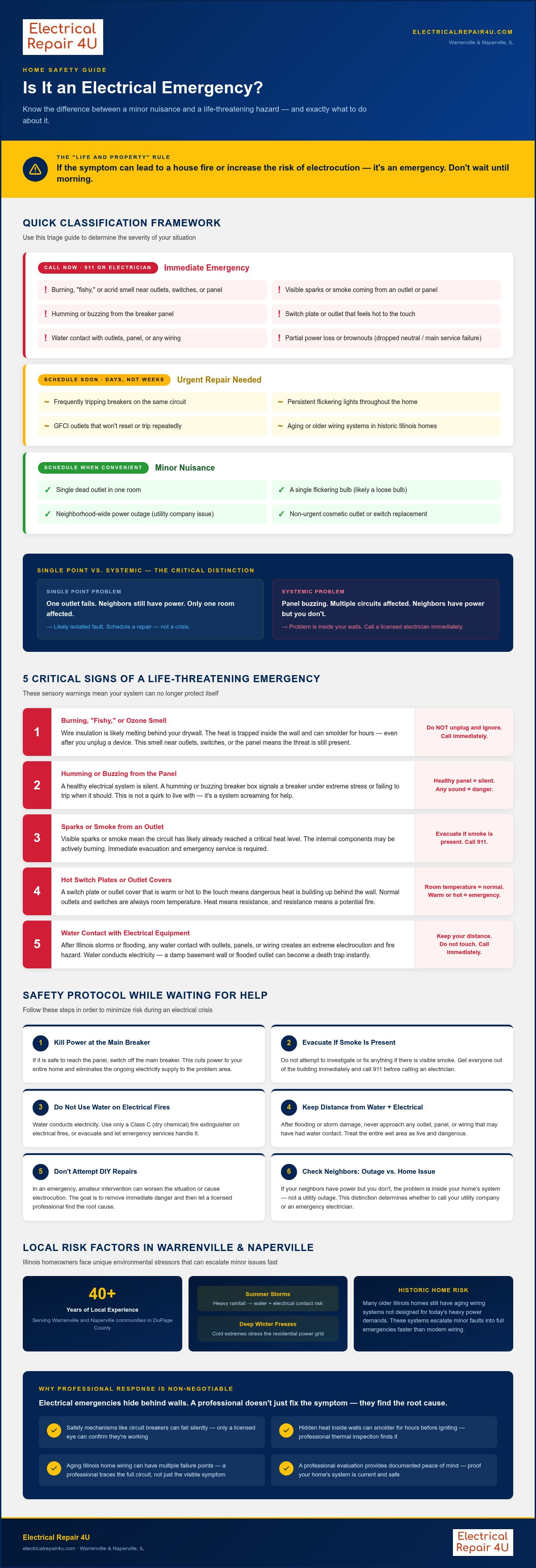
An electrical emergency exists when your system's safety mechanisms, such as circuit breakers or GFCI outlets, have failed or are under extreme stress. We follow the "Life and Property" rule: if the symptom can lead to a house fire or increase the dangers of electrical shock, it's a crisis. Understanding what constitutes an electrical emergency helps you realize that waiting until the next business day is a dangerous gamble in these scenarios. Signs like acrid smells or sparking panels mean the system can no longer protect itself, and you need a professional to intervene immediately.
Why Local Infrastructure Matters in Warrenville and Naperville
Our local infrastructure in Warrenville and Naperville presents specific challenges for homeowners. Many historic Illinois homes still feature older wiring that wasn't designed for today's heavy power demands. These aging systems can escalate minor issues into full-blown emergencies during extreme weather. Summer storms and deep winter freezes put immense pressure on the residential power grid in DuPage County. It's also vital to distinguish between neighborhood-wide outages and home-specific emergencies. If your neighbors have lights but your panel is buzzing, the problem is likely inside your walls and requires a licensed professional's eye to resolve safely.
5 Critical Signs of a Life-Threatening Electrical Emergency
Recognizing the sensory triggers of a system failure is the most effective way to protect your home. While a flickering lamp might just be a loose bulb, other symptoms indicate that your home’s infrastructure is under dangerous levels of stress. In our local area, homes face unique environmental pressures like heavy seasonal rainfall and rapid temperature shifts. These factors can turn a minor wiring flaw into a major hazard overnight. Understanding what constitutes an electrical emergency helps you act before a spark turns into a tragedy.
Beyond smells and sounds, visible signs and power fluctuations demand immediate attention. If you see sparks or smoke from an outlet, the circuit has likely already reached a critical heat level. Similarly, partial power loss or "brownouts" often signal a dropped neutral or a main service failure. These aren't just inconveniences; they are precursors to equipment damage or fire. After heavy Illinois rainfall, any water contact with outlets or panels creates an extreme danger. Water conducts electricity, turning a damp basement wall or a flooded outlet into a potential death trap. Always follow electrical hazard safety protocols by keeping your distance from any equipment in contact with water.
The Scent of Danger: Burning Plastic and Ozone
Burning smells are the primary indicator of an active electrical fire risk. If you detect an acrid, "fishy," or "ozone" scent, your wire insulation is likely melting behind the drywall. This scent often lingers near outlets, switches, or the main service panel. If you smell this, do not simply unplug the device and walk away. The heat is often trapped inside the wall, where it can smolder for hours. This is exactly what constitutes an electrical emergency because the threat remains even after the appliance is removed.
Humming and Buzzing: When the Panel Protests
A healthy electrical system should be silent. There is a significant difference between a faint, normal hum and a loud, aggressive buzzing or arcing sound. A buzzing breaker box is a clear sign that a safety mechanism is failing to trip or that electricity is jumping between loose connections. Regular breaker box maintenance helps catch these issues before they become audible. When your panel begins to protest, our specialized residential electrical repair in Warrenville provides the expert intervention needed to secure your home. If you hear your system struggling, it's time to schedule a professional safety check to ensure your peace of mind.
Emergency Triage: Should You Call Now or Schedule Later?
Developing a "Homeowner Triage" mindset helps you act decisively without overreacting to every minor flicker. The goal is to separate small inconveniences from genuine threats to your safety. We often see homeowners paralyzed by the fear of high emergency fees, yet they hesitate to call when their home is at risk. It is helpful to remember that an emergency visit is a proactive investment in fire prevention. By understanding what constitutes an electrical emergency, you can protect your property while avoiding unnecessary service calls for minor repairs.
A simple way to evaluate your situation is the "Single Point vs. Systemic" rule. If a single lamp is flickering, the problem is likely isolated to that bulb or cord. However, if lights are dimming across multiple rooms or your entire kitchen loses power simultaneously, you have a systemic failure. Systemic issues often originate at the breaker box or the main service line, which places them firmly in the emergency category. When a minor issue like flickering is accompanied by heat or a buzzing sound, the risk level escalates immediately.
The Emergency vs. Urgent Repair Framework
To help you decide your next move, consider these three tiers of electrical care. Distinguishing between them ensures you get the right level of help at the right time. Many homeowners find that a whole house surge protector installation can prevent many of these systemic issues from occurring in the first place.
- Emergency (Call Now): Visible sparks, acrid burning smells, a service panel that is hot to the touch, or a humming breaker box that won't trip.
- Urgent (Same Day): Partial power loss, flickering lights that occur when large appliances kick on, or outlets that work only intermittently.
- Standard (Scheduled): Upgrading old outlets, fixing a loose light switch, or installing new ceiling fans and lighting fixtures.
Evaluating Risk in Multi-Family and Commercial Spaces
Electrical crises in commercial or multi-family buildings involve significantly higher liability than single-family homes. For business owners in Lombard and Aurora, a power failure is more than a nuisance; it can disable critical safety systems like fire alarms and emergency exit lighting. Our commercial electrical services focus on keeping these essential systems operational to protect both your employees and your customers. In these high-occupancy environments, any sign of systemic instability qualifies as an emergency that requires a licensed professional's immediate attention.
Safety Protocols: What to Do While Waiting for Help
Once you've identified what constitutes an electrical emergency, your priority shifts immediately to containment and personal safety. The high-stakes minutes before a professional arrives are critical for protecting your family and your property. The first and most vital rule of electrical safety is to never touch a person or an object currently in contact with a live current. If a family member is being shocked, do not grab them. Use a non-conductive object like a wooden broom handle to move them away from the source, or ideally, kill the power at the main breaker before approaching.
In our 40 years of serving the Warrenville community, we've seen how a calm, methodical response prevents minor incidents from becoming tragedies. When you realize your home is facing a crisis, your first action should be to create distance between your loved ones and the hazard. If a panel is buzzing or an outlet is smoking, the risk of a flashover or a sudden fire is real. Taking the right steps now ensures that when our team arrives, the situation is stable and ready for a professional resolution.
Step-by-Step: Cutting the Power Safely
Locate your main service panel, which is typically found in the basement, garage, or a utility closet. You are looking for the "Main" disconnect, which is usually a large double-pole breaker at the top of the panel. We strongly recommend using the "one-hand rule" when operating a main breaker, especially in damp Illinois basements. Keep one hand in your pocket and use the other hand to flip the switch. This simple technique prevents a current from passing through your chest and heart if a fault occurs. Cutting power is the single most effective way to stop an electrical fire before it can spread through your walls.
Managing the Scene and Evacuating
If you encounter a small electrical flare-up, you must never use water to extinguish it. Water conducts electricity and will likely cause a severe shock or worsen the fire. Only use a Class C or multi-purpose ABC fire extinguisher. If the smoke becomes thick or you see flames emerging from behind the drywall, stop troubleshooting immediately and get everyone out of the house. Notify the fire department even if you think the "fire" is out. Smoldering heat trapped inside insulation can reignite hours after the initial spark. Keep your driveway and entryway clear for the emergency electrician to ensure they can reach your panel without delay. If you are currently facing a crisis and need expert help, contact our emergency team for immediate professional assistance.
Why Professional Response is Non-Negotiable for Electrical Crises
When you're standing in a dark hallway smelling ozone, the temptation to "just check the wires" yourself is high. Don't do it. A DIY fix might restore power temporarily, but it often leaves the underlying cause untouched. This creates a ticking time bomb behind your walls. Understanding what constitutes an electrical emergency means recognizing that the danger doesn't vanish just because the lights came back on. A licensed professional brings the specialized equipment and training to verify that the circuit is truly stable and safe for your family.
We've served as a stable pillar for the Warrenville community for over 40 years. That tenure allows us to see the root cause where others only see a symptom. Whether it's a failing breaker box or degraded wiring in an older home, we ensure every repair meets the most current safety codes. This proactive approach prevents future crises and restores the peace of mind that only comes from knowing the job was done right by a seasoned veteran.
The Risk of the 'Quick Fix'
DIY electrical work carries heavy risks that extend far beyond the initial repair. For instance, improper wiring can lead to future EV charger installation failures or catastrophic panel overloads. Beyond immediate safety, there are serious insurance implications to consider. Most homeowner policies require safety-critical work to be performed by licensed contractors. Unpermitted emergency repairs can void your coverage, leaving you liable for damages if a fire occurs later. A professional safety guarantee removes this financial and emotional burden entirely.
Your Local Partner in Electrical Safety
Electrical Repair 4U isn't just a faceless contractor; we are your neighbors. We take pride in our neighborly reliability and high-stakes technical expertise. Our commitment to Warrenville, Naperville, and the surrounding DuPage County suburbs has remained unchanged for four decades. We understand the specific infrastructure of our local area and the unique challenges our Illinois weather presents. We don't just fix wires; we secure homes and build long-term partnerships with the families we serve. Don't wait for a spark to become a fire—contact us for emergency support.
Protecting Your Home with Confidence and Clarity
Your home should be a place of security, not a source of constant worry. By mastering the signs of a systemic failure and knowing when to hit the main disconnect, you've already taken the most important steps toward fire prevention. Understanding what constitutes an electrical emergency allows you to act with precision when seconds count. Whether you're smelling ozone or hearing a hum from your panel, your quick decision to prioritize safety can prevent a minor fault from becoming a major loss.
We've been serving Warrenville and the wider DuPage County area since 1983. Our team of licensed and insured master electricians brings over 40 years of local experience to every call. We don't just fix the immediate problem; we ensure your entire system is stable and code-compliant. Secure your home today; Contact Electrical Repair 4U for emergency service or a safety inspection. You don't have to face technical failures alone. We are here to provide the dependable, neighborly support you need to keep your household running safely and efficiently.
Frequently Asked Questions
Is a buzzing light switch considered an electrical emergency?
Yes, a buzzing light switch is often a precursor to a more serious hazard. This sound usually indicates electrical arcing, where current jumps between loose connections or damaged internal components. While it might seem like a minor nuisance, this heat build-up can eventually melt insulation and start a fire behind your walls. We recommend turning off the circuit at the breaker and contacting a professional to replace the switch immediately to ensure your home's stability.
What should I do if my outlet is warm to the touch but not smoking?
A warm outlet is a significant warning sign that your electrical system is under stress. This usually happens when the internal connections are loose or the circuit is overloaded. You should unplug everything from that outlet and stop using it immediately. While it isn't smoking yet, the heat indicates that the materials are nearing their melting point. It's a key example of what constitutes an electrical emergency requiring professional inspection.
Can I use a regular fire extinguisher on an electrical fire?
You must only use a fire extinguisher labeled as Class C or a multi-purpose ABC model on an electrical fire. Standard Class A extinguishers, which use water, are extremely dangerous because water conducts electricity and can lead to a fatal shock. If you don't have the correct extinguisher or the fire is larger than a small toaster, evacuate your home immediately. Safety is our top priority for families in Aurora and the surrounding DuPage County communities.
Why does my circuit breaker keep tripping immediately after I reset it?
A breaker that trips immediately after a reset is doing its job by protecting your home from a short circuit or a severe ground fault. Repeatedly resetting the breaker can cause a catastrophic failure or an electrical fire. This "hard trip" means there is a direct path to ground or a major wiring failure that needs to be diagnosed. Our licensed professionals have spent four decades identifying these critical faults for homeowners in Lombard and Elmhurst.
What is the most common cause of home electrical fires in Illinois?
In Illinois, arcing faults and aging infrastructure are leading causes of residential electrical fires. Many homes in historic suburbs like Naperville and Oak Park have wiring that hasn't been updated to handle modern power demands from large appliances and EV chargers. These older systems often experience degraded insulation or loose connections that generate intense heat. Proactive breaker box maintenance is one of the most effective ways to identify these hidden risks before they escalate.
Is it an emergency if only half of my house has power?
Losing power to only half of your house is a genuine emergency known as a "dropped phase" or "dropped neutral." This situation can cause uneven voltage that destroys sensitive electronics and appliances. It often signals a failure in your main service line or your breaker box. Because this affects the entire system's stability, you should treat it as a crisis. We've helped families in Bolingbrook and Sugar Grove resolve these systemic failures safely for over 40 years.
How can I tell if a burning smell is coming from my electrical system or an appliance?
To identify the source, first safely unplug the suspected appliance and see if the scent dissipates. If the acrid or "fishy" smell persists or seems to be coming from an outlet or your walls, the problem is likely in your home's wiring. This is a primary indicator of what constitutes an electrical emergency. Remember that we don't offer internal appliance repair, so if the appliance itself is the culprit, you'll need a specialized technician for that device.
Should I call the fire department or an electrician first during an electrical emergency?
If you see active flames, thick smoke, or a fire that you cannot immediately extinguish, call the fire department first. Once the immediate fire threat is neutralized, or if you have a hazard like a buzzing panel without active fire, contact a licensed electrician. We act as your safety partner in Warrenville to ensure the root cause is fixed so the fire doesn't reignite. Always prioritize evacuation if the situation feels out of control or dangerous.


