You are right in the middle of a busy morning when the kitchen suddenly goes dark. It isn't a neighborhood blackout; it is just that same stubborn switch in the basement flipping off again. Dealing with a circuit that refuses to stay powered is more than a minor inconvenience. It is a stressful situation that leaves you wondering what to do when breaker keeps tripping and whether your home's safety is at risk.
We understand that recurring power loss in your favorite rooms creates a sense of anxiety. You shouldn't have to navigate confusing jargon like "ground faults" or "short circuits" just to keep your lights on. Our team has spent over 40 years helping neighbors in the Warrenville and Naperville area find stability in their electrical systems. This guide will provide you with the professional clarity you need to diagnose the root cause of the trip and restore your power safely.
You will learn how to identify simple overloads you can fix yourself and recognize the red flags that require a licensed expert. We are here to help you move from technical confusion to total confidence in your home's electrical health.
Key Takeaways
- Understand that a tripping breaker is actually a safety success story designed to protect your home's wiring from overheating and potential fires.
- Learn the critical differences between a simple circuit overload and a dangerous short circuit to pinpoint the exact source of your power loss.
- Follow a safe, step-by-step protocol to determine what to do when breaker keeps tripping, starting with the "Unplug Phase" to isolate the load.
- Discover how modern demands like Level 2 EV chargers can strain older Illinois electrical panels and when a 200 Amp upgrade is the only permanent solution.
- Identify the specific red flags that mean it is time to move past DIY fixes and call a licensed professional for an advanced diagnostic.
Understanding Why Your Breaker Keeps Tripping (and Staying Safe)
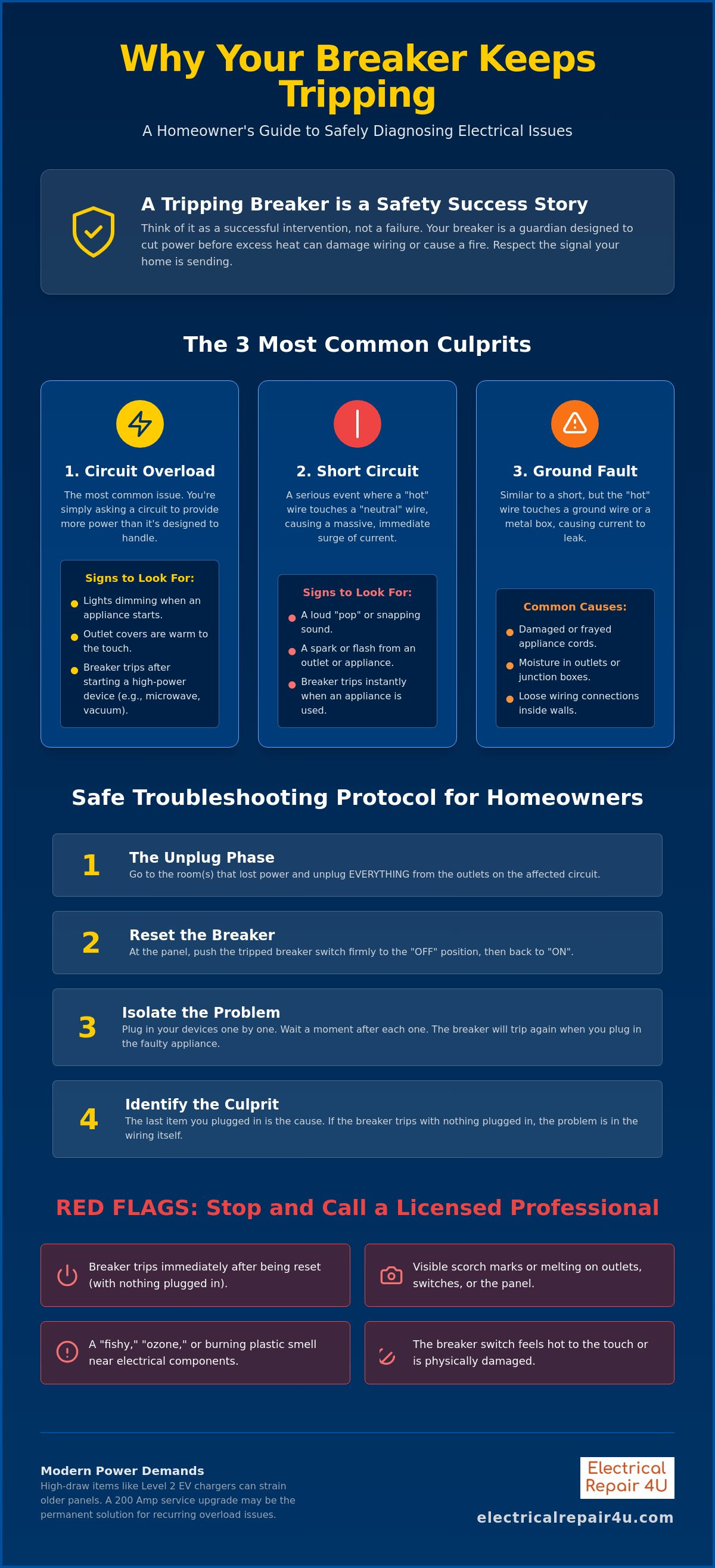
A tripping breaker is actually your home's way of telling you that its safety systems are working exactly as intended. Instead of viewing it as a failure, think of it as a successful intervention. Your electrical panel acts as a silent guardian, and every individual Circuit breaker is a deliberate "weak link" in the chain. It's designed to interrupt the flow of electricity before excess heat can damage your wiring or start a fire. When you are wondering what to do when breaker keeps tripping, the first step is to stay calm and respect the signal your home is sending.
Sometimes a trip is just a "nuisance" caused by a temporary surge or a single heavy appliance. Other times, it's a critical safety shut-off responding to a deeper issue like a short circuit. If a breaker won't reset or immediately flips back to the middle position, it's a clear signal of an active hazard. Don't try to override it. Over our 40 years of local service in the Naperville area, we've also seen many cases of "breaker fatigue." Like any mechanical device, these switches can simply wear out after decades of protecting your family. When the hardware itself fails, it can no longer provide the reliable protection you need.
The Anatomy of a Circuit Trip
Inside that plastic housing, a complex dance of heat and electromagnetism occurs. When too much current flows, a bimetallic strip heats up and bends, or an electromagnet pulls a lever to snap the connection shut. This moves the switch to a "tripped" position, which is usually right in the middle between on and off. You should never force a breaker to stay in the "on" position if it wants to trip. Doing so bypasses the safety mechanism and puts your home at risk of an electrical fire. It's a high-stakes situation that requires a gentle touch and professional respect.
Immediate Safety First-Steps
Before you touch the panel, take a moment to look and smell. Do you see scorch marks on the wall or the panel itself? Do you notice a strange "fishy" or "ozone" odor? These are signs of melting insulation or electrical arcing. When you do interact with the panel, use the "one-hand rule." Keep one hand in your pocket or behind your back while using the other to flip the switch. This simple safety protocol prevents a path for electricity to travel through your chest in the rare event of a fault. Identifying what to do when breaker keeps tripping starts with knowing which rooms are dark and which appliances were running right before the power cut out.
Identifying the Three Most Common Culprits
When you are trying to figure out what to do when breaker keeps tripping, you first need to identify which of the three main electrical "villains" is at play. Most trips aren't random events. They are calculated responses to specific conditions in your wiring. By understanding these culprits, you can move from frustration to a clear plan of action that restores your peace of mind.
Signs of a Circuit Overload
The circuit overload is the most common reason for a trip. It happens when the electrical demand simply exceeds what the circuit is rated to handle. Think of it like a pipe trying to carry too much water. If you are running an air fryer and a microwave on the same kitchen circuit, you are likely pulling more than the standard 15 or 20 amps. Modern gadgets like high-end gaming PCs or powerful upright vacuums can easily strain the 15-amp circuits found in many older homes in the Naperville area. You might notice warning signs before the power cuts out, such as lights that dim when an appliance kicks on or outlet covers that feel warm to the touch. This is a clear signal to redistribute your power load across different circuits.
Detecting Short Circuits and Ground Faults
A short circuit is a more serious safety event. This occurs when a "hot" wire makes direct contact with a "neutral" wire. This creates an immediate, massive spike in current that triggers the breaker instantly. You might hear a distinct "pop" or even see a small flash at the outlet. A ground fault is similar, but the current escapes to the ground wire or a metal junction box instead. These are often caused by loose connections or damaged wiring hidden inside your walls.
Sometimes the problem isn't your house; it's what you've plugged into it. You should try to identify if a faulty appliance or a frayed power cord is the hidden trigger. If you unplug everything and the breaker still trips, the issue is likely rooted in the infrastructure itself. For persistent mystery trips that don't seem related to an overload, a professional electrical repair is the safest way to protect your home from potential arc faults. Our team can help you identify these hidden hazards before they become emergencies.
Finally, modern homes often use Arc Fault Circuit Interrupters (AFCI). These specialized breakers detect dangerous sparking, or "arcing," in older or damaged wiring that a standard breaker might miss. Whether it's a simple overload or a serious fault, recognizing these patterns is your first step toward a permanent solution. Understanding the difference between these issues ensures you take the right safety steps for your specific situation.
A Step-by-Step Troubleshooting Protocol for Homeowners
When your power cuts out, a systematic approach turns a confusing situation into a manageable task. Knowing exactly what to do when breaker keeps tripping reduces anxiety and keeps your family safe. Instead of flipping switches at random, follow this professional protocol to isolate the issue and determine if you can fix it yourself or if it's time to call in our team.
- Step 1: Identify and Turn Off. Locate your electrical panel and look for the switch that isn't lined up with the rest. It will likely be stuck in a middle position. You must switch it fully to the "off" position first to engage the internal spring mechanism.
- Step 2: The Unplug Phase. Walk through the rooms that lost power and unplug every single device. Don't forget the "hidden" items like power strips, chargers, or small appliances tucked in corners. This isolates the circuit from any external variables.
- Step 3: The Reset. Go back to the panel and flip the breaker to "on." If the breaker stays in place, your home's internal wiring is likely healthy.
- Step 4: The Stress Test. Plug your devices back in one at a time. Start with the most essential items. The moment the breaker flips again, you have successfully identified the "tipping point" appliance or a specific outlet that is causing the overload.
Mapping Your Home’s Power Grid
Understanding which outlets share a single breaker is a powerful tool for preventing future trips. Many older homes in the Warrenville area have "daisy-chained" outlets that can easily become overloaded by modern technology. You can calculate your load by dividing the total Watts of your devices by 120 Volts. If the result is close to the 15 or 20 Amp limit on your breaker, you need to move some items to a different circuit. Keeping an updated circuit map is a vital part of proactive breaker box maintenance and helps you manage your home's energy more effectively.
When the Breaker Trips Immediately (No Load)
If the breaker snaps back to the middle position immediately after a reset with nothing plugged in, you are dealing with a serious internal fault. This usually indicates a "dead short" or a ground fault hidden behind your walls. Don't keep trying to reset it. Forcing a reset on a dead short creates intense heat that can melt insulation and start a fire. This scenario is an automatic signal to stop what you are doing and seek professional help. We have spent 40 years helping Naperville neighbors resolve these high-stakes infrastructure issues safely and efficiently.
Modern Power Demands: EV Chargers and Aging Panels in Illinois
Growing families often find that their power needs outpace their home's original design. While 100-amp panels were the standard for years, they often lack the "headroom" required for heat pumps, induction stoves, and electric vehicles. We also see "phantom trips" where sensitive smart home hubs or mesh networks react poorly to slight voltage fluctuations. These minor dips in power, which might go unnoticed by a lamp, can cause modern digital infrastructure to reset or fail. If you're ready to modernize your home's power supply, our team specializes in whole-house surge protection and panel upgrades to ensure your system stays stable through every storm.
EV Charging and Your Breaker Box
A Level 2 EV charger is a high-demand device that requires a dedicated circuit and a specific type of breaker. If your charger is "starving" other appliances for power, you'll notice the breaker for the kitchen or garage tripping frequently during charging sessions. It's critical to check our EV charger installation Warrenville guide to understand how capacity planning prevents these conflicts. Proper installation ensures your car charges quickly without compromising the rest of your home's safety.
The Vulnerability of Older Illinois Infrastructure
The median age of housing stock in the Chicago metro area is now 53 years. Homes in Aurora and Naperville built before 1980 often feature wiring and panels that weren't designed for the digital age. Beyond age, extreme Illinois weather poses a unique threat. Humidity and intense temperature swings can cause metal components in outdoor breaker boxes to expand, contract, and eventually corrode. This environmental stress makes your system more prone to failure during summer storms. If you are wondering what to do when breaker keeps tripping after a heavy rain, it is likely a sign that moisture has compromised your panel's integrity.
Professional Solutions for Recurring Breaker Issues
There comes a moment when the standard troubleshooting steps aren't enough. If you have unplugged your appliances and mapped your circuits but still find yourself wondering what to do when breaker keeps tripping, it is time to move beyond DIY. At this stage, your home's safety requires the eyes of a master electrician. We use advanced diagnostic tools like megohmmeters to test insulation resistance and thermal cameras to see through your walls. These technologies allow us to find the root cause of a failure without unnecessary guesswork.
Choosing between a quick fix and a permanent solution is a common crossroads for homeowners in Naperville and Aurora. Replacing a single breaker that has grown "tired" is sometimes all that's needed. However, if the issue is rooted in an aging bus bar or a panel that is simply too small for your modern lifestyle, that new breaker is just a temporary Band-Aid. A comprehensive residential electrical repair in Warrenville ensures your home meets the latest safety standards and local building codes. This professional oversight provides the emotional reassurance that your family is protected by a system built for longevity.
The Diagnostic Process: What to Expect
When we arrive at your home, we perform a deep dive into your panel's health. We look for "loose neutrals" that cause voltage swings and check for dangerous "double tapping," where two wires are forced into a single breaker terminal. These are common DIY mistakes that create significant fire risks. Our thermal imaging cameras identify "hot spots" caused by poor connections or failing components. By catching these invisible heat signatures early, we prevent a minor electrical glitch from turning into a major emergency.
Investing in Long-Term Stability
Future-proofing your home often means moving from a 100-amp service to a robust 200-amp panel upgrade. This transition provides the power you need for a growing family, whether you are adding a home office or a new kitchen. Modern breaker technology has also evolved. Today's "dual-function" AFCI/GFCI breakers provide superior protection by detecting both sparking hazards and moisture-related faults. At Electrical Repair 4U, we've spent 40 years as a stable pillar of this community. We take pride in delivering honest results and fair pricing. Our goal is to leave you with a system that is safe, reliable, and ready for whatever the next few decades bring.
Secure Your Home’s Electrical Future
You now have a reliable roadmap to navigate your home's power challenges with confidence. Remember that a tripping breaker isn't a failure of your system; it's a vital safety success that protects your family from hidden hazards. By following a systematic troubleshooting protocol, you can easily separate simple appliance overloads from the serious internal faults that require an expert's touch. Understanding what to do when breaker keeps tripping is the first step toward removing the anxiety of sudden power loss and ensuring your infrastructure can handle modern demands like high-speed EV charging.
If your persistent electrical issues require more than a simple reset, don't leave your safety to chance. Schedule a Professional Breaker Box Inspection with Electrical Repair 4U Today to gain total peace of mind. Our licensed and insured master electricians bring 40+ years of local expertise to homeowners across Warrenville, Naperville, and DuPage County. We take pride in providing the stable, long-term solutions your home deserves. You've done the hard work of identifying the problem; now let our seasoned team provide the professional cure that keeps your lights on and your family safe.
Frequently Asked Questions
Why does my breaker trip even when nothing is plugged in?
A breaker tripping with nothing plugged in usually indicates a short circuit or a ground fault hidden within your home's permanent wiring. This happens when a hot wire touches a neutral or ground wire inside a wall or junction box. Since you cannot isolate the problem by unplugging a device, this situation is an automatic safety hazard. It requires an expert to locate the fault before it generates enough heat to start a fire.
Is it dangerous if a circuit breaker feels warm to the touch?
It is definitely a cause for concern if a breaker feels uncomfortably warm or hot to the touch. While breakers naturally generate a small amount of heat while under load, they should never be hot enough to startle you. This heat is often a sign of a loose wire connection or an internal failure. Ignoring a hot breaker can lead to melting insulation and is a major red flag for your home's safety.
How many times can I reset a tripped breaker before it's a problem?
You should only attempt to reset a tripped breaker once, and only after you have unplugged the devices on that circuit. If the breaker flips back to the middle position immediately, do not try again. Forcing a reset against an active short circuit causes intense electrical stress. This can damage the bus bar in your panel or lead to an arc flash; it is best to call a professional after the first failed reset.
Can a bad appliance cause a breaker to trip in a different room?
Yes, a faulty appliance can trip a breaker that affects a completely different room because of how circuits are mapped. In many older Naperville homes, one circuit might power the kitchen lights and the living room outlets simultaneously. If you are struggling with what to do when breaker keeps tripping in the bedroom, check if a high-draw appliance in the hallway is actually sharing that same electrical line.
What is the difference between a fuse box and a circuit breaker panel?
The main difference is that a fuse is a single-use safety device, while a breaker is a resettable switch. Fuses contain a small wire that melts when too much power flows through it, requiring a total replacement. Breakers use a mechanical switch that flips off and can be turned back on. Most modern homes have transitioned to breakers because they handle the high-amperage demands of modern appliances much more safely and conveniently.
How much does it typically cost to replace a single circuit breaker?
The total investment for replacing a breaker depends on whether you need a standard switch or a specialized AFCI or GFCI model. While the hardware itself is a small part of the project, the real value comes from the professional diagnostic to ensure the new breaker won't just trip again. You should consult a licensed master electrician to get an accurate estimate that accounts for your specific panel brand and any necessary permit requirements.
Do I need to upgrade my whole electrical panel if only one breaker trips?
You don't always need a full upgrade, but a single tripping breaker can sometimes be a warning sign for a larger issue. If the breaker is just old, a simple replacement is a cost-effective cure. However, if you are wondering what to do when breaker keeps tripping because you've added modern technology like a Level 2 EV charger, your current panel might be at its limit. A professional inspection can determine if a 200-amp upgrade is necessary.
Why does my breaker trip only when it rains or when it's very humid?
Tripping during rain or high humidity usually means moisture is entering your electrical system through a compromised seal or an outdoor conduit. Water is a conductor, and even a small amount can cause a ground fault that snaps the breaker off. This is a common issue in older DuPage County homes where outdoor panels have faced decades of Illinois weather. It is a signal that your system needs better weatherproofing to stay reliable.


