What if your electrical panel isn't failing you, but is actually saving your home from a disaster? It's easy to feel defeated when your circuit breaker keeps tripping, especially when you're just trying to get through your daily routine. You're likely worried about the inconvenience of losing power to your favorite appliances or, more seriously, the 51,000 home electrical fires that occur every year. We understand that uncertainty. It's stressful to deal with a system you can't see, but you don't have to face it alone. Our team is here to help you regain control and peace of mind.
In this 2026 safety guide, you'll discover exactly why your breakers are cutting power and how to handle the situation without putting your family at risk. We'll explore the latest NEC safety updates regarding GFCI and AFCI protection so you can stay ahead of modern standards. You will learn to distinguish between a simple overload and a dangerous short circuit. By the end, you'll have a clear path to restore your power safely and know exactly when it's time to call in a seasoned expert for a permanent fix.
Key Takeaways
- View your breaker as a safety gatekeeper that actively prevents electrical fires rather than a simple technical glitch.
- Pinpoint whether a routine circuit overload or a more serious short circuit is the reason your circuit breaker keeps tripping.
- Master a safe troubleshooting routine to unplug appliances and reset your power without compromising your family's security.
- Identify red flags like corrosion or outdated panels that signal it's time to invest in professional breaker box maintenance.
- Explore how dedicated circuits and whole-house surge protection can stabilize your home's electrical system for the long term.
Understanding Why Your Circuit Breaker Keeps Tripping
Think of your electrical panel as the brain of your home's infrastructure. Within that panel, each individual switch acts as a safety gatekeeper. When your circuit breaker keeps tripping, it's easy to feel frustrated by the sudden darkness or the silence of a dead refrigerator. However, that "trip" isn't a failure of the system. It's actually a vital safety feature designed to prevent electrical fires before they start. By cutting the power, the breaker stops electricity from flowing through wires that are becoming dangerously hot.
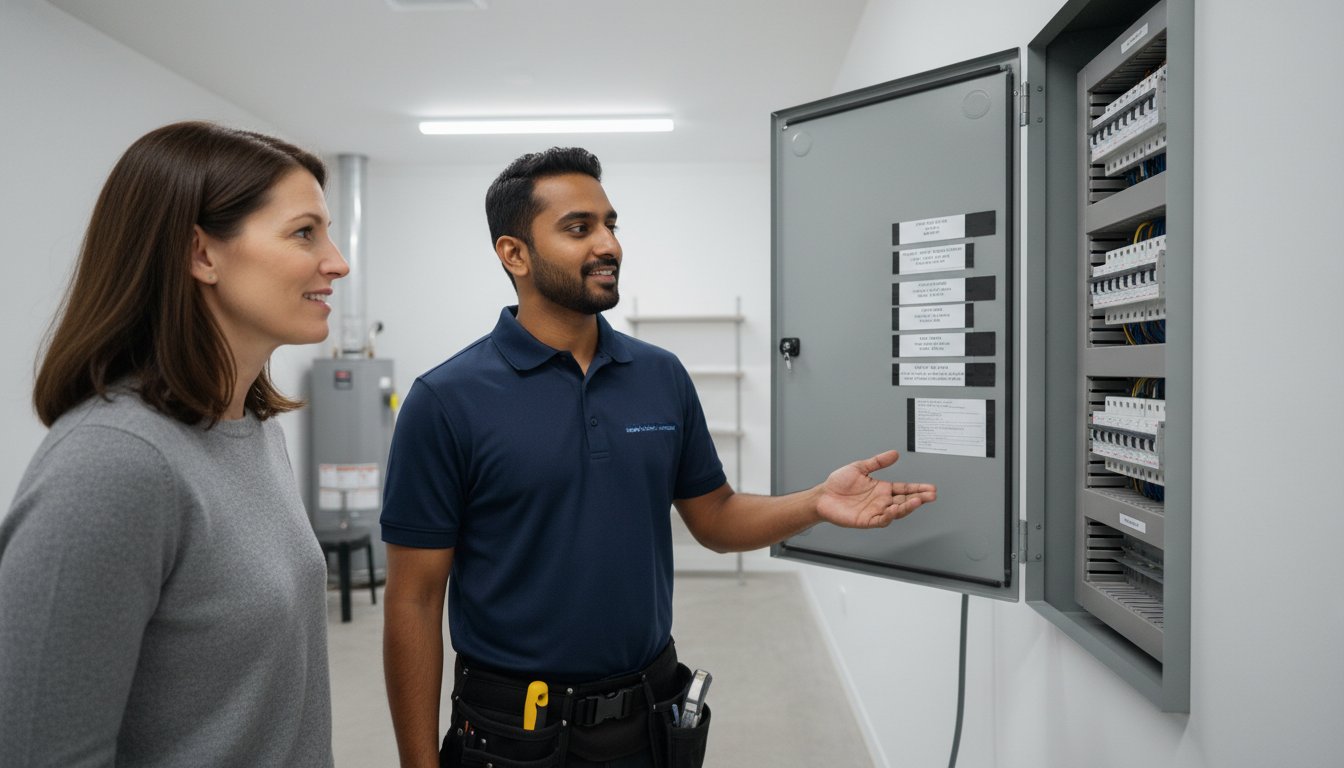
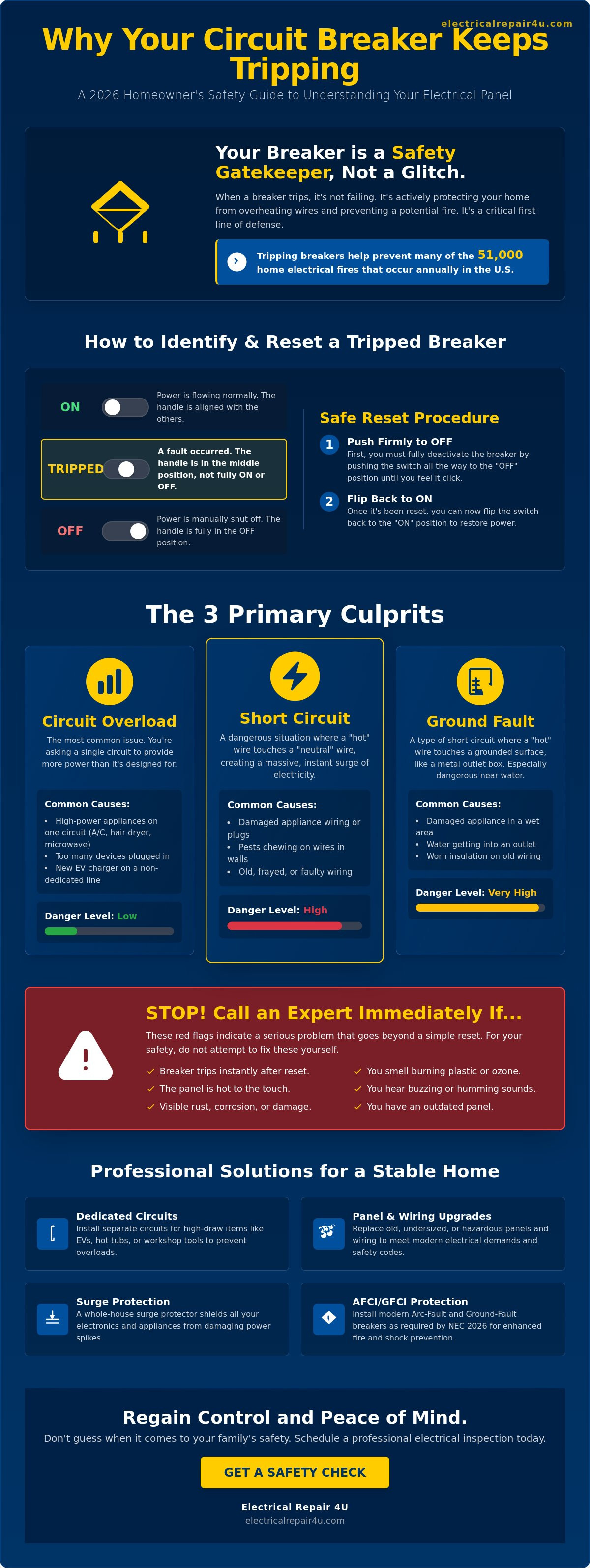
To truly grasp the mechanics, it helps to understand what is a circuit breaker in a technical sense. It's an automatically operated switch that monitors the electrical load. Every circuit in your home has a specific capacity, usually measured in amps. When the demand for power exceeds what the wires can safely handle, the internal mechanism snaps open. This creates a physical break in the path of the electricity. Most breakers have three distinct positions. "On" means the circuit is powered; "Off" means you've manually cut the power; and the "Center" position indicates the breaker has tripped due to a fault.
The Anatomy of a Tripped Breaker
Identifying a tripped breaker in a dimly lit basement or utility closet requires a keen eye. You won't usually find the switch flipped all the way to the "Off" side. Instead, it will likely be resting in a "no man's land" between the two extremes. You might see a small red or orange window on some modern models, but most often, you'll just see one handle that isn't aligned with the rest of the row. When a surge occurs, you might even hear a distinct metallic "click" as the spring-loaded contact pulls away. If you try to reset it and the handle feels "spongy" or loose, the breaker hasn't fully reset. You must push it firmly to the "Off" position first until it clicks, then flip it back to "On."
Safety First: When to Stop Troubleshooting
While most homeowners feel comfortable resetting a switch, you need to know when the situation has moved beyond a simple DIY fix. If your circuit breaker keeps tripping immediately after a reset, there is a persistent fault that needs professional eyes. Watch for clear warning signs like a faint buzzing sound, a panel cover that feels hot to the touch, or the acrid smell of burning plastic. The absolute #1 rule of electrical safety is to never force a breaker to stay in the "On" position. If it won't stay put, it's protecting you from a potential disaster. In these high-stakes moments, it's best to step away and consult a licensed electrician in Warrenville who can diagnose the root cause and ensure your home remains a safe haven.
The 3 Primary Culprits: Overloads, Short Circuits, and Ground Faults
Identifying why your circuit breaker keeps tripping requires a look at the physics of your home. Most issues fall into three distinct categories. The first and most common is a circuit overload. This happens when you ask a single line to carry more electricity than its rated capacity. Think of it like a highway during rush hour; eventually, the traffic cannot move safely. In 2026, our homes are busier than ever. We have high-end air fryers, smart appliances, and powerful gaming PCs all pulling from the same source. When the total amperage of these devices exceeds the breaker's limit, the switch flips to protect your wiring from melting.
The second culprit is a short circuit, which is a more serious safety concern. This occurs when a "hot" wire makes direct contact with a "neutral" wire. This creates a sudden, massive surge of energy that generates intense heat. Your breaker snaps open instantly to prevent a fire. Finally, we have ground faults. This is similar to a short circuit but happens when the electricity touches a ground wire or a grounded part of the system, such as a metal box. Ground faults are especially dangerous in areas with moisture, which is why the 2026 National Electrical Code (NEC) has expanded requirements for specialized protection.
Circuit Overloads in the Modern Smart Home
Illinois homeowners often face overload issues during intense summer heatwaves. When your AC unit works overtime alongside your daily appliances, the combined load can become unbearable for older systems. If you have recently upgraded your garage with an EV charger installation, you have added a significant new draw to your panel. Without a dedicated circuit, this high-demand technology is often the reason your circuit breaker keeps tripping. Modern 2026 kitchen appliances also pull more power than their predecessors, making it easy to accidentally overload a shared line with just a toaster and a coffee maker.
Short Circuits and Ground Faults: The Danger Zones
You can usually spot a short circuit by how the breaker reacts. If you reset the switch and it trips again immediately with a loud pop, you likely have a physical wiring fault. This is where home electrical safety becomes a top priority. Ensuring you have a professional grounded outlet installation is your best defense. GFCIs are designed to trip at the slightest hint of a ground fault to prevent shocks in bathrooms and kitchens. Interestingly, the 2026 NEC now requires GFCI protection for new outdoor HVAC units as of September 1, 2026. This often requires high-frequency rated GFCIs to prevent nuisance tripping from modern, high-efficiency compressors. If your power cuts out every time the AC kicks on, a quick breaker box maintenance check can determine if you need a modern upgrade to meet these new safety standards.
Troubleshooting Safely: What to Do When the Power Goes Out
When a room suddenly goes dark, your first instinct might be to rush to the electrical panel. Before you touch a single switch, take a breath. Systematic troubleshooting is the safest way to determine why your circuit breaker keeps tripping. Start by turning off all the lights and unplugging every appliance on the affected circuit. This removes the immediate demand on the wires. Overloaded electrical circuits are the most common reason for a trip, so clearing the line is your best first step to a resolution.
Next, head to your electrical panel with a flashlight. Look for the breaker that has moved to that middle "tripped" position we discussed earlier. To reset it properly, you must move the handle firmly to the "Off" position first. You should feel a distinct click as the internal spring resets. Only then should you flip it back to the "On" position. If the power stays on, return to the room and begin plugging in your devices one by one. This process allows you to isolate the "problem child." If the breaker trips the moment you plug in a specific toaster or hair dryer, you've likely found a faulty appliance rather than a house wiring issue.
The Process of Elimination Technique
You can simplify future headaches by using masking tape to label which outlets belong to each specific breaker. This mapping helps you visualize if a single circuit is being asked to do too much work. Be mindful of "phantom loads" from smart home hubs or always-on chargers that might be pushing your capacity to the limit. If the circuit breaker keeps tripping even when absolutely nothing is plugged in, you likely have a deeper issue within the walls that requires professional diagnostic tools.
Emergency Protocol: If You Smell Burning
There are times when troubleshooting must stop immediately to protect your home from a fire. If you notice a sharp, acrid smell like burning plastic or ozone, do not attempt to reset any breakers. This scent often indicates a melting wire or a failing bus bar within the panel. Your immediate priority is security. Turn off the main breaker to cut power to the entire house and evacuate if you see any signs of smoke. For a more detailed guide on these red flags, refer to our burning smell safety checklist. Taking quick action in these moments can be the difference between a simple repair and a major insurance claim.
Beyond the Trip: Signs Your Electrical Panel Needs Professional Attention
Sometimes, the problem isn't what you're plugging in, but the box itself. If your circuit breaker keeps tripping on a weekly basis, the hardware may simply be "weak" from decades of service. Every time a breaker trips, the internal spring mechanism experiences wear. Over time, this component loses its calibration and begins to cut power at lower and lower amperage levels. While we often focus on the devices in our rooms, the health of your panel is the true foundation of your home's safety.
Environmental factors in local basements also play a significant role in electrical stability. Illinois humidity is notorious for creeping into utility spaces, leading to subtle corrosion and rust on copper bus bars. This oxidation creates resistance, which generates heat and causes nuisance trips. Additionally, decades of thermal expansion—the way wires slightly expand when hot and contract when cool—can cause terminations to wiggle free. These loose connections are a major fire hazard that a simple reset won't fix.
Outdated Panels Common in DuPage County
Many Naperville and Aurora homes built before 1990 still rely on original electrical equipment that wasn't designed for the digital age. We frequently encounter "danger brands" like Federal Pacific (FPE) or Zinsco panels during routine calls. These specific models are famous in the industry for a "no-trip" failure. Instead of cutting power during a surge, they lock in the "on" position, allowing wires to overheat until they catch fire. If you see these names inside your door, a professional breaker box maintenance check is no longer optional; it's a critical safety priority for your family.
Physical Signs of Panel Failure
You don't always need a multimeter to spot a failing system. Keep a lookout for these red flags during your next trip to the basement:
- Discoloration: Look for "scorch marks" or dark soot around the breaker housing.
- Audible Cues: Listen for crackling, sizzling, or buzzing sounds coming from behind the cover.
- Flickering Lights: Notice if the lights dim throughout the house every time your refrigerator or AC kicks on.
If your circuit breaker keeps tripping and you notice any of these physical symptoms, your system is waving a white flag. Ignoring these signs can lead to costly damage to your sensitive electronics or, worse, a structural fire. Our team has spent decades helping neighbors secure their homes against these hidden risks. Request a professional panel inspection today to ensure your electrical heart is beating strong and safe.
Securing Your Home: Professional Solutions and Panel Upgrades
When your circuit breaker keeps tripping despite your best troubleshooting efforts, it's time to move toward permanent infrastructure solutions. Many modern homes struggle because they lack dedicated circuits for high-draw appliances. Devices like microwaves, air fryers, and EV charging stations pull significant amperage that can easily overwhelm a shared line. By installing a dedicated circuit, you give these heavy hitters their own direct path to the panel. This simple upgrade stops the constant tug-of-war for power and ensures your daily routine remains uninterrupted.
We also encourage homeowners to look beyond the basic breaker for total device safety. While a breaker protects your wires, whole-home surge protection acts as a shield for your sensitive electronics. In an era of smart refrigerators and high-end gaming consoles, a single external power spike can cause thousands of dollars in damage. Moving to a comprehensive defense strategy ensures that your entire home remains secure from unpredictable electrical events. Our team has spent 40 years keeping Illinois families safe by staying ahead of these technological demands.
When is it Time for a Panel Upgrade?
Modern life requires a larger "power budget" than most older homes can provide. Many residences in our area still operate on 100-amp service, which was the standard decades ago. However, the 2026 reality of electric vehicles and all-electric kitchens often requires a move to 200-amp service. Upgrading your panel provides the necessary "breathing room" for your system to run cool and efficient. This investment doesn't just stop the frustration when your circuit breaker keeps tripping; it also increases your property value and ensures compliance with the latest 2026 NEC safety standards. For the ultimate level of security, a whole house surge protector installation is the best way to safeguard your home's digital heart.
Why Choose a Licensed Local Expert?
Electrical work is a high-stakes task that leaves no room for error. DIY repairs often lead to insurance denials or hidden fire hazards that can smolder behind walls for weeks before being noticed. By choosing a seasoned veteran, you benefit from decades of field experience and neighborly reliability. We view ourselves as collaborative partners in your home's safety. We take pride in delivering honest results and high-caliber craftsmanship to every neighbor we serve. Don't let technical failures cause unnecessary anxiety in your life. Contact Electrical Repair 4U for a professional breaker box inspection today and let us restore your peace of mind with a system you can depend on.
Secure Your Home's Electrical Future
Your home’s electrical system is a complex network that deserves expert attention. We've explored how a circuit breaker acts as a vital safety gatekeeper and why identifying the root cause is essential for your family's protection. Whether it's a routine overload or a more serious wiring fault, knowing the signs of panel failure ensures you stay ahead of potential hazards. Modern power demands from EV chargers and high-end appliances mean your infrastructure must be ready for the road ahead.
If your circuit breaker keeps tripping, it's a clear signal that your system needs a professional touch. Our team brings over 40 years of local Illinois expertise to every service call. As licensed and insured master electricians, we specialize in high-caliber 200-amp panel upgrades and EV charging point installations. We are here to remove the anxiety of technical failures and provide you with a stable, reliable home environment.
Don’t let a tripping breaker risk your home. Schedule your professional inspection with Electrical Repair 4U now! We look forward to being your collaborative partner in keeping your household powered and safe for years to come.
Frequently Asked Questions
Why does my circuit breaker keep tripping with nothing plugged in?
If your circuit breaker keeps tripping when nothing is plugged in, you likely have a "short" hidden within your walls or a failing breaker switch. This occurs when a wire's insulation has degraded or a pest has chewed through the line. It's a high-stakes situation that requires a professional diagnostic tool to locate the fault without opening up every wall in your home.
Can a bad lightbulb cause a circuit breaker to trip?
A lightbulb can absolutely cause a trip if the filament breaks in a way that bridges the internal connections. This creates a momentary short circuit that the breaker detects immediately. If you notice a pop and the lights go out, check the bulb for a dark scorch mark before you attempt to reset the power.
How many times can you reset a circuit breaker before it becomes dangerous?
You should only attempt to reset a breaker once or twice to identify the problem. Every time a breaker trips, the mechanical components inside experience high-heat stress. If you repeatedly force a reset without fixing the root cause, you risk damaging the internal spring and ignoring a potential fire hazard that could smolder behind your panel.
What is the difference between a short circuit and a ground fault?
A short circuit happens when the "hot" wire touches the "neutral" wire, while a ground fault occurs when the "hot" wire touches a grounded surface like water or metal. Both are dangerous, but ground faults are specifically common in wet areas like kitchens. This is why 2026 safety codes require specialized GFCI protection for these high-risk zones.
Why does my breaker trip only when the air conditioner or microwave is running?
High-draw appliances like microwaves or AC units often trip breakers because they push a shared circuit past its amperage limit. These devices require a lot of "juice" to start up. If your circuit breaker keeps tripping during these moments, it's a sign you need a dedicated circuit installed to handle the specific load of that appliance. For high-performance climate solutions, consulting with a professional team like Ultra Air Heating and Cooling can help ensure your system is operating efficiently without overloading your panel.
Is it expensive to replace a single circuit breaker?
Replacing a single breaker is a routine maintenance task that provides immense value for your home's security. While the hardware itself is a standard part, the value is found in the expertise required to ensure the new breaker is compatible with your specific panel brand. It is a small investment compared to the risk of an electrical fire.
How do I know if my circuit breaker itself is faulty and needs replacement?
You can tell a breaker is faulty if it feels "spongy" when you try to flip it or if it shows visible signs of heat damage. A healthy breaker should have a firm, snappy click. If it trips with no load at all or won't stay in the "on" position, the internal mechanism has likely worn out and requires professional replacement.
What should I do if my main breaker trips and the whole house loses power?
If your main breaker trips, turn off every individual branch breaker before attempting to reset the main switch. This prevents a massive surge of power from hitting all your appliances at once. If the main breaker trips again immediately, stop what you're doing and call a licensed expert, as this indicates a serious issue with your service entrance or panel bus bar.


