
Imagine waking up at 2 AM to a faint, acrid smell of ozone or seeing a sudden spark behind your nightstand outlet. It's a moment of pure anxiety that leaves every homeowner wondering if their family is truly safe. You shouldn't have to live with the constant worry that a minor flicker is actually one of the critical signs of electrical problems in house that indicate a looming danger. We understand that technical complexities can feel overwhelming, especially with the updated 2026 National Electrical Code standards now in effect. It's natural to feel torn between the fear of a house fire and the anxiety over repair costs.
We've spent over 40 years serving as a stable pillar in the community, helping our neighbors distinguish between simple glitches and life-threatening hazards. This guide empowers you to identify critical red flags before they escalate into devastating fire risks. By the end of this article, you'll have a clear understanding of which issues require immediate professional attention and which ones can wait. We're here with constant availability to provide the emotional reassurance and technical expertise you need, offering a proactive partnership that keeps your household running safely and reliably for years to come.
Key Takeaways
- Spot the "Big Three" red flags, including unusual burning odors and outlets that feel warm to the touch, to stop electrical fires before they ignite.
- Learn how to interpret signs of electrical problems in house, such as flickering lights or frequent breaker trips, as urgent warnings of circuit overloads.
- Discover why older homes built before 1970 require specific attention to legacy wiring systems like aluminum or knob-and-tube for long-term stability.
- Master the "Don't Touch" triage rule to keep your family safe while identifying which circuits need immediate professional repair.
- Gain peace of mind by understanding how the latest 2026 safety standards protect your home's infrastructure and ensure your family's security.
Understanding Your Home’s Electrical Warning System
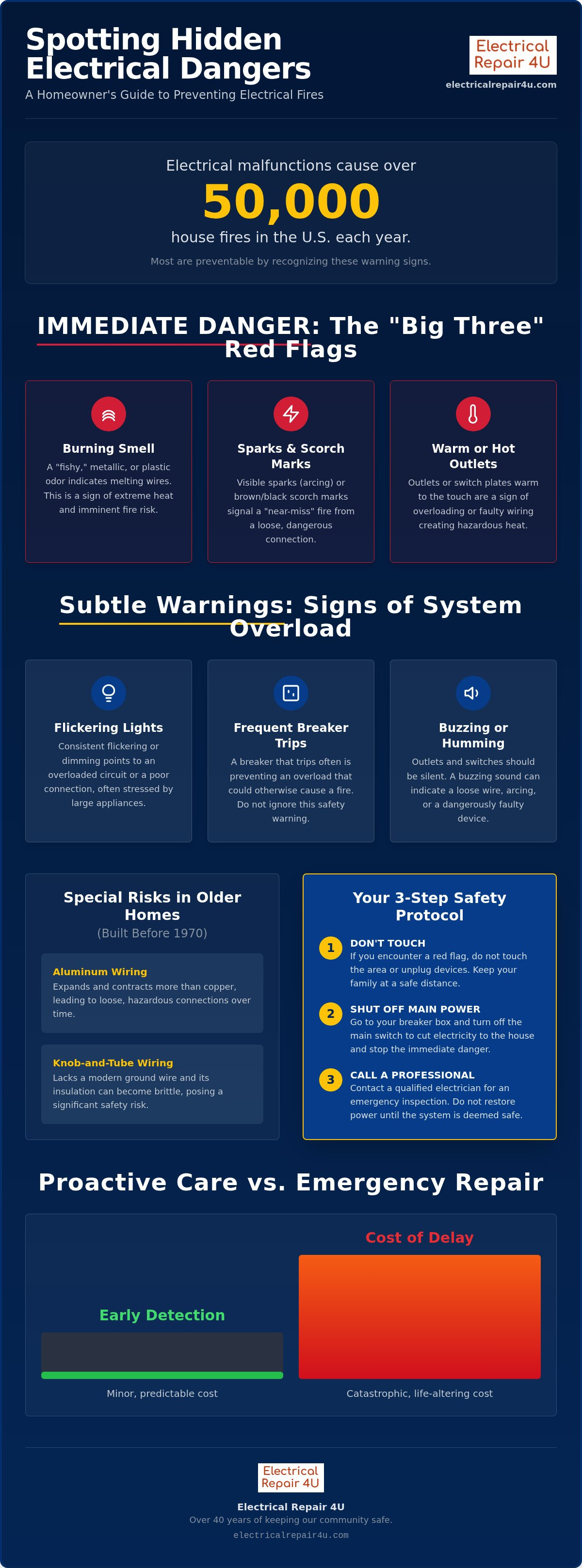
Think of your home’s electrical network as a living system. Just like your car has a "check engine" light to warn you of mechanical failure, your house provides subtle cues when its infrastructure is under stress. Recognizing the signs of electrical problems in house is your first line of defense against disaster. According to data from the Electrical Safety Foundation International, electrical malfunctions cause more than 50,000 house fires each year. These tragedies are almost always preventable if you know how to read the warnings. In a healthy "closed system," electricity flows smoothly along a defined path with minimal resistance. When that path is disturbed by loose connections, corroded terminals, or frayed wires, the electricity struggles to move, which generates intense heat. Electrical troubleshooting is the vital process of identifying these hidden faults before they manifest as an active fire hazard.
Why Electrical Problems Are Often Hidden
Most homeowners only interact with the parts of the system they can see, such as outlets and switches. However, about 90% of your wiring remains tucked away behind drywall or buried deep in attic insulation. This hidden nature makes it easy to ignore brewing issues until they reach a breaking point. For instance, "arcing" occurs when electricity jumps between two conductors, creating a miniature lightning bolt of heat. Because your wires are wrapped in protective jackets and hidden in wall cavities, you might not see the sparks or smell the smoke until the surrounding wood or insulation ignites. Your breaker box acts as the primary safety gate for the entire property, but it can't always detect every micro-fault if the system is aging or poorly maintained.
The Cost of Delay vs. Early Detection
Proactive maintenance is always more affordable than emergency restoration. Replacing a single worn-out outlet or a loose wire is a minor, routine task; however, repairing the damage from a full-scale house fire is a life-altering event. Regular breaker box maintenance ensures your home’s "safety gate" remains functional and responsive to modern power demands. We've spent over 40 years helping families in the Warrenville area secure their properties by catching these issues early. Understanding the signs of electrical problems in house doesn't just save you money on potential repairs. It provides the deep emotional peace of mind that comes from knowing your loved ones are sleeping in a safe, stable environment. Choosing to investigate a small flicker today prevents a major crisis tomorrow.
Immediate Danger: The "Big Three" Electrical Red Flags
While some infrastructure issues develop slowly over years, others demand instant action to prevent a house fire. These specific signs of electrical problems in house represent the highest level of risk to your property. Recognizing these red flags early allows you to intervene before a small spark becomes a catastrophic event. If you encounter any of the following symptoms, don't wait for a convenient time to call; take safety measures immediately to protect your family.
The Burning Smell: Identifying Ozone and Plastic
A peculiar "fishy" or metallic odor is often the first warning of a serious electrical failure. This unique scent occurs when wire insulation or plastic components begin to melt due to extreme heat. It's a clear indicator that the chemical composition of your home's infrastructure is breaking down. If you detect this smell, don't search for the source with your nose. Instead, go directly to your breaker box and shut off the main power switch. This simple action stops the flow of energy and prevents a potential ignition. For immediate assistance in these high-stakes moments, our team offers emergency electrical repair to locate and neutralize the hazard.
Sparking and Discoloration
It's important to distinguish between a small, blue static "snap" when plugging in a device and dangerous electrical arcing. Arcing is a sustained, high-heat discharge that occurs when electricity jumps across a gap. If you see brown or black scorch marks on an outlet plate, you've witnessed a "near-miss" fire. These marks often point to "back-stabbed" wiring, a common shortcut in older homes where wires are pushed into the back of a device rather than secured to terminal screws. This creates a loose connection that generates dangerous heat levels. Never plug a device into a discolored outlet; the internal components are already compromised and represent a fire hazard.
Finally, pay close attention to the sounds and temperature of your walls. Outlets and switches should always remain cool to the touch. If a wall plate feels warm or you hear a buzzing or sizzling sound, electricity is struggling to move through a failing connection. That sound is the literal noise of power jumping through the air to complete a circuit. These are not minor glitches that will resolve themselves. If your home is showing these signs of electrical problems in house, we can help you repair electrical wiring promptly to restore the stability and safety of your living space.
Subtle Symptoms: When Your Electrical System is Overloaded
Not every electrical threat arrives with a loud pop or a visible spark. Many of the most common signs of electrical problems in house are quiet, persistent issues that homeowners often dismiss as minor quirks of an older property. However, these subtle symptoms usually indicate that your system is struggling to meet modern power demands. When your infrastructure is consistently pushed to its limit, it creates heat and instability that eventually leads to component failure. Recognizing these early warnings allows you to act before the damage becomes irreversible.
Flickering Lights and Voltage Fluctuations
If your kitchen lights dim every time the refrigerator compressor kicks in, you aren't just seeing a bulb issue. You're witnessing a significant voltage drop caused by a high-draw appliance. Modern homes are filled with sensitive electronics, from smart refrigerators to LED lighting systems. These devices are particularly vulnerable to "dirty" power and voltage fluctuations. Professional whole house surge protector installation acts as a vital stabilizer for your entire property. It protects your expensive smart home investments by filtering the electrical flow and preventing micro-surges from degrading delicate circuit boards over time.
The Chronic Tripping Breaker
Breakers don't trip by accident. They are precision safety devices designed to cut power when a circuit becomes dangerously overloaded. While a one-time trip might happen because you plugged in a space heater and a vacuum at once, recurring trips are a serious warning. Resetting and forgetting is a dangerous habit that forces your wiring to endure high temperatures repeatedly. If you find yourself visiting the breaker panel once a week, it's a clear signal that your current panel can't handle your lifestyle. In many cases, a professional panel upgrade is the only safe way to accommodate today's high-powered appliances and EV chargers.
Pay attention to how your plugs fit into their outlets. If a plug falls out or feels loose, the internal tension in the outlet has failed. This creates high electrical resistance, which generates enough heat to melt the surrounding plastic. Additionally, never ignore a "tingle" or a mild shock when touching a metal appliance. This symptom suggests a grounding failure or a "hot" wire touching the appliance casing. These issues represent a direct electrocution risk and require an immediate professional inspection to ensure your home remains a safe haven for your family. Identifying these signs of electrical problems in house is the first step toward a more reliable and secure home.
Investigating the Root Cause: Age, Wiring, and Local Factors
In our 40 years serving the local community, we've seen how the specific history of DuPage County architecture plays a role in modern safety. Many homes in Naperville and Warrenville were built during the mid-century expansion. This means they often harbor infrastructure that was never designed for the heavy electrical loads of the 21st century. Understanding the signs of electrical problems in house requires looking past the symptoms to the underlying causes. These are frequently tied to the era your home was constructed and the local environmental stressors unique to the Midwest.
Legacy Wiring: Aluminum and Knob-and-Tube
Homes built between 1965 and 1973 often contain aluminum wiring, which presents a unique set of challenges. Unlike copper, aluminum expands and contracts significantly when heated. This process, known as "cold creep," eventually loosens connections at outlets and switches. These loose connections create high-resistance points that can lead to localized overheating and fire. Even older properties might still have knob-and-tube wiring. While it was a reliable standard in the early 20th century, it lacks a dedicated grounding wire. This is a critical failure for 2026 electronics and high-power appliances that require a safe path for excess current to prevent shocks. Most modern insurance providers now require a professional rewiring project to maintain coverage. These legacy systems represent an inherent risk that simple repairs cannot always fix.
Environmental Impact on Illinois Homes
Our local climate also dictates the health of your electrical system. Illinois winters are harsh. They often drive rodents into attics and crawlspaces in search of warmth. These pests frequently chew through wire insulation. This leaves bare conductors exposed to flammable building materials, which is a leading cause of "mystery" attic fires. Additionally, the high humidity of Midwest summers leads to significant corrosion inside breaker boxes located in damp basements or garages. This oxidation creates a layer of resistance that prevents breakers from tripping when they should. It effectively disables your home's primary safety mechanism without you ever knowing it. Recognizing these environmental signs of electrical problems in house is especially important during the transition between seasons.
Local storms in our area can also cause hidden surges that weaken your panel's components over decades. Because DuPage County building codes are often stricter than national minimums, maintaining compliance is essential for your property's value and family safety. If you suspect your older home's infrastructure is failing, we can help you install new breaker box hardware to ensure your home remains a stable, secure pillar of the community.
Taking Action: Triage, Inspection, and Professional Repairs
Once you recognize the signs of electrical problems in house, your immediate response is the difference between a simple fix and a major emergency. We recommend a strict "Don't Touch" rule for any outlet or switch showing signs of distress. If a plate is hot, discolored, or buzzing, stop using it immediately and tape it off to prevent others from accidentally plugging in devices. Your second step is to identify the corresponding circuit in your panel and shut it down. This removes the energy source and halts the heat generation that leads to fire. Mapping the problem to the breaker box allows you to isolate the danger while keeping the rest of your home functional.
Effective resolution requires more than just resetting a switch. It involves a systematic approach to implementing the fix, which often begins with comprehensive breaker box maintenance. Our team moves quickly from identifying the challenge to offering a resolution. This ensures your home’s infrastructure is restored to peak performance without the stress of recurring failures.
The Professional Inspection Process
A professional safety audit goes far beyond what the naked eye can see. Our Master Electricians utilize infrared thermography to detect thermal anomalies hidden behind your drywall. These "hot spots" represent loose connections or overloaded wires that remain invisible during a standard visual check. While DIY troubleshooting often focuses on the localized symptom, a licensed professional identifies the "upstream" cause. This might be a failing bus bar in your panel or a compromised neutral wire in a junction box. Using advanced circuit tracers and thermal imaging ensures we solve the root problem. This approach provides you with the long-term stability and security your family deserves.
Why Electrical Repair 4U is Your Local Safety Partner
For over 40 years, we've served as a stable pillar of the community in Warrenville and Naperville. We don't view ourselves as just contractors; we are your collaborative partners in home safety. Our team takes immense pride in delivering high-caliber results with honest, upfront pricing. We project a proactive attitude and maintain constant availability for those high-stakes moments when you need urgent assistance. You deserve the emotional reassurance that comes from a job done right by seasoned veterans who know the specific electrical demands of DuPage County homes. Don't leave your family’s safety to chance. Contact us for a professional safety inspection today and experience the peace of mind that comes with proven expertise.
Secure Your Home’s Future and Peace of Mind
Your home should be a sanctuary of safety and stability. By learning to identify the signs of electrical problems in house, you've taken a vital step in protecting your property and your loved ones from hidden hazards. Whether it's addressing an overloaded circuit or upgrading legacy wiring in an older local home, proactive maintenance is the key to long-term security. We've served as a stable pillar of the community for over 40 years. Our licensed Master Electricians are dedicated to providing the high-caliber results you expect. We offer 24/7 emergency support because electrical issues don't follow a schedule. Don’t guess with your family’s safety; schedule a professional electrical inspection today! We are here to partner with you, providing the honest service and emotional reassurance you need to sleep soundly tonight. Your safety is our pride and our long-standing commitment to this community.
Frequently Asked Questions
Is a flickering light always an electrical emergency?
A flickering light isn't always an emergency, but it's a clear signal that your system is struggling. It often indicates a loose connection or a circuit that's overloaded by a high-draw appliance. If the flickering is localized to one room, it's likely a wiring issue. If it happens throughout your Naperville home, the problem might be at the main panel. Don't ignore it; small flickers can eventually lead to dangerous arcing.
Why does my outlet smell like fish or rotten eggs?
A fishy smell from an outlet is a high-priority warning that plastic components or wire insulation are melting. This happens when a connection is so poor that it generates extreme heat without tripping the breaker. If you detect this odor, shut off your main power immediately. It's one of the most dangerous signs of electrical problems in house and requires an urgent safety audit from a licensed professional to prevent a fire.
Can I replace a sparking outlet myself if I turn off the power?
You shouldn't attempt to replace a sparking outlet yourself. While turning off the power is a good first step, a spark usually indicates that internal arcing has already damaged the wires or the junction box. Simply swapping the device doesn't address the underlying heat damage or the loose "upstream" connection. Our team uses specialized tracers to ensure the entire circuit is stable, protecting your family from a recurring hazard.
How often should a house have an electrical safety inspection?
Most experts recommend a professional electrical safety inspection every three to five years, especially for homes in older areas like Warrenville. If your property was built before 1970, more frequent checks are necessary to monitor legacy wiring systems. You should also schedule a visit immediately if you notice any new signs of electrical problems in house. Regular audits ensure your infrastructure stays compliant with the latest 2026 National Electrical Code standards.
What happens if my circuit breaker won’t stay reset?
If a circuit breaker won't stay reset, it's doing its job by protecting you from a "hard fault" or a short circuit. Never force a breaker to stay in the "on" position; doing so can cause the wires to overheat and ignite. This situation usually means there is a direct path between a hot wire and a ground. It requires professional troubleshooting to locate the fault and restore your home’s power safely.
Are warm light switches normal if the lights have been on a long time?
Warm light switches are never normal, regardless of how long the lights have been on. A switch that feels warm to the touch is a sign of high electrical resistance or an internal mechanical failure. This heat is a byproduct of electricity struggling to pass through a worn-out contact. Replacing the switch is essential to prevent the heat from damaging the surrounding insulation and creating a potential fire risk in your walls.
Does whole-house surge protection stop electrical problems from starting?
Whole-house surge protection is designed to stop external power spikes from damaging your electronics, but it doesn't prevent problems caused by faulty internal wiring. It acts as a shield for your smart home devices against utility surges and lightning strikes. However, it cannot fix existing issues like loose terminals or corroded panels. We recommend combining surge protection with regular breaker box maintenance to ensure your entire system remains stable and secure.
What is the most common cause of electrical fires in older homes?
The most common cause of electrical fires in older Illinois homes is overloaded circuits and degraded insulation on legacy wiring. Many properties in the Aurora and Elgin area still use aluminum or knob-and-tube systems that weren't built for modern power demands. Over time, the insulation becomes brittle and cracks, leading to dangerous arcing. Professional rewiring is often the most reliable way to bring these older properties up to modern safety standards.


