
Did you know that your home's electrical outlets are actually active safety devices rather than just passive sockets? Most homeowners don't realize that a loose plug or a warm faceplate is more than an inconvenience; it's a warning signal from a system that helps prevent the 500 deaths caused by home electrical fires annually. If you've been noticing sparks or sockets that feel hot, you're likely seeing the clear signs you need to replace electrical outlets before they pose a serious fire risk. It's frustrating when your devices won't stay connected, and it's even more stressful trying to figure out if your property meets the rigorous 2026 National Electrical Code updates.
We understand that technical jargon can feel overwhelming, so we've simplified the safety process for you. You deserve to feel secure in your own home without worrying about what's happening behind the drywall. This guide will help you identify hidden hazards and understand the latest requirements for GFCI and AFCI protection now mandatory for 2026. We'll show you how to confirm your home's safety and when it's time to call in a seasoned partner to protect your family's peace of mind.
Key Takeaways
- Spot immediate physical hazards like cracked faceplates and loose connections that signal your outlet has reached the end of its safe lifespan.
- Recognize the specific sensory signs you need to replace electrical outlets, including the distinct "fishy" smell of melting insulation or sizzling sounds.
- Learn why simply swapping 2-prong outlets for 3-prong versions without proper grounding creates a dangerous "false ground" and violates 2026 safety codes.
- Identify when to stop a DIY project and call a professional, especially if you encounter the aluminum wiring common in local homes from the 60s and 70s.
- Upgrade your home's security with modern AFCI technology and convenient USB-integrated outlets to meet the latest bedroom safety standards.
The 'Big 5' Immediate Danger Signs for Electrical Outlets
Your electrical outlets are the workhorses of your home. Over our 40 years of serving the Naperville and Warrenville areas, we've seen that most homeowners treat them as permanent fixtures. However, an outlet is a mechanical device with a limited lifespan. We define an 'expired' outlet as one that can no longer maintain a secure physical or electrical connection. Recognizing these mechanical failures early is one of the primary signs you need to replace electrical outlets before they become a fire hazard.
Many builder-grade homes in newer developments near Bolingbrook use 'back-stabbed' wiring. This is a method where wires are pushed into the back of the outlet instead of being secured tightly under a screw. These connections often fail over time. They lead to flickering lights and sudden voltage drops that can damage your expensive electronics. Inside every socket are metal strips called wiping contacts. They are designed to grip the prongs of your plug tightly. If your plug falls out or sags, those contacts are worn beyond repair. Looking back at the history of electrical outlets, safety standards have evolved specifically to address these mechanical failures and prevent arcing.
Physical Damage and Discoloration
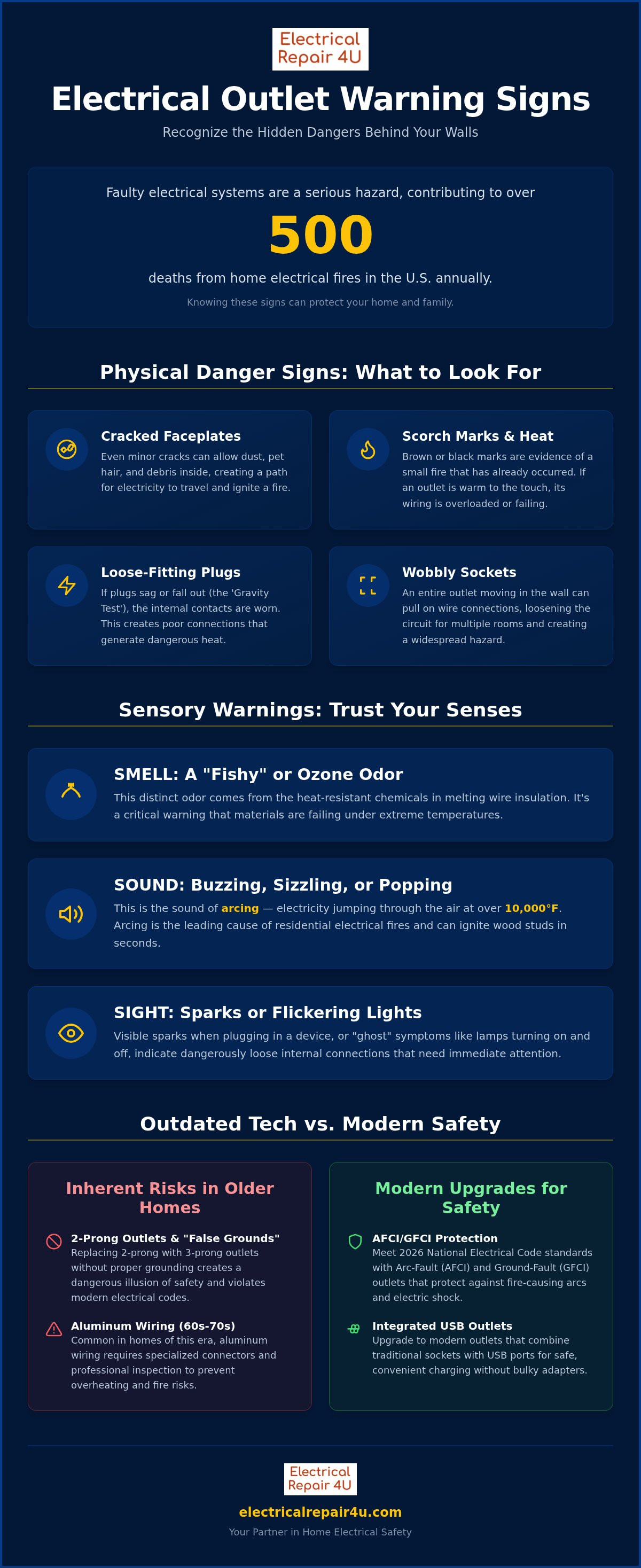
If you see brown or black scorch marks on the faceplate, stop using that outlet immediately. This discoloration isn't just a stain; it's evidence of a small fire that has already occurred inside the wall. Physical cracks are equally dangerous. While they might look like a minor cosmetic issue, cracks allow dust and pet hair to accumulate inside the socket. This debris can lead to internal tracking, where electricity travels across the dust, eventually igniting it. If the plastic feels warm to the touch, the wiring behind the wall is likely overloaded or failing. Our team of master electricians can perform a safety inspection to see if the heat has damaged the surrounding insulation.
Loose Plugs and Wobbly Sockets
Try the 'Gravity Test' on your most-used sockets. If a standard phone charger sags or falls out, the internal tension is gone. Loose connections create electrical resistance; resistance generates intense heat. This heat can melt wire insulation long before a breaker ever trips. If the entire outlet wobbles when you plug something in, it's a structural risk. That movement pulls on the wire nuts inside the electrical box. Over time, this can loosen connections for the entire circuit, potentially affecting multiple rooms in your house. We've spent decades ensuring that every outlet we install is seated firmly and wired for longevity.
Sensory Warnings: What Your Sight, Sound, and Smell Are Telling You
Your home often communicates through your senses long before a total system failure occurs. While we previously discussed physical wear, sensory alerts are much more immediate and high-stakes. If you detect a strange odor or a new sound near your wall, these are urgent signs you need to replace electrical outlets. Don't dismiss a faint "fishy" or "ozone" smell as a simple cleaning issue. This specific odor typically comes from the heat-resistant chemicals in wire insulation as they begin to melt under extreme temperatures. It's a chemical warning that the materials protecting your home are failing.
It's common to hear a small, single "click" when you flip a switch. That is normal mechanical movement. However, if you hear a persistent buzzing, sizzling, or popping sound when an appliance is under load, you're hearing a serious hazard. You might also experience "ghost" symptoms, such as a lamp that turns itself on and off or a vacuum that loses power if the cord is bumped. These issues suggest that the internal connections have loosened to the point where electricity can no longer flow steadily. Following CPSC safety recommendations, you should treat any audible crackling or intermittent power loss as a priority repair to prevent potential ignition.
The Sound of Arcing
Arcing is the sound of electricity jumping across a gap. This happens when an outlet is worn out or the internal wiring has pulled away from its terminal. It is currently the leading cause of residential electrical fires in Illinois. To put the danger in perspective, arcing is electricity traveling through air, reaching temperatures over 10,000 degrees Fahrenheit. This intense heat can ignite the wooden studs and insulation inside your walls in a matter of seconds. If you hear these sounds, the internal components are essentially creating a miniature lightning storm inside your wall box.
The 'Ozone' Smell and Smoke
Before you see actual flames, you might notice a sharp, metallic "ozone" smell or the scent of burning sulfur and plastic. This indicates that the plastic housing of the outlet is carbonizing. If you see even a tiny wisp of smoke, you must act immediately. Your first step is to cut power at the source to stop the flow of energy. You can find specific emergency shutoff steps in our comprehensive guide on breaker box maintenance. Once the power is off, the danger is contained, but the circuit should remain unused until a professional can evaluate the damage.
In 2026, the updated safety protocol for sensory warnings is simple: unplug, de-energize, and inspect. We've helped our neighbors in Naperville and Aurora navigate these scary moments for over 40 years. Our team provides reliable Electrical Repair to ensure your family feels secure and your home meets the latest safety standards.
Obsolescence: Why Old Outlets Are Inherent Risks
Many homes in the historic neighborhoods of Naperville and Elmhurst still feature original electrical hardware from decades ago. While these sockets might still provide power, their age makes them one of the most common signs you need to replace electrical outlets. A standard residential outlet has a predictable lifespan of 15 to 25 years. Once you pass this window, the internal metal components fatigue. They lose their ability to maintain the tight grip required for the high-draw demands of modern computers and kitchen appliances. This mechanical wear is unavoidable, making regular updates a necessity for home safety.
We often encounter "painted-over" outlets in local rental properties or recent house flips. This is more than just a cosmetic eyesore. Layers of dried paint can gum up the internal contacts or act as a flammable insulator that traps heat inside the wall box. If you struggle to insert a plug because of paint buildup, the outlet is compromised. Our team of master electricians has spent over 40 years helping neighbors identify these hidden risks. We ensure every replacement meets the rigorous 2026 safety standards, providing you with long-term stability and peace of mind.
The 2-Prong to 3-Prong Dilemma
In older Illinois homes, two-prong outlets are a frequent sight. These are inherently risky because they lack a dedicated grounding wire. The third prong on modern plugs serves as an "emergency exit" for stray electricity. Without it, a power surge has nowhere to go but through your sensitive electronics or your body. Don't fall into the "false ground" trap. Simply swapping a 2-prong for a 3-prong socket without updating the wiring is a dangerous code violation. It creates a false sense of security while leaving your devices vulnerable. Surge protectors cannot function without a true ground; on a 2-prong circuit, they're nothing more than basic power strips.
Missing GFCI Protection in Wet Areas
Current 2026 Illinois codes require Ground Fault Circuit Interrupter (GFCI) protection in all "wet" areas, including kitchens, bathrooms, garages, and basements. If your outlets in these zones lack "Test" and "Reset" buttons, they are dangerously obsolete. You should also follow the "10-year rule." GFCI outlets contain delicate internal sensors that eventually fail. If your outlet doesn't trip when you press the test button, it can no longer protect you from a lethal shock. Upgrading to modern outlet technologies is the best way to ensure your family stays safe. For comprehensive defense, we often recommend combining these upgrades with whole house surge protector installation to shield your entire property from external electrical spikes.
Professional Replacement vs. DIY: Safety and Code Compliance
While online tutorials make outlet swaps look like a five-minute project, they often skip the high-stakes technical details that keep your home safe. Recognizing the signs you need to replace electrical outlets is just the first step in protecting your property. The second step is ensuring the new installation doesn't create a hidden hazard behind your walls. We suggest a "Three Strike Rule" for our neighbors: if you find wires of an unexpected color, discover a loose electrical box, or realize you don't have a torque screwdriver to meet 2026 tightness standards, it's time to call a professional. These are clear indicators that the job has moved beyond a simple DIY task.
For those living in the Aurora area, professional intervention is often a matter of critical safety due to the prevalence of aluminum wiring in homes built during the 1960s and 70s. If you open a socket and see "silver" wires instead of copper, stop immediately. Aluminum expands and contracts at different rates than copper, and using standard outlets on these circuits is a primary cause of residential fires. A licensed electrician in Warrenville ensures every connection is made with specialized Al/Cu rated connectors and tightened to the exact inch-pound specifications required by modern codes. This level of precision is what provides the long-term stability your family deserves.
When you choose a professional service, you receive more than just a new socket. We provide a comprehensive "circuit map" during every replacement, helping you understand exactly which breakers control which areas of your home. This removes the anxiety of guesswork during future repairs. Furthermore, having a master electrician handle the work ensures full code compliance for insurance purposes. In the event of a claim, having documented, professional work can be the difference between a covered loss and a denied claim. We take pride in being a stable pillar of the community, offering honest results that protect your investment.
The Risks of Incorrect Installation
Incorrectly installed outlets often lead to "reverse polarity," where the hot and neutral wires are switched. This mistake can destroy expensive smart appliances and poses a significant shock risk even when a device is turned off. Loose neutral wires are another common DIY pitfall; they create "hot" circuits that can arc and generate heat. We frequently fix "back-stabbed" wiring, a builder-grade method where wires are simply pushed into the back of the outlet. These connections inevitably loosen over time, leading to the sizzling sounds and flickering lights we discussed earlier. Proper screw-terminal installation is the only way to ensure a permanent, secure connection.
When to Call Electrical Repair 4U
If you encounter damaged electrical boxes or brittle, aging wire insulation, don't take the risk of a makeshift fix. Our team has over 40 years of local experience handling the specific challenges of older Illinois housing stock. You can bundle your outlet updates with our comprehensive residential electrical repair in Warrenville to ensure your entire system is up to 2026 safety standards. We are dedicated to providing the emotional reassurance that comes from a job done right the first time. For a home that is both safe and dependable, schedule your professional outlet and switch replacement today and let us handle the technical details for you.
Modernizing Your Home: Beyond Simple Outlet Repair
Upgrading your home's electrical system is a strategic investment in both safety and daily convenience. While we have spent time discussing the urgent signs you need to replace electrical outlets, modernization allows you to move from reactive repairs to a proactive lifestyle. In 2026, the technology behind your wall plates has evolved to do much more than just provide power. From protecting your children with advanced hardware to charging your laptop directly from the wall, these upgrades transform your property into a high-performance environment. Transitioning to modern standards is about more than just compliance; it's about making your home work better for your family.
AFCI: The Ultimate Fire Prevention
Arc Fault Circuit Interrupter (AFCI) outlets are now the 2026 gold standard for bedroom and living area safety. While we previously noted that GFCI outlets protect you from water-related shocks, AFCI technology is designed to detect the dangerous arcing we described in earlier sections. These smart devices essentially "listen" to the flow of electricity. If they detect the specific electronic signature of a spark jumping a gap, they shut off power in milliseconds. This is a critical layer of defense because it stops heat generation before a fire can even start. Current Illinois codes now require AFCI protection in new constructions and significant remodels, ensuring your sleeping areas have the highest level of security available.
Charging and Convenience Upgrades
Modern families deal with a constant rotation of devices that need power. Replacing old sockets with high-wattage USB-A and USB-C integrated outlets eliminates the need for bulky "wall warts" and tangled adapters. These specialized outlets can provide enough power to charge tablets and laptops directly from the wall, leaving the standard plugs free for other appliances. When our team at Electrical Repair 4U helps you plan a modern "power layout" for a home office, we also focus on the aesthetic impact. Screwless faceplates offer a sleek, minimalist look that fits perfectly with contemporary interior design while maintaining professional-grade durability.
Safety and Durability for 2026
Beyond convenience, modernizing your outlets provides specific protections tailored to your environment and family needs. We often recommend these specialized upgrades during our safety inspections:
- Tamper-Resistant (TR) Outlets: These feature internal shutters that only open when a two-prong plug is inserted simultaneously. They are a code requirement for child safety, preventing little ones from inserting dangerous objects into the slots.
- Weather-Resistant (WR) Outlets: Essential for Aurora and Lombard outdoor spaces, these are built with UV-stabilized materials and corrosion-resistant components to withstand harsh Illinois winters.
- Smart Outlets: These integrate with your home automation system. They allow you to monitor energy monitoring in real-time or schedule your coffee maker through a smartphone app.
Recognizing the signs you need to replace electrical outlets is your chance to bring your home into the modern era. We take pride in being a collaborative partner for our neighbors, ensuring every installation provides the emotional reassurance of a job done right. Whether you are looking for safety or smart home integration, our master electricians are here to ensure your home is both safe and dependable for years to come.
Secure Your Home with Proactive Electrical Safety
Your home is your sanctuary, and keeping it safe shouldn't be a source of stress. By staying alert to the signs you need to replace electrical outlets, you're taking a vital step toward long-term security. Whether it's the faint smell of ozone, a loose plug that fails the gravity test, or outdated two-prong sockets, these indicators are your home's way of communicating a need for professional attention. Upgrading to 2026 standards like AFCI protection doesn't just meet local codes; it provides the deep emotional reassurance that your family is protected from hidden arcing risks.
Our team has served DuPage County for over 40 years as a stable pillar of the community. We employ A+ Rated Licensed Master Electricians who take immense pride in their craft and your safety. We provide emergency 24/7 electrical support because we understand that peace of mind doesn't have an off switch. Don't let technical uncertainty linger in your walls. Schedule your professional outlet safety inspection with Electrical Repair 4U today! We look forward to being your collaborative partner in keeping your home safe and dependable.
Frequently Asked Questions
Is it dangerous if an outlet is warm to the touch?
Yes, a warm outlet is a serious warning sign that requires immediate attention. Heat is typically caused by electrical resistance or arcing behind the wall plate, which can melt wire insulation and lead to a fire. If you notice warmth, you should unplug all devices and contact a professional to investigate the internal connections.
Can I replace a two-prong outlet with a three-prong outlet myself?
You should not simply swap a two-prong outlet for a three-prong version without ensuring a proper ground path is present. Installing a three-prong socket on an ungrounded circuit is a code violation and creates a "false ground" that leaves your electronics unprotected. A licensed electrician can help you determine if your home needs rewiring or if a GFCI-labeled solution is appropriate for your specific situation.
How much does it cost to have an electrician replace an outlet in Warrenville?
The total investment for outlet replacement depends on several factors, including the type of outlet being installed and the condition of your existing wiring. Upgrading to 2026 standards with AFCI or GFCI protection involves different material requirements than standard sockets. We recommend a professional safety inspection to provide an accurate assessment based on your home's age and current code requirements.
Why does my plug keep falling out of the wall socket?
Plugs fall out because the internal metal "wiping contacts" have become loose or worn out over time. This is one of the most common signs you need to replace electrical outlets in high-traffic areas of your home. When these contacts lose their grip, they create electrical resistance and heat, making the outlet a potential fire hazard that needs replacement.
What is the difference between a GFCI and an AFCI outlet?
GFCI outlets are designed to protect people from fatal shocks in wet areas like kitchens and bathrooms by detecting ground faults. In contrast, AFCI outlets are designed to prevent fires by detecting dangerous arcing in the wiring. The 2026 safety standards often require both types of protection to ensure your home is fully shielded from both shock and fire risks.
How often should I have an electrical safety inspection for my outlets?
We recommend a comprehensive safety inspection every three to five years, especially for homes in the Naperville area built more than 20 years ago. Regular checkups allow us to identify signs you need to replace electrical outlets before they lead to an emergency. You should also schedule an inspection immediately if you move into a new property or notice flickering lights.
Can a bad outlet cause my circuit breaker to trip constantly?
A damaged or worn-out outlet can definitely cause your circuit breaker to trip. If there is an internal short circuit or persistent arcing within the socket, the breaker will shut off power to prevent the wires from overheating. If you have a breaker that won't stay reset, it's a clear signal that the circuit needs a professional evaluation to ensure your safety.
Should I replace all the outlets in my house at the same time?
While it isn't always mandatory to replace every outlet at once, it is often the most efficient way to ensure your entire home meets 2026 safety standards. Replacing them in groups allows for consistent aesthetics and ensures that every room benefits from modern AFCI protection. Our team can help you prioritize the most critical areas, such as bedrooms and wet zones, to balance your budget with your safety needs.


