
You might think a few DIY solar stakes are enough to protect your property, but Illinois winters have a way of turning those quick fixes into dark, frozen failures. It's frustrating to invest time and money into your yard only to have it disappear into the shadows the moment the sun sets. We know you want a home that feels safe for your family and looks beautiful for the neighbors, all without the stress of technical failures or complex wiring.
Choosing a professional outdoor lighting installation ensures your investment actually survives the sleet, snow, and wind. In this guide, we'll share our 40 years of local expertise to help you navigate the confusion of low-voltage versus line-voltage systems. You'll discover how to eliminate dangerous dark spots, boost your property value, and create a durable lighting setup that provides real emotional reassurance and security for years to come.
Key Takeaways
- Learn how strategic lighting layouts deter intruders and keep your walkways safe for guests during dark Illinois evenings.
- Discover why brass and copper fixtures are essential for surviving the Midwest’s harsh snow and rain cycles.
- Understand the critical differences between low-voltage and line-voltage systems to ensure your home’s electrical infrastructure remains stable.
- Master the art of layering light to highlight your home’s best architectural features while maintaining a cohesive look.
- Realize the long-term value of a professional outdoor lighting installation that guarantees code compliance and ground-fault protection.
The Benefits of Professional Outdoor Lighting Installation
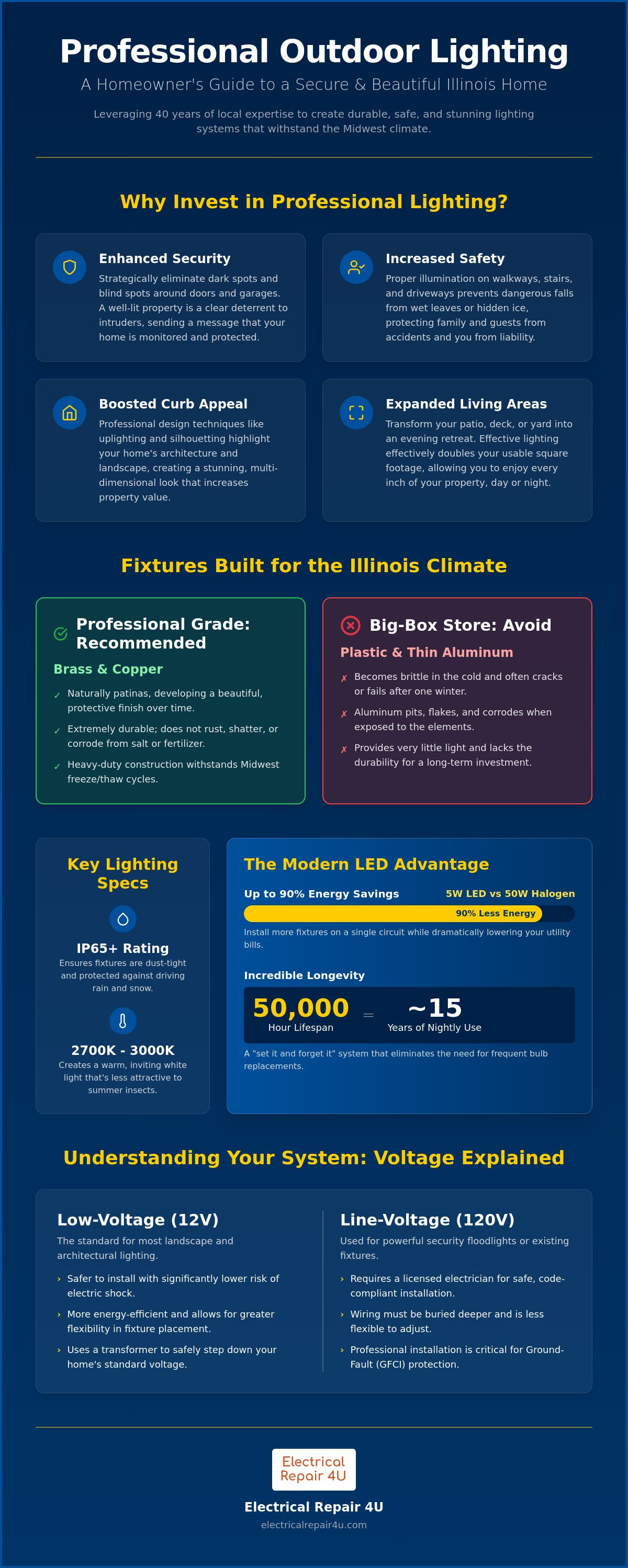
Your home is your sanctuary. When the sun goes down, you shouldn't feel like you're losing half your property to the shadows. A high-quality outdoor lighting installation does more than just make your house look pretty. It's a strategic infrastructure investment that protects your family and your finances. After 40 years of serving our neighbors, we've seen how the right setup transforms a dark lot into a secure, welcoming estate.
Security starts with visibility. Intruders look for easy targets. A house draped in darkness is an open invitation. By eliminating blind spots around side doors and garages, you're sending a clear message that your home is monitored and cared for. Beyond security, there's the practical matter of liability. In our corner of the Midwest, wet leaves or hidden ice on a walkway can lead to a nasty fall. Proper illumination ensures delivery drivers and guests reach your door safely. This prevents accidents and protects you from potential legal headaches.
In competitive markets like Naperville and Aurora, first impressions are everything. Professional illumination highlights the quality of your home's construction and makes it stand out during evening showings. It also effectively doubles your usable square footage. Why should your patio be off-limits after 8:00 PM? With the right light, your deck becomes an evening retreat for coffee or conversation. You've worked hard for your home and deserve to enjoy every inch of it; to ensure your interior matches the quality of your exterior, Miller's Window Works invites you to explore Custom Window Treatment Sales and Installation to enhance your home's privacy and aesthetic appeal.
Security Lighting vs. Landscape Lighting
Security lighting focuses on raw power and visibility. We often recommend motion-activated floodlights for DuPage County homes because they provide a sudden, startling burst of light that deters trespassers. Conversely, landscape lighting design prioritizes the mood and beauty of your property. It’s the difference between a harsh spotlight and a warm, inviting glow. Both are essential. A professional outdoor lighting installation integrates these two goals so your home looks elegant while staying fortress-secure.
The Aesthetic Impact on Curb Appeal
Don't settle for the "runway" look created by scattered DIY solar stakes. Those plastic lights often fail after one Illinois winter and provide very little actual light. Professional design uses techniques like uplighting to showcase a stone façade or silhouetting to bring out the drama of your prize oak trees. We create depth and texture. This ensures your home looks as stunning at midnight as it does at noon. A professional touch turns a flat, dark yard into a multi-dimensional masterpiece that neighbors will notice.
Choosing the Right Fixtures for the Illinois Climate
Illinois weather puts your home's exterior through a gauntlet. From humid 90-degree summers to sub-zero blizzards, your fixtures take a beating every single day. Big-box stores often push plastic or thin aluminum fixtures that simply can't survive a Warrenville winter. For a truly reliable outdoor lighting installation, you need heavy-duty materials that can handle the constant expansion and contraction of our local soil.
Brass and copper are the gold standards for our climate. Unlike aluminum, which pits and flakes when exposed to road salt or lawn fertilizers, brass and copper naturally patina over time. They don't rust; they don't shatter; they offer the stability your property deserves. We also look for high Ingress Protection (IP) ratings. An IP65 rating ensures the fixture is dust-tight and protected against driving rain. High-quality seals keep internal moisture out, preventing the technical failures that often follow a heavy spring thaw.
Color temperature is another critical factor for your comfort. We suggest warm white tones between 2700K and 3000K. This creates a soft, inviting glow that highlights your home’s architecture without looking like a gas station parking lot. These warmer tones are also less attractive to bugs, which is a major win during our humid summer months. It keeps your porch clear and your light lenses clean.
Weatherproofing and Durability
The freeze and thaw cycles in the Midwest are brutal on electrical infrastructure. When the ground shifts, it can pull on buried wires or loosen fixture mounts. We use corrosion-resistant finishes and marine-grade gaskets to ensure longevity. Every connection must be watertight to prevent ice from forming inside the housing, which is the primary cause of cracked lenses and short circuits in Illinois.
Energy Efficiency and Modern LED Tech
Modern LED technology has revolutionized the outdoor lighting installation process. Integrated LED fixtures can last up to 50,000 hours, which is nearly 15 years of nightly use. Switching from 50-watt halogen floodlights to 5-watt LEDs reduces energy use by 90 percent. This efficiency allows us to install more fixtures on a single circuit while keeping your utility bills low. If you want a system that is both sustainable and stunning, our team offers specialized lighting solutions tailored to your home's specific needs.
Technical Foundations: Low Voltage vs. Line Voltage Systems
The backbone of any reliable lighting system isn't the bulb; it's the wiring hidden beneath your sod. Most homeowners feel a bit of anxiety when choosing between low voltage (12V) and line voltage (120V) systems. Each has a specific role in a high-caliber outdoor lighting installation. While one offers safety and artistic flexibility, the other provides the raw power needed for high-stakes security. We help you balance these two technical worlds to create a system that is both beautiful and functional.
Low voltage systems rely on a transformer to convert your home's standard 120V current down to 12V. This transformer acts as the brain of your landscape. It manages the timing and power distribution for your entire yard. One technical hurdle we always address is "voltage drop." This happens when the electrical pressure decreases over long wire runs. Without professional calculations, the fixtures furthest from your home will appear dim and yellowish. We size your wires and transformer capacity correctly from the start. We often use multi-tap transformers to ensure every light on your property shines with consistent, crisp brightness, regardless of how far it is from the power source.
When to Use Line Voltage (120V)
When you need maximum visibility for security, 120V is the standard. This is the same power running through your kitchen outlets. We use it for heavy-duty floodlights that need to cast light across a 100-foot driveway or illuminate a large commercial space. Because this voltage is higher, the safety requirements are much stricter. Illinois codes often require wires to be buried 18 to 24 inches deep inside rigid conduit. This prevents accidental contact from shovels or aerators. Professional line-voltage work also includes installing dedicated circuits in your breaker box. This prevents your outdoor security from tripping the same breaker as your indoor appliances. It's a complex task that requires a licensed electrician to guarantee your property meets all local safety standards.
The Versatility of Low Voltage (12V)
Low voltage is the preferred choice for path lights, accent spots, and deck illumination. It's safe, energy-efficient, and incredibly easy to adjust. As your Warrenville landscape matures and your bushes grow taller, we can simply move the fixtures to maintain the perfect look. We take extra care during the outdoor lighting installation to protect your lines. We bury cables deep enough to avoid the "freeze-thaw" heave of Illinois soil. If you ever notice flickering or dead zones, we can quickly repair frayed wiring caused by lawn equipment or curious local wildlife. Our goal is to remove the stress of technical failures, providing you with a system that is as dependable as it is beautiful.
Designing a Strategic Outdoor Lighting Plan
A successful outdoor lighting installation requires more than just picking out fixtures you like. It's about intentionality. We start by identifying the focal points of your property. Maybe it's a century-old oak tree or the intricate stonework on your front porch. By highlighting these features, we create a sense of depth that a single porch light simply can't provide. It’s about creating a narrative for your home after the sun sets.
Layering is the secret to a professional result. We combine three distinct types of light to achieve a cohesive look. Path lighting provides safe passage along walkways. Accent lighting draws the eye to specific textures or plants. Ambient lighting creates a soft, general glow for social areas like patios. We avoid the "runway" effect by staggering lights rather than placing them in perfectly straight, parallel lines. This prevents the dreaded "light tunnel" and makes your yard feel more natural and expansive. Good design respects your neighbors, too. We focus the light exactly where it's needed, preventing glare from spilling into nearby windows. To further manage light and privacy within your living spaces, you can discover Vermont Shade and Blind for custom window treatment solutions that complement your home's design.
The Principles of Landscape Design
We use specific techniques to bring your property to life. Uplighting places fixtures at the base of trees or walls to create a grand, soaring effect. For a softer feel, we often recommend "moonlighting." This involves placing lights high up in tree branches to cast gentle shadows on the ground below, mimicking a full moon. If your home has a texture-heavy surface like brick or stone, we use wall washing or grazing to emphasize every detail. Shadowing is another favorite; by placing a light in front of an architectural feature, we cast a dramatic silhouette onto a wall, adding mystery and elegance to your evening landscape.
Smart Lighting and Automation
Modern technology has removed the hassle of manual switches. We can set up your system to follow the exact sunrise and sunset times in Warrenville. This ensures your lights are always on when you need them most. For total peace of mind, we recommend connecting your new system to a whole house surge protector. This protects your sensitive smart timers and LED drivers from unexpected power spikes during Midwest thunderstorms. You can even create dimmable zones controlled by your smartphone, allowing you to shift from bright security mode to a soft dinner party glow with one tap. If you're ready to see how a strategic plan can redefine your home, our team provides expert lighting solutions that combine beauty with technical precision.
Why Professional Installation is a Security Investment
Professional outdoor lighting installation is a commitment to your family's safety. While big-box stores might suggest anyone can tackle this in an afternoon, they often skip over the risks of electrical shorts and fire hazards. In our 40 years of serving Warrenville and DuPage County, we've seen how poor wiring leads to system failures. We treat your property as a complete electrical ecosystem. A professional outdoor lighting installation ensures your investment is built to last and functions correctly when you need it most.
Code compliance is non-negotiable for exterior work. Every outdoor circuit must have a ground-fault circuit interrupter (GFCI). This device shuts off power in a fraction of a second if it detects a leak. It prevents shocks and fires in wet conditions. Our licensed master electricians ensure every outlet and connection meets strict Illinois standards. If your current system is flickering or failing, we can troubleshoot electrical problems to find the root cause before it becomes a hazard.
Ensuring Long-Term Electrical Safety
We take the time to do the invisible work correctly. This includes proper trenching and conduit use to prevent accidental wire cuts from lawn mowers or shovels. We also protect your connections against the corrosive nature of soil acidity and the moisture that seeps in during spring thaws. Before we add new loads to your system, we perform a thorough breaker box maintenance check. This ensures your home’s electrical panel can safely handle the new fixtures without tripping or overheating.
Professional Support and Warranty
Working with a dedicated team of licensed and insured professionals removes the anxiety of technical failures. You aren't just getting a one-time service; you're gaining a collaborative partner. We take pride in our craft and stand by the longevity of our results. Whether you need help with future system expansions or simply want the peace of mind that comes from a job done right, we're here to help. Don't leave your home's security to chance. Secure your home with a professional lighting consultation today and experience the difference that 40 years of local expertise makes.
Secure and Brighten Your Property Today
Your home deserves to shine long after the sun sets. By prioritizing durable materials like brass and copper, you ensure your system stands strong against the harshest Illinois winters. We've explored how a strategic layout eliminates dangerous dark spots and highlights your home's best architectural features, all while maintaining strict electrical safety codes and GFCI protection. These technical foundations are what separate a lasting infrastructure investment from a temporary DIY project.
A professional outdoor lighting installation is much more than a simple cosmetic upgrade. It's a long-term commitment to your family's security and your property's value. With over 40 years of local service in Warrenville and the surrounding suburbs, our licensed and insured master electricians are A+ rated for safety and reliability. We take pride in being a stable pillar of this community, helping our neighbors remove the anxiety of technical failures through diligent, honest work.
Don't leave your property in the dark. Get a Professional Outdoor Lighting Quote from Electrical Repair 4U to start your transformation today. We look forward to partnering with you as a trusted neighbor to make your home the safest and most beautiful on the block.
Frequently Asked Questions
Do I need a permit for outdoor lighting installation in Illinois?
Permit requirements depend on your specific municipality and the voltage of the system you choose. For line-voltage (120V) systems, most Illinois suburbs require a permit and a licensed electrician to ensure everything meets safety codes. Low-voltage (12V) systems often do not require a permit. It's always a good idea to check your local Warrenville or DuPage County regulations before your project begins.
How much does it cost to install landscape lighting professionally?
Professional installation costs vary based on the number of fixtures, the complexity of the wiring, and the quality of materials used. While we don't provide flat rates here, investing in a high-caliber system prevents the frequent replacement costs associated with cheap DIY kits. A professional assessment will give you an accurate picture of what's needed for your specific property and security goals.
What is the difference between solar and hardwired outdoor lights?
Hardwired lights provide a consistent, high-intensity glow regardless of the weather, while solar lights depend entirely on daily sunlight. In Illinois, solar lights often struggle during cloudy winters and shorter days. A hardwired outdoor lighting installation offers the reliability needed for security and safety. It ensures your walkways stay bright every single night of the year, regardless of the season.
Can outdoor lighting help lower my homeowners insurance?
Some insurance providers offer discounts for homeowners who install professionally designed security lighting systems. Because well-lit properties are less attractive to intruders and less prone to trip-and-fall accidents, they represent a lower risk. You should contact your specific insurance agent to see if your outdoor lighting installation qualifies for a premium reduction under their current security or safety guidelines.
How deep do outdoor electrical wires need to be buried?
Burial depth depends on the voltage and whether the wire is protected by conduit. Low-voltage cables are typically buried about 6 inches deep. Line-voltage (120V) wires usually require a depth of 18 to 24 inches to meet National Electrical Code standards. Proper depth prevents accidental damage from lawn aerators, shovels, or the natural shifting of Illinois soil during our heavy freeze-thaw cycles.
Why do my outdoor lights keep flickering or burning out?
Flickering is usually caused by loose connections, corroded sockets, or an overloaded transformer. If bulbs burn out frequently, you might be experiencing voltage spikes or using bulbs that aren't rated for the fixture's heat. Professional troubleshooting can identify if the issue is a simple fix or a sign of a larger infrastructure problem that needs immediate attention to prevent a potential fire hazard.
Is LED outdoor lighting better than halogen for cold climates?
LEDs are significantly better for cold climates because they thrive in low temperatures and don't require time to warm up. Unlike halogen bulbs, which generate excessive heat and can crack when hit by snow, LEDs stay cool and operate efficiently even in sub-zero weather. This makes them the most durable and energy-efficient choice for Illinois homeowners facing brutal winter conditions.
Can I integrate my outdoor lighting with my smart home system?
Yes, modern systems easily integrate with smart home platforms or dedicated lighting apps. For high-end integration, PREMIERE SYSTEMS DESIGN can help you set automated schedules, dim specific zones, or trigger lights based on motion sensor activity. This level of control adds a layer of convenience and security, allowing you to manage your home's exterior appearance and safety from anywhere in the world with just a few taps.


