

Last Tuesday, a homeowner in Naperville watched a single lightning strike turn their high-end EV charger and smart refrigerator into expensive scrap metal. It's a heartbreaking scenario that highlights why so many neighbors are asking about the cost of whole house surge protector installation this year. You've invested thousands in your home's technology, and it's completely normal to feel protective of those assets while worrying about the technical complexity of modern electrical panels.
We agree that your peace of mind shouldn't be compromised by confusing industry jargon or hidden fees. This guide simplifies the process by revealing the real-world costs of professional shielding in 2026. You'll learn about the different types of surge devices, current labor rates in Illinois, and how a professional setup secures your equipment warranties. We'll cover everything from basic unit prices to the value of hiring a seasoned electrician to ensure your home stays powered and protected.
Key Takeaways
- View the cost of whole house surge protector installation as a strategic investment that shields high-value assets like EV chargers and smart home systems from unpredictable grid spikes.
- Learn why professional installation is necessary to secure equipment warranties and ensure the device is grounded correctly for maximum safety.
- Understand the limitations of standard power strips and why a layered approach starting at the main panel is the only way to protect hardwired appliances.
- Discover how factors like panel age and local permit standards in DuPage County can affect the timing and technical requirements of your project.
- Benefit from the neighborly reliability of a licensed expert who removes the anxiety of technical failures through proven, safety-first electrical solutions.
Evaluating the Cost of Whole House Surge Protector Installation in 2026
Think about your home as a collection of high-tech investments. From your smart thermostat to your high-end kitchen appliances, your electrical system carries the lifeblood of your daily routine. When homeowners ask about the cost of whole house surge protector installation, they're usually looking at a small fraction of their total asset value. In the Chicago suburbs, where seasonal storms and grid fluctuations are a reality, this investment acts as a primary line of defense. It's no longer just a "nice to have" feature; it's a fundamental requirement for modern living.
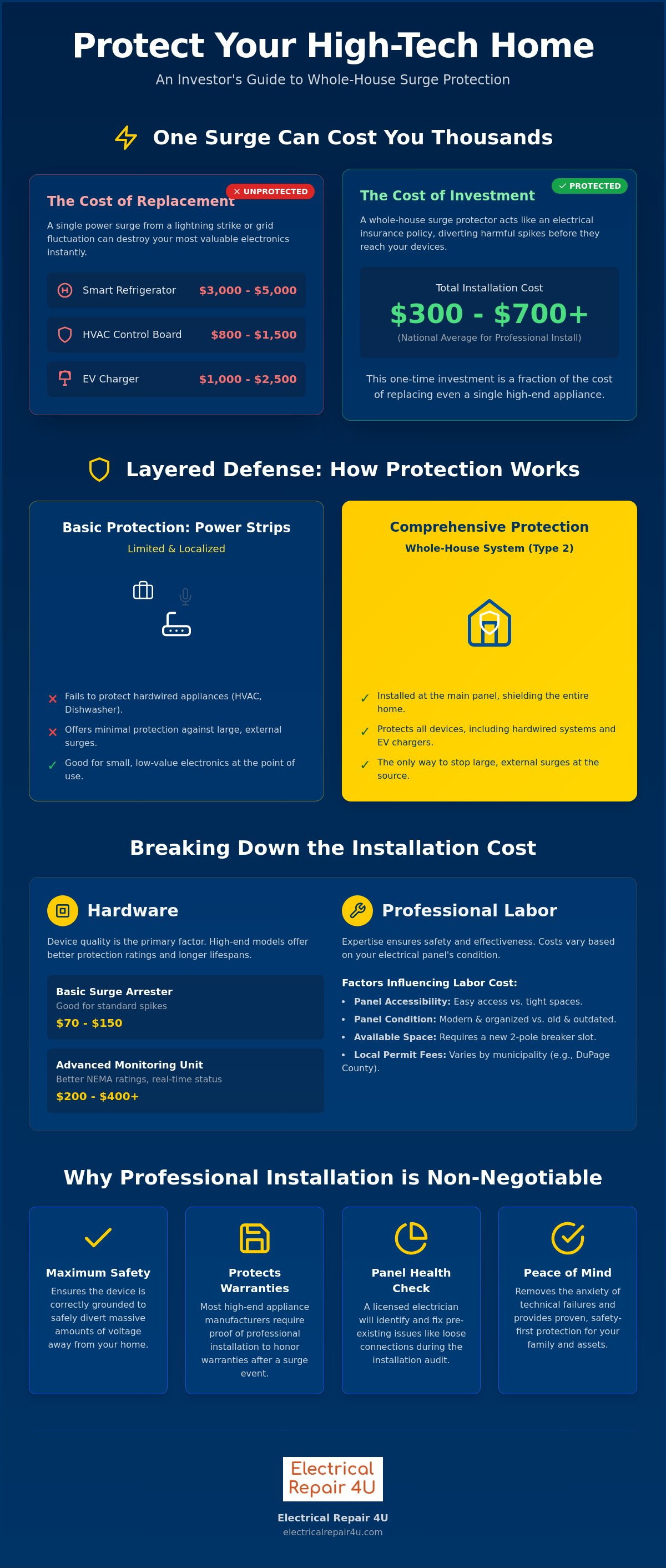
Many residents in DuPage County still rely on basic power strips from big-box stores. While these are fine for a lamp or a toaster, they can't stop a massive grid spike from entering your main breaker box. If a surge hits your home, those plastic strips often fail to protect hardwired items like your furnace, dishwasher, or security system. National averages for 2026 suggest a total price range between $70 and $700, but local factors in Naperville or Aurora, such as permit fees and panel accessibility, can shift those numbers. Investing in professional shielding ensures that your entire infrastructure remains stable during the most volatile weather.
The "Insurance" Math: Surge Protection vs. Appliance Replacement
Imagine a scenario where a single lightning strike hits a nearby transformer. Without a whole-home device, that massive energy flows directly into your kitchen and laundry room. You could face a $5,000 bill for a new smart refrigerator or a complex HVAC control board repair. To understand the technical side, it helps to know What is a Surge Protector? and how it diverts excess voltage safely to the ground. Spending a few hundred dollars on professional installation is essentially buying "electrical insurance" that keeps your manufacturer warranties intact. Most high-end brands actually require proof of professional surge protection to honor their repair guarantees after a power event.
Why 2026 is Different: EVs and Smart Infrastructure
The electrical needs of a modern home have changed rapidly over the last few years. In 2026, your house likely contains more microchips than a 1990s office building. These sensitive components are easily fried by "transient" surges that happen dozens of times a day. We see this most often with EV charger installation in Warrenville. Electric vehicles are essentially giant batteries connected to your home's nervous system, and they require clean, stable power to charge safely. A whole-house device ensures that your car and your smart hub don't become victims of a sudden grid fluctuation. It's a proactive step that our team has recommended for over 40 years to keep local families safe and their technology running smoothly.
Breaking Down the Price: Hardware, Labor, and Panel Compatibility
The cost of whole house surge protector installation isn't just a single number on a receipt. It's a combination of the hardware quality you choose and the technical expertise required to integrate that device into your home's nervous system. While you might see various devices online, the final quote reflects the specific needs of your property. The Electrical Safety Foundation International notes that these systems are critical for modern safety, but their effectiveness depends entirely on correct placement and professional calibration.
Your hardware choice sits at the center of the budget. You'll find a spectrum of options, from basic surge arresters that handle standard spikes to advanced monitoring units that provide real-time status updates on your home's electrical health. High-end models often include better NEMA ratings for outdoor durability or field-replaceable modules that extend the unit's life. We've found that investing in a high-quality Type 2 device provides the most reliable shield for the sensitive electronics local families rely on every day. If your mobile devices or laptops have already been affected by power-related issues, you can learn more about professional repair solutions from First Help Tech.
Your history of breaker box maintenance also dictates the labor involved. If your panel is clean, labeled, and has available space for a new 2-pole breaker, the installation is straightforward. However, if we discover loose connections or outdated components during our initial audit, we must address those safety concerns first. This ensuring that your new surge protector has a stable environment to function correctly, which is why a professional assessment is so valuable. If you're ready to secure your home, a quick safety assessment can clarify exactly what your system needs.
Understanding Device Types (Type 1 vs. Type 2)
Type 1 devices are heavy-duty units installed at the meter base. They're designed to catch massive external surges from lightning or downed power lines before they enter your house. Type 2 devices are the standard choice for most homeowners. We install these at the main service panel to manage both external spikes and the smaller, frequent internal surges caused by HVAC units or large appliances cycling on and off. Most families opt for Type 2 protection because it offers the most comprehensive defense for interior circuits and smart devices.
What a Professional Installation Includes
A licensed electrician doesn't just "plug it in." The process begins with a full capacity check to ensure your panel can handle the new breaker safely. We then focus on lead length optimization. If the wires connecting the surge device to the panel are too long, the protection level can drop significantly. Finally, we verify your home's grounding system. Without a solid path to the earth, even the most expensive surge protector can't divert excess energy away from your electronics. Our team brings over 40 years of local experience to every install, ensuring these technical details are handled with precision.
Professional vs. DIY Installation: Why Expertise Saves You Money
Working inside a live main service panel is a high-stakes environment where one slip can lead to catastrophic injury or a house fire. While some homeowners might consider a DIY approach to reduce the initial cost of whole house surge protector installation, the long-term financial risks far outweigh any temporary savings. A professional installation ensures that the device is integrated without compromising the structural integrity of your breaker box. Our team of licensed and insured electricians brings the technical precision needed to handle high-voltage components safely while removing the anxiety of a potential mistake.
We often see "handyman" or DIY attempts that look correct on the surface but fail when they're needed most. A common mistake involves using lead wires that are too long or winding. Every extra inch of wire increases resistance, which can reduce the effectiveness of the surge protector by 30% or more. Without expert grounding verification, the excess energy from a strike has nowhere to go. This often leads to the surge bypassing the protector entirely and flowing through your home's wiring. When you hire a professional, you're paying for the certainty that your equipment will actually perform when the grid fails.
The Warranty Trap: Why Professional Documentation Matters
Most reputable surge protector brands offer connected equipment coverage ranging from $25,000 to $75,000. However, this coverage is almost always conditional. You must provide proof that a qualified professional performed the work to qualify for a claim. An invoice from a 40-year veteran like Electrical Repair 4U acts as a safety net for your investment. An uncertified installation is an automatic warranty rejection. Having that professional paper trail ensures you aren't left holding the bill for thousands of dollars in damaged electronics after a storm.
Code Compliance and Home Resale Value
Local building codes in Naperville and Aurora are strict for a reason. They protect your family and your property value. Unpermitted or non-compliant electrical work can become a massive headache during a home inspection when you decide to sell your property. Buyers in today's market look for homes that meet modern National Electrical Code (NEC) standards, and a professionally installed Surge Protective Device (SPD) is a major selling point. It shows that you've been a diligent steward of the property. Knowing that your home is fully shielded provides emotional reassurance that no DIY project can match.
Factors That Influence Your Final Quote in Warrenville and Beyond
Every home in the Chicago suburbs has its own electrical history. When we calculate the cost of whole house surge protector installation, we look at the unique "fingerprint" of your property. A 1950s ranch in Lombard has different technical requirements than a new construction home in Naperville. While the device itself is a fixed expense, the labor and prep work required to install it safely can vary based on your existing infrastructure. We've spent over 40 years helping neighbors navigate these variables, ensuring every job is done right the first time.
The distance between your main service panel and the meter can also play a role. Longer wiring runs or difficult access to the breaker box add labor time to the project. If your home has sub-panels in a finished basement or a detached garage, you might need protection at multiple locations to ensure a complete shield. We also have to consider local permitting fees. Towns like Elmhurst, Bolingbrook, and Elgin each have their own administrative requirements and inspection schedules that we handle on your behalf to keep the project code-compliant.
Dealing with Older Electrical Infrastructure
Many homes in older sections of Lombard or Oak Park still have panels that aren't ready for modern surge devices. If our audit reveals an obsolete brand like Zinsco or Federal Pacific, we can't safely install a surge protector without addressing those fire risks first. Sometimes, a request for surge protection reveals a deeper breaker box maintenance issue that needs immediate attention. Modern "plug-on neutral" panels allow for a faster, cleaner install, whereas older wired systems require more manual labor to secure the connections properly.
Regional Labor Rates in the Chicago Suburbs
Labor rates across DuPage County reflect the high demand for licensed expertise. You might find "cheap" quotes from contractors who skip the essential grounding rod inspection. We don't take those shortcuts. A surge protector is only as good as the grounding system it uses to dump excess energy. You can often save money by bundling this safety upgrade with other projects, such as Warrenville lighting solutions or general repairs. This approach ensures your home is both beautiful and protected in one visit. If you want a clear picture of what your specific home needs, you should schedule a local site visit today.
Investing in Long-Term Safety with Electrical Repair 4U
Choosing a partner to protect your home's electrical heart is a significant decision. We've spent over four decades serving as a stable pillar for families in DuPage County. Our neighborly approach isn't just about fixing wires; it's about building a foundation of security for your most valuable assets. When you consider the cost of whole house surge protector installation, you're choosing to remove the anxiety of the unknown. We treat every home as if our own family lived there, ensuring that every connection is tight and every safety standard is exceeded.
A professional consultation with our team is a straightforward, no-pressure technical audit. We don't believe in "quick fixes" that might fail during a high-stakes weather event. Instead, we perform a comprehensive check of your grounding system and panel capacity. We've seen how modern grid transients can brick a high-end EV charging station or a smart home hub in seconds. By prioritizing safety over speed, we ensure your surge device is calibrated to provide maximum shielding from the moment we flip the switch.
The Electrical Repair 4U Difference: 40 Years of Trust
Our long-standing history in the area means we understand the specific grid quirks of your neighborhood. Whether you're in a historic section of Naperville or a newer development in Warrenville, we know the infrastructure challenges you face. We're committed to transparent pricing and service calls that leave you feeling empowered rather than intimidated. Our master electricians are licensed, insured, and dedicated to the craft of keeping your home stable. This longevity in the community acts as a recurring anchor of reliability for our clients.
Before you finalize your home defense plan, use this checklist to ensure you're ready for a professional upgrade:
- Identify your most sensitive electronics, including EV chargers and smart appliances.
- Check your main electrical panel for available space for a 2-pole breaker.
- Verify if your home has sub-panels that might require secondary protection.
- Review your appliance manufacturer warranties for professional installation requirements.
- Confirm that your home's grounding rod is accessible and in good condition.
Ready to Secure Your Home?
Upgrading your home’s defenses is a simple process that we can often complete in a single afternoon. When you're ready to understand the total cost of whole house surge protector installation for your specific layout, a local site visit is the best way to get an accurate, honest quote. We'll handle the technical heavy lifting and the local permits so you can focus on the peace of mind that comes with a fully shielded home. Protect your home today with Electrical Repair 4U and secure your technology for years to come.
Secure Your Home's Future and Technology Today
Protecting your home's electrical infrastructure is about more than just avoiding a temporary nuisance; it's about safeguarding the smart appliances and EV chargers that drive your daily life. We've explored how professional shielding preserves your expensive equipment warranties and ensures your property stays code-compliant in 2026. By now, you should have a clear perspective on the cost of whole house surge protector installation and why it's a high-value investment for any DuPage County homeowner seeking long-term stability.
Our team brings over 40 years of local experience to every project we undertake. As licensed, bonded, and insured professionals, we specialize in modern home electrical safety and neighborly reliability. You don't have to navigate technical anxiety or grid volatility alone when you have a seasoned partner ready to help. We're committed to providing the security your family needs through diligent, expert service that stands the test of time.
Get a Professional Surge Protection Quote from Our Warrenville Experts
Your home deserves the highest caliber of protection available. We look forward to helping you build a safer, more resilient future for your property and your peace of mind.
Frequently Asked Questions
How much does a whole house surge protector cost to install in 2026?
The cost of whole house surge protector installation depends on your panel's age, the specific device rating, and local permit requirements in your town. Every home in DuPage County has unique technical needs that influence the final labor and hardware requirements. A professional assessment ensures you aren't paying for unnecessary work while securing a system that actually performs when a storm hits.
Will a whole house surge protector protect against a direct lightning strike?
No device can guarantee 100% protection against a direct lightning strike because the voltage is simply too massive for any residential equipment to handle. However, these protectors are highly effective at diverting the intense energy from nearby strikes and grid fluctuations. They act as a critical shield that prevents the majority of surge-related damage from reaching your sensitive smart home electronics.
How long do whole house surge protectors typically last?
Most whole-house surge protectors have a functional lifespan of five to seven years under normal conditions. It's important to remember that these devices are sacrificial, meaning they wear down every time they divert a spike away from your appliances. If your neighborhood experiences a major electrical event or a nearby lightning strike, you should have a licensed electrician inspect the unit immediately.
Do I still need power strips if I have a whole house surge protector?
Yes, a layered approach is the best way to protect your most sensitive gear like computers and high-end gaming consoles. While the whole-house unit stops large surges at the panel, point-of-use power strips catch smaller transients that can occur inside your home's own circuits. This two-tier strategy provides the maximum level of security for your modern technology and EV chargers. To find high-quality tech accessories and lifestyle items that benefit from this level of protection, learn more about ElectroGadget.
Does a whole house surge protector lower my home insurance premiums?
Many insurance providers don't offer an automatic premium discount, but having a professionally installed protector can make a significant difference during the claims process. Some surge devices also come with their own equipment warranties that cover thousands of dollars in damages. This extra layer of financial security helps remove the anxiety of potential out-of-pocket replacement costs after a major power failure.
Can I install a whole house surge protector on an old electrical panel?
You can often install a protector on an older panel as long as it's in good working condition and has physical space for a new breaker. However, if our team discovers an obsolete or dangerous brand like Federal Pacific or Zinsco, we'll recommend a panel upgrade before proceeding. Safety is our priority, and we'll never install a device on a system that poses a fire risk to your family.
What is the difference between a surge arrester and a surge protector?
A surge arrester is typically a Type 1 device installed at the utility meter to stop massive external spikes before they enter your home. A surge protector is usually a Type 2 device installed at your main breaker box to manage both external and internal surges. Using both types provides a comprehensive defense system that guards against every common electrical threat in the Chicago suburbs.
How do I know if my whole house surge protector is still working?
Most modern units feature a simple LED status light that stays green when the protection is active. If you notice the light has turned red or turned off completely, it means the internal components have been spent and the device is no longer shielding your home. Some advanced models also include audible alarms to notify you the moment a professional replacement is required.


